Yunnan Crossing Bridge Noodles: The Famous Yunnan Rice Noodles, Explained
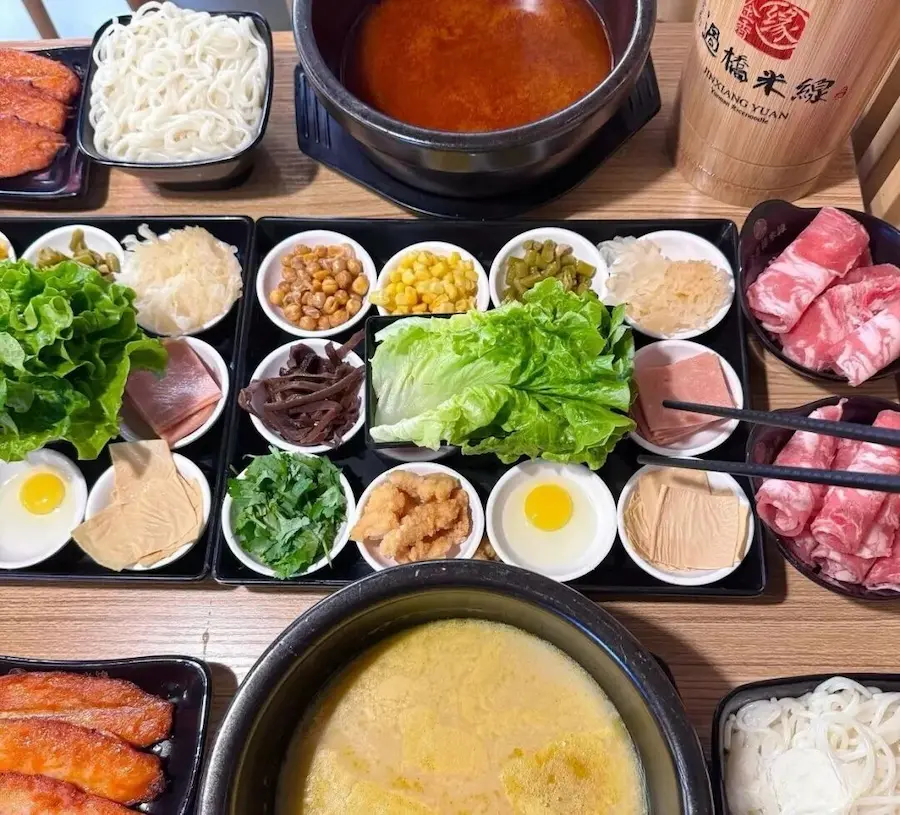
A server sets a thick ceramic bowl in front of you — bigger than your face. Inside sits a milky chicken broth with a sheet of golden chicken oil floating on top. Not a wisp of steam.
Then come the little dishes, arranged in a ring around the bowl: razor-thin slices of raw pork loin, Xuanwei ham, chicken, a few slices of raw fish, one raw quail egg, crispy fried pork, plus chives, wood-ear mushrooms, and a pinch of yellow chrysanthemum petals. Last, a bowl of thick white rice noodles.
Nine out of ten people freeze right here. The meat is raw. The soup doesn’t even look hot. How are you supposed to eat this?
That “cold” broth is the entire trick. A layer of chicken oil seals in heat above 90°C, and this is the heart of Yunnan crossing bridge noodles — known in Mandarin as Guòqiáo mǐxiàn, a dish Yunnan has been making for over 300 years and listed as a national intangible cultural heritage in 2014. The first time I held that bowl in Kunming, I almost took a sip straight away. A local friend grabbed my arm. “Don’t. Put the meat in first.”
What Is Yunnan Crossing Bridge Noodle?
Yunnan crossing bridge noodle is, at its simplest, a Yunnan rice noodle soup you “cook” yourself at the table. The difference from a normal bowl: the ingredients arrive raw, and a bowl of scalding broth does the cooking right in front of you.
A proper bowl of Yunnan crossing bridge noodles has four parts:
- The broth. Made from local chicken, pork bones, and ham bones, simmered for hours until milky white. A layer of chicken oil is poured on top before serving, which traps the heat — so it looks cold but is actually scalding.
- The rice noodles. Thick noodles made from local Yunnan rice. White, springy, smooth.
- The raw ingredients. Razor-thin slices of raw pork loin, chicken, and thin white fish slices, plus ham and one raw quail egg.
- The vegetables. Chives, wood-ear mushrooms, pea shoots, tofu skin, chrysanthemum petals.
Drop the raw ingredients into the hot broth one by one and they cook in seconds. That’s the part people remember — this is a dish you build yourself, and one of the most famous plates in Yunnan cuisine.
The Legend Behind Crossing Bridge Noodles
There’s a story most locals will tell you.
During the Qing dynasty, a scholar studied alone on an island in Nanhu Lake in Mengzi. His wife crossed a bridge every day to bring him lunch. The walk was long, and the food always arrived cold. One day she simmered a pot of chicken soup and noticed the chicken fat floated on top, sealing the heat in — the soup stayed hot the whole way. From then on, she carried the broth, the raw meat, and the rice noodles separately, assembling everything at the island so he could eat it fresh.
When the scholar saw that bowl with no visible steam, he was stunned. “My wife crosses the bridge to bring me this meal every day,” he said. “Let’s call them crossing the bridge noodles.”
The scholar later passed the imperial exam, and the dish spread. There’s a second story too — that the rice noodles form a “bridge” between two bowls as you eat. Either way, Yunnan crossing bridge noodles come from Mengzi in southern Yunnan, still recognized today as their birthplace.

How to Eat Yunnan Crossing Bridge Noodles (the order matters)
First-timers get the order wrong all the time. One rule: raw before cooked, meat before vegetables, noodles last.
- Crack the raw quail egg into the small dish of raw meat and stir it into a thin egg wash.
- Add the raw meat — pork loin, chicken, fish — dipping each slice in the egg first so it stays extra tender.
- Add the cooked items — ham, crispy pork, anything already ready to eat.
- Add the vegetables — chives, wood-ear mushrooms, chrysanthemum petals, tofu skin.
- Add the rice noodles last. Stir and eat.
Why does the order matter? The broth looks cool but runs around 90°C. Dump the cold noodles in first and the temperature drops, so the raw meat won’t cook through. Raw ingredients go in first to catch the hottest broth.
The first time I ate it in the right order, I watched the pork turn from pink to white in a few seconds — deeply satisfying in a way I can’t quite explain. The broth gives off no smell, but the first sip is so clean and savory you want another bowl. Not greasy at all. The rice noodles are slippery and springy, soaked in broth, against that tender meat. One bowl and you’re warm all over.
Other Yunnan Rice Noodles Worth Trying
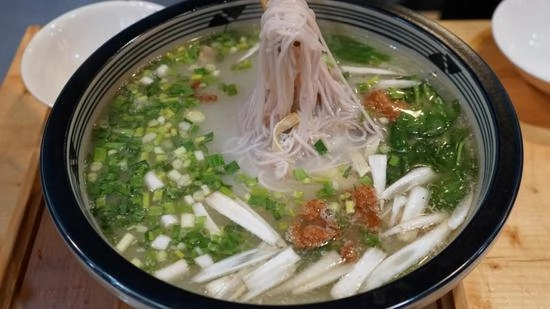
Crossing bridge noodle is the ceremony. But the bowl Yunnan locals actually eat most often is one of these — the rice noodles known across the province as mixian (Yunnan mixian). Don’t stop at crossing bridge; line up a few more too.
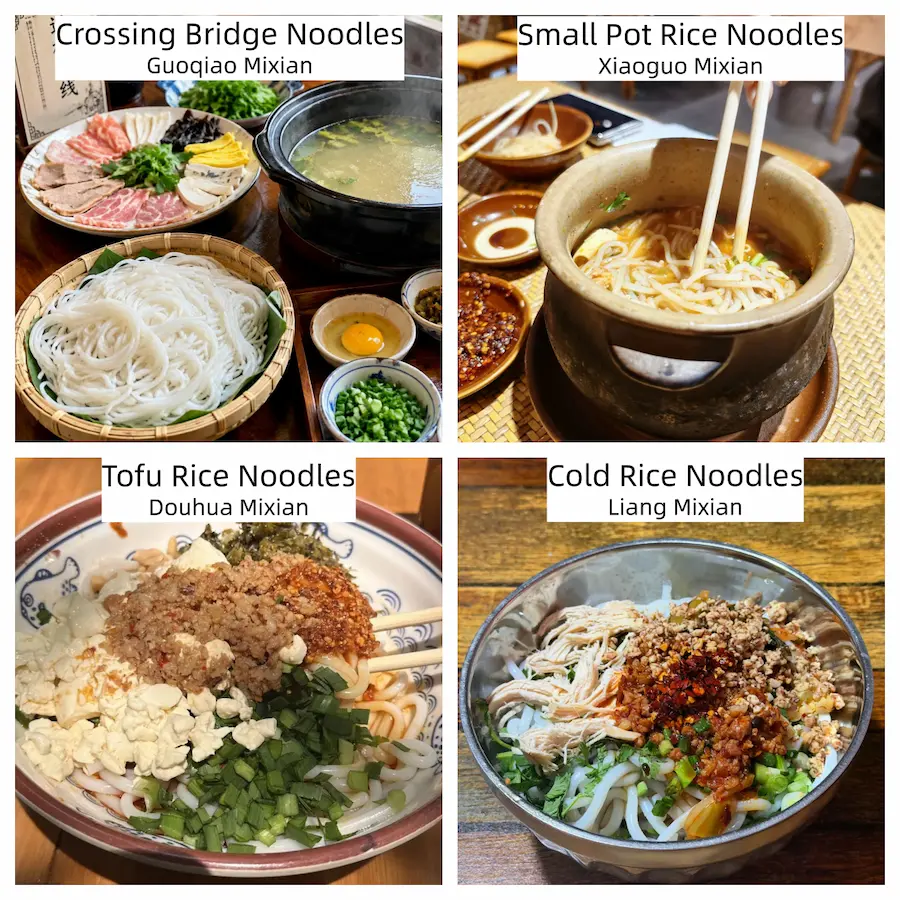
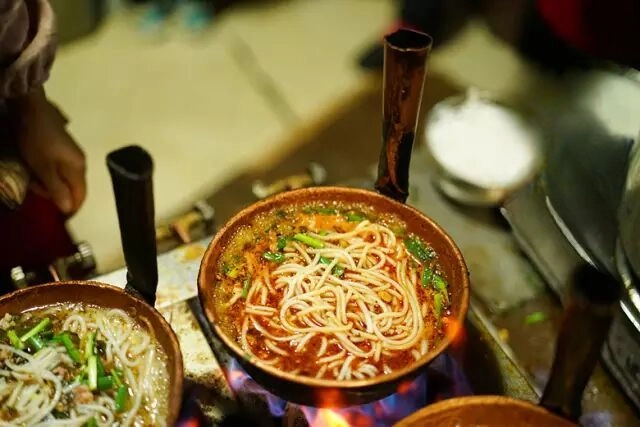
Yunnan small pot rice noodles (Xiaoguo Mixian)
A Yunnan-style rice noodle cooked to order in a small copper pot over high heat, with minced pork, pickled greens, chives, and chili oil. Sour and spicy, full of wok breath. Locals call it “everyday food” — the kind you never get tired of (and it’s spicier than most Yunnan food).
Price: ¥12–¥20 (USD 1.70–2.80)
Douhua Mixian (tofu rice noodles)
No soup — this one is tossed dry. A scoop of silky fresh tofu over rice noodles, with sweet soy sauce, crushed peanuts, winter greens, and chili oil. Salty-sweet with a kick, a classic snack in Kunming’s markets.
Price: ¥10–¥16 (USD 1.40–2.25)
Cold rice noodles (Liang Mixian)
A summer dish, tossed cold with vinegar, shredded chicken, cucumber, crushed peanuts, and sesame oil. Fresh and bright.
Price: ¥10–¥15 (USD 1.40–2.10)
Crossing bridge is the signature you must try. Small pot is what locals eat daily. Douhua and cold rice noodles are the street flavor. If you have time, try all four.
5 Mistakes to Avoid With Crossing Bridge Noodles
- Don’t sip the broth right away. That chicken oil seals in heat above 90°C. It looks cold and will burn your mouth. Add the ingredients first, let the temperature drop, then ladle some into your small bowl.
- Don’t dump the noodles in first. Cold noodles crash the temperature and the raw meat won’t cook. Noodles always go last.
- Skip the overpriced “tourist sets” at scenic spots. Outside popular attractions (like an old-town gate), you’ll see ¥100+ (USD 14+) sets with mediocre toppings. Unless there’s real wild mushroom or a whole sea cucumber inside, a good local premium set rarely tops ¥80 (USD 11).
- Don’t let it sit. The noodles go stiff and the broth loses its aroma. Eat it hot, eat it fast.
- Look for three things: freshly made, oil-sealed broth, raw toppings. Real Yunnan crossing bridge noodles is something you assemble yourself. If it arrives as a bowl of pre-cooked noodles in plain soup, that’s just a Yunnan rice noodle soup — not the real thing.
Where to Eat Authentic Crossing Bridge Noodles in Yunnan
Two places won’t let you down. First, Kunming — century-old Jianxin Garden and the Qiaoxiangyuan chain are both trusted by locals. ¥38–¥58 (USD 5.40–8.30) gets you a generous mid-to-high-end set: a dozen-plus toppings, quail egg, Xuanwei ham, and chicken, and most old shops refill your rice noodles for free. (Pair it with things to do in Kunming for a full day.)
Second, the birthplace itself — Mengzi. Around Nanhu Lake you’ll be fine almost anywhere. The bowls are huge, the toppings generous, the prices low.
For specific restaurant names, addresses, and ordering tips, head to our full Yunnan food guide. Planning the trip around it? Check the best time to visit Yunnan and how to get around Yunnan. This page just points you toward the right city.
A bowl of broth that doesn’t steam, a few plates of raw ingredients, a ritual you assemble yourself — Yunnan crossing bridge noodles are all about that contrast. When you finally get there, don’t sip that bowl. Drop in one slice of meat, watch it turn white in seconds, and you’ll understand why a 300-year-old dish still draws a crowd.

Ke Ping — Founder, Yunnan Travel Tips
Certified China Travel Specialist · Certificate details
This guide can become your real trip. Instead of figuring out complicated logistics alone, let me and our team build your perfect Yunnan journey — from sunrise at Meili Snow Mountain to tea tasting in ancient Dali.
📋 Plan My Yunnan Trip