Yunnan Food Guide: 15 Best Dishes, Cuisine & Where to Eat
When travelers talk about Chinese food, conversations usually drift toward fiery Sichuan cooking, delicate Cantonese dim sum, or Beijing’s famous roast duck. But those who venture deeper into China’s southwestern frontier stumble upon something truly special—yunnan food. Known locally as Dian cuisine, yunnan cuisine stands out as the most ethnically diverse of all Chinese regional cooking styles. It blends culinary wisdom from the Han majority and 25 indigenous minority groups, drawing on an astonishing range of ingredients to create yunnan dishes that celebrate the natural flavors of mountain herbs, wild fungi, freshwater fish, and farm-fresh produce.
Yunnan sits on a high plateau where unique geography and mild climate have produced an almost absurd abundance of edible plants and animals. A local Dai saying puts it bluntly: “If it’s green, it’s a vegetable. If it moves, it’s meat.” From springtime flower blossoms and mountain greens to the wild mushrooms that erupt from the soil after summer rains, from salt-cured hams to hand-pulled milk products and rice-based snacks—the province offers a feast that spans all four seasons. Before you pack your bags, check out these essential yunnan travel tips to make your culinary adventure smooth and enjoyable.
This guide walks you through 15 unmissable yunnan dishes, explains what makes Chinese yunnan food so distinctive, and points you to reliable restaurants where you can taste it all firsthand.
- What Makes Yunnan Cuisine Special?
- 15 Best Yunnan Dishes You Need to Try
- 1. Crossing Bridge Noodles
- 2. Steam Pot Chicken
- 3. Wild Mushroom Hot Pot
- 4. Xuanwei Ham
- 5. Dali Clay Pot Fish
- 6. Yiliang Roast Duck
- 7. Erkuai
- 8. Rushan
- 9. Flower Cake
- 10. Jianshui Grilled Tofu / Shiping Tofu
- 11. Baijiang Tofu
- 12. Xizhou Baba
- 13. Dali Raw Pork Skin
- 14. Dai-Style Sapie
- 15. Lijiang Cured Rib Hot Pot
- Where to Eat Yunnan Food by City
- Yunnan Tea and Coffee: A Bonus for Drink Lovers
- Practical Tips for Eating Through Yunnan
- Frequently Asked Questions About Yunnan Food
What Makes Yunnan Cuisine Special?
Before diving into specific dishes, it helps to understand what sets yunnan cuisine apart from other Chinese regional cooking. Three things define it: geography, ethnic diversity, and an obsession with fresh, wild ingredients.
The province ranges from tropical lowlands near the Myanmar and Laos borders to snow-capped peaks on the Tibetan plateau. That dramatic elevation change means you can find banana trees and alpine meadows within a day’s drive. Yunnan food reflects this variety—a meal in the southern city of Jinghong might feature coconut milk and lemongrass, while dinner up north in Shangri-La leans heavily on yak meat and barley.
Twenty-five ethnic minority groups call Yunnan home. Each brings distinct cooking traditions, fermentation techniques, and spice combinations. Dai people favor fresh herbs and sour-sweet flavors. Bai cooks in Dali specialize in dairy products like cheese and yogurt—a rarity in much of China. Naxi families in Lijiang cure hams and smoke ribs. Tibetan communities in the northwest churn butter tea and slow-cook clay pot chicken. Eating your way across Yunnan feels like traveling through several different food cultures stitched together by mountain roads and river valleys. For a broader look at how these cultures shape the province, browse our yunnan travel guide.
Then there’s the wild mushroom obsession. Each summer monsoon season, foragers head into pine forests to collect porcini, matsutake, chicken-fat mushrooms, and dozens of other fungi species. If you’re wondering is yunnan food spicy, the answer varies by region. Dai dishes pack serious heat with fresh chilies and Sichuan peppercorns, while Bai cooking leans mild and herbal, and Tibetan food uses almost no spice at all. A safe rule: yunnan food spicy levels range from zero to eye-watering, and you can always ask your server to adjust it.
15 Best Yunnan Dishes You Need to Try
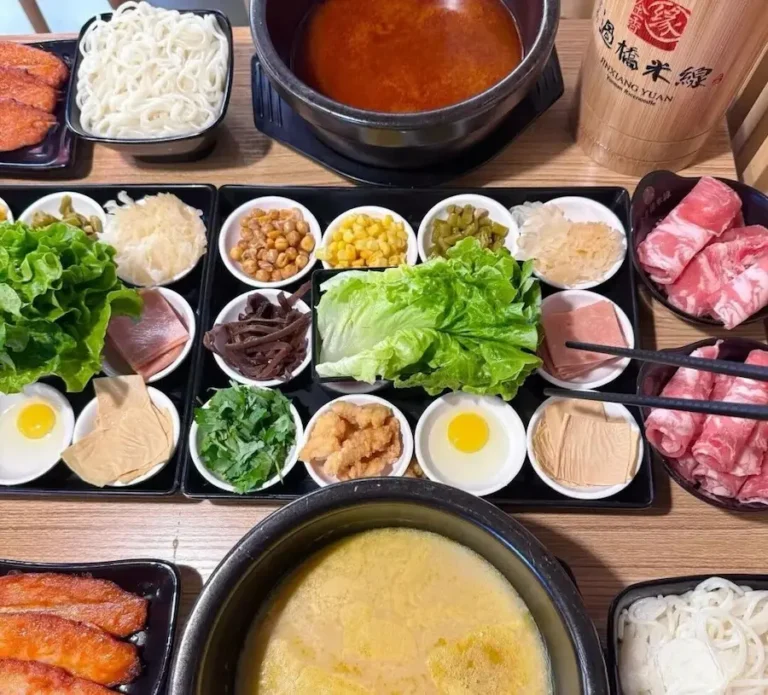
1. Crossing Bridge Noodles
Crossing Bridge Noodles (Guòqiáo mǐxiàn) is Yunnan’s most famous dish — a bowl of scalding chicken broth served with raw meat, vegetables, and rice noodles that cook at your table in seconds. Read the full story, the correct eating order, and the rice noodle varieties →
Where to eat it:
Jianxin Yuan (Baoshan Street flagship): A Kunming institution since 1906, open 24 hours. Their technique is listed as provincial intangible cultural heritage. A bowl runs around 20 CNY (roughly 2.80 USD). 📍 195 Baoshan Street, Wuhua District, Kunming
Qiaoxiangyuan: A well-known chain with branches across the city. They’ve built a whole museum and cultural park dedicated to the dish in Mengzi, its birthplace. Expect to pay 25-40 CNY (3.50-5.60 USD). 📍 Multiple locations in Kunming
Lao Dian Guoqiao Mixian: A local favorite where the soup broth runs deep and rich. Around 20 CNY (2.80 USD). 📍 Yong’an Road, Kunming
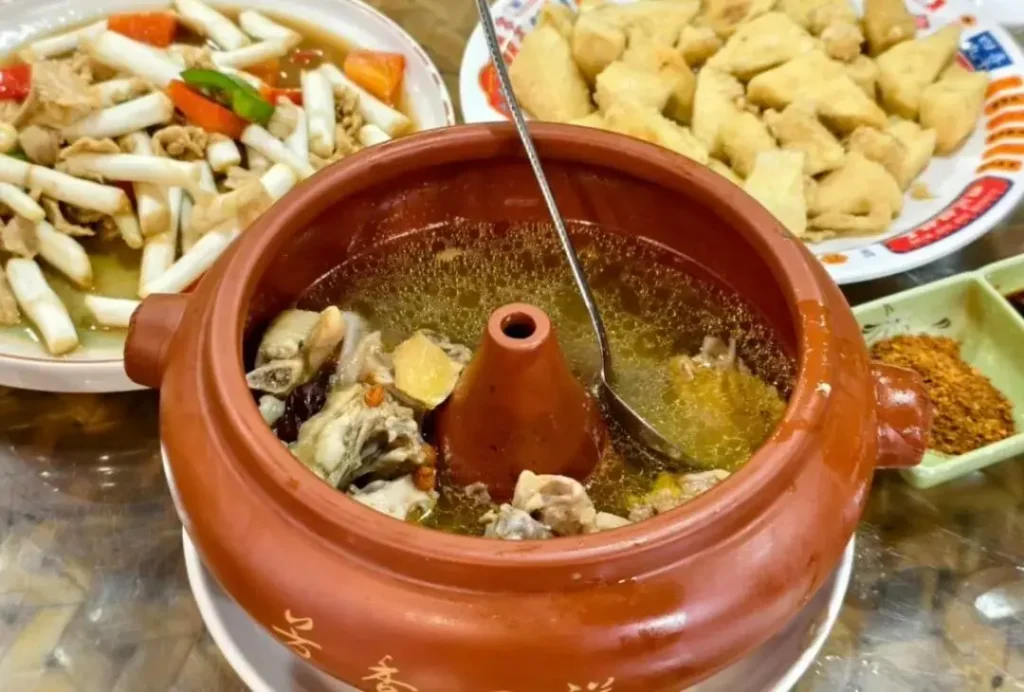
2. Steam Pot Chicken
Steam pot chicken turns a simple bird into something almost magical. The chef places chicken chunks, ginger, and sometimes medicinal herbs like Panax notoginseng or gastrodia root into a Jianshui clay pot with a chimney-like hollow tube rising through the center. This pot sits over a larger vessel of boiling water. Steam travels up the tube, condenses inside the sealed pot, and slowly transforms into a crystal-clear broth—all without adding a single drop of water.
The soup tastes pure and intense, the meat falls off the bone, and if you opt for the herbal version, you’ll leave the table feeling thoroughly nourished.
Where to eat it:
Xiaojipo No.8 (Wenlin Street): Featured on Dianping’s 2025 Must-Eat list. They do traditional steam pot chicken alongside creative dishes like flaming mashed potatoes. 80-100 CNY (11.20-14 USD) per person. 📍 Wenlin Street, Kunming
Huixiang Xilou (Cuihu): Another Must-Eat list pick near Green Lake Park. A refined spot for classic yunnan dishes. 100-150 CNY (14-21 USD) per person. 📍 Near Cuihu, Kunming
3. Wild Mushroom Hot Pot
Come between June and September, and you’ll understand why Yunnan is the undisputed kingdom of wild mushrooms. This isn’t your standard yunnan hot pot loaded with sliced beef and tofu. The star here is fungi: matsutake, porcini, chicken-fat mushrooms, morels, and the famously mysterious “see-the-hand-blue” mushroom that changes color when cut.
The broth starts with dried wild mushrooms simmered for up to seven hours, often blended with pork bone stock for extra body. Once it’s bubbling at your table, fresh mushrooms go in, each variety cooking for a precisely timed interval. The result is an earthy, almost impossibly savory soup that tastes like a walk through a pine forest.
A serious note: some wild mushrooms are toxic when undercooked. Always follow your server’s timing instructions. Never eat before they tell you it’s ready. Restaurants take this seriously and have protocols in place.
Where to eat it:
Yiduo Jun – Nanhua Wild Mushroom Hot Pot (Nanya): A Kunming specialist that made the 2025 Must-Eat list. 120-180 CNY (16.80-25.20 USD) per person. 📍 Nanya Fengqingyuan, Kunming
Qinghong Private Kitchen – Bai Courtyard Mushroom Hot Pot: Inside Dali Ancient Town, set in a traditional Bai family courtyard. 100-150 CNY (14-21 USD). 📍 Dali Ancient Town
Shi Quan Jiu Mei – Mushroom & Cured Rib Hot Pot (Mufu): In Lijiang, they do a split pot with wild mushrooms on one side and Naxi-style cured pork ribs on the other. 100-150 CNY (14-21 USD). 📍 Near Mufu, Gucheng District, Lijiang
4. Xuanwei Ham
Yunnan ham from Xuanwei ranks among China’s three greatest cured hams, alongside Jinhua and Rugao varieties. Shaped like a pipa lute, the ham ages for months to develop a concentrated savory flavor with just a whisper of sweetness. The simplest preparation—thinly slicing and steaming it—releases an aroma that fills the whole room.
Locals also dice yunnan ham into stir-fries, soups, and fried rice as a flavor booster. It’s a key ingredient in the broth for crossing bridge noodles, lending an unmistakable depth.
Where to eat it:
Lao Dian Shanzhai – Yunnan Specialties (Guandu Square): Must-Eat listed restaurant featuring multiple dishes built around Xuanwei ham. Live ethnic song and dance performances add to the atmosphere. 70-100 CNY (9.80-14 USD) per person. 📍 Near Guandu Square, Kunming
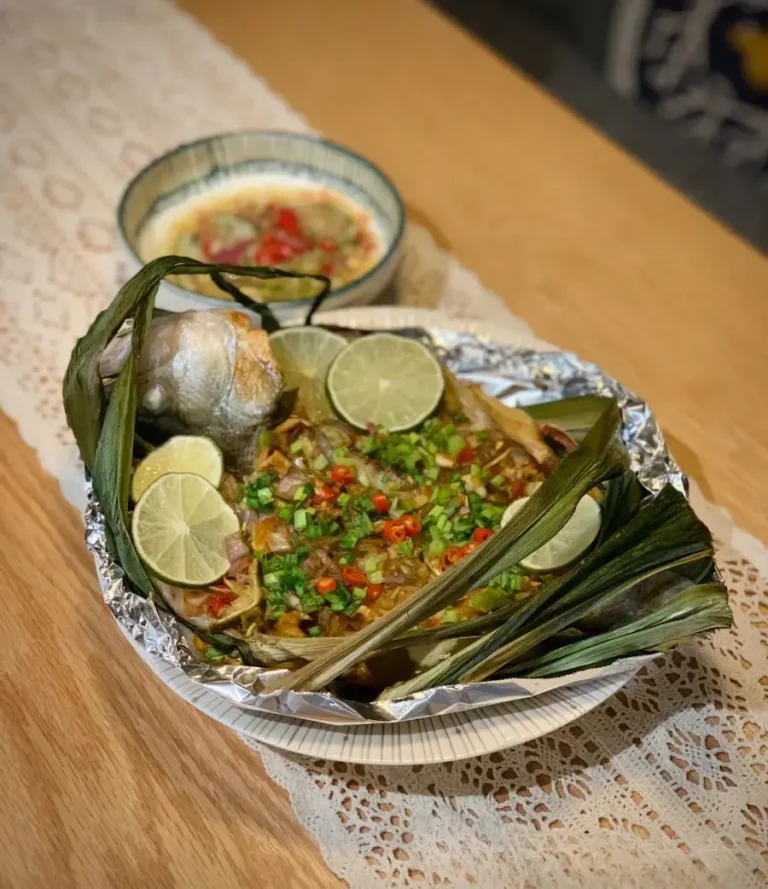
5. Dali Clay Pot Fish
In Dali, this dish anchors every banquet table. A whole carp from Erhai Lake goes into a clay pot with chicken slices, ham, shiitake mushrooms, and a dozen other ingredients, then simmers over a low flame until the broth turns milky and rich. The pot arrives at the table still bubbling, sending up curls of aromatic steam. The fish stays tender, the broth tastes clean and nourishing, and the vegetables soak up all that goodness.
Where to eat it:
Xianglinyuan – Authentic Dali Flavors (Dali Port): 2025 Must-Eat pick serving classic clay pot fish and other Bai specialties. 60-90 CNY (8.40-12.60 USD) per person. 📍 Near Dali Port, Dali
6. Yiliang Roast Duck
Think of this as Yunnan’s answer to Beijing’s famous roast duck, with a 600-year history of its own. Yiliang cooks use pine needles as fuel, brushing the duck skin with honey water and lard before roasting. The result: crackling skin that shatters on contact, tender meat underneath, and a subtle sweetness that sets it apart. Two versions exist—young duck, which is more delicate and sweet, and mature duck, which has more fat and a deeper flavor. The most authentic versions come from Goujie town in Yiliang.
Where to eat it:
Goujie Town Roast Duck Shops: The birthplace of the dish. For mature roast duck, call at least three hours ahead to reserve one freshly roasted. 50-70 CNY (7-9.80 USD) per person. 📍 Goujie Town, Yiliang County, Kunming
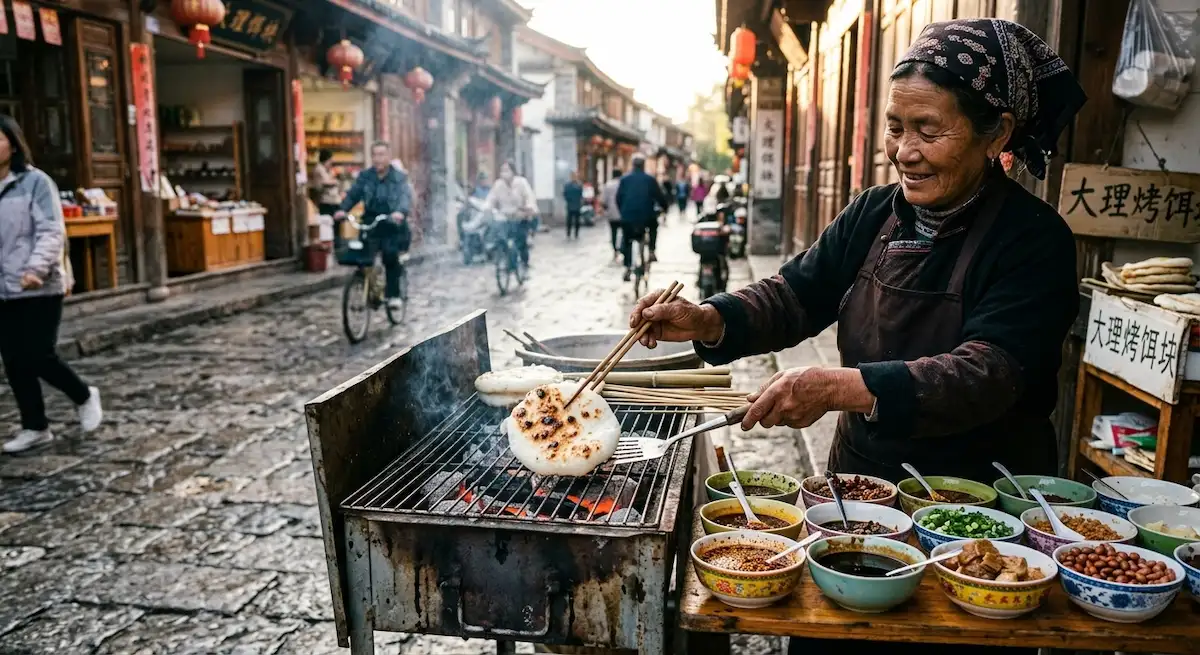
7. Erkuai
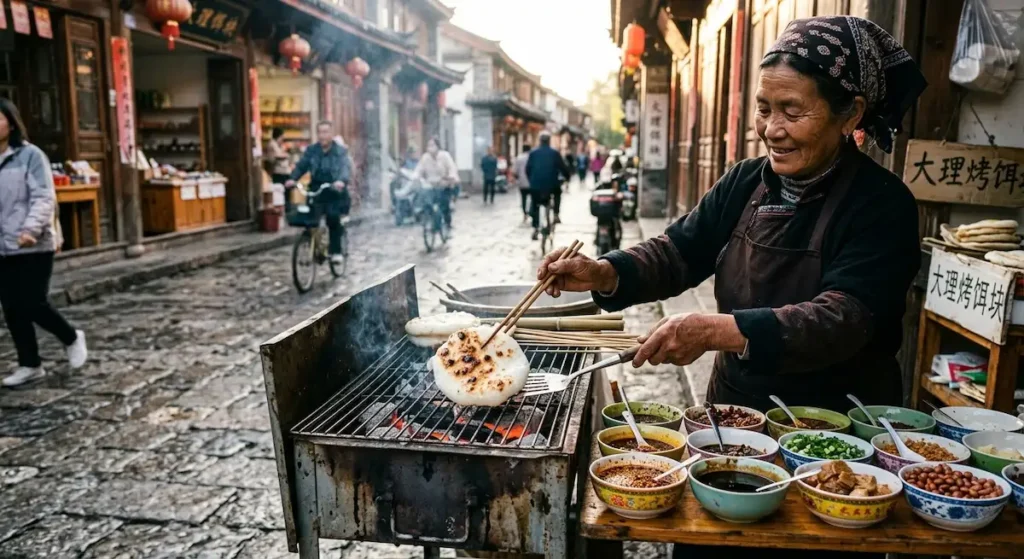
Erkuai is an everyday staple across Yunnan, made by steaming, pounding, and kneading high-quality rice into a dense, chewy cake. Vendors sell it in blocks, strips, or sheets. Street stalls in Kunming and Dali grill erkuai over charcoal until the outside blisters, then slather it with sweet bean paste, chili sauce, or fermented bean curd before folding it around a crispy youtiao (fried dough stick). It’s the ultimate grab-and-go breakfast.
Where to eat it:
Lao Wang Guojiang Ersi: A Dali Must-Eat pick specializing in erkuai noodle soups and grilled versions. 15-25 CNY (2.10-3.50 USD) per person. 📍 Dali
8. Rushan
Rushan comes from Eryuan County near Dali, an area famous for dairy farming. Fresh cow’s milk is hand-stretched and dried into thin, pale yellow sheets that look almost like parchment. Grilled briefly over charcoal, rushan softens and releases an intoxicating caramelized milk aroma. It tastes mild, slightly sweet, and stretchy—easily described as Yunnan’s answer to cheese.
You can eat it raw, pan-fried, or deep-fried. Locals wrap grilled rushan around a smear of rose petal jam, creating a simple dessert that hits all the right notes: creamy, floral, a touch smoky from the grill.
Where to eat it:
Shiweiyuan – Bai Specialties: 2025 Must-Eat listed restaurant in Dali Ancient Town for grilled rushan and other Bai snacks. 50-80 CNY (7-11.20 USD) per person. 📍 Dali Ancient Town
9. Flower Cake
A flower cake yunnan bakeries sell by the thousands each day is a flaky pastry filled with sweetened edible rose petals. The crust shatters into buttery layers when you bite down, and the rose jam inside tastes floral and slightly tart—not perfume-y or artificial. These make perfect edible souvenirs to bring home. Eat them warm from the oven whenever possible.
Where to buy: Bakeries and souvenir shops throughout Kunming and Dali Ancient Town. The most common brand is Jiahua. Watch the bakers roll and fill them through shop windows. 5-15 CNY (0.70-2.10 USD) each.
10. Jianshui Grilled Tofu / Shiping Tofu
Jianshui’s old town runs on grilled tofu. Every evening, locals gather around charcoal braziers along Zitao Street, watching small squares of tofu puff and turn golden on wire grills. The outside crisps up while the inside stays custardy and warm. A dip in chili powder or a fermented bean curd sauce completes the bite. Shiping tofu is a close cousin—slightly smaller, equally addictive.
Where to eat it: Zitao Street in Jianshui, a nighttime destination combining street food, local pottery, and souvenir shopping. 10-20 CNY (1.40-2.80 USD). 📍 Jianshui County, Honghe Prefecture
11. Baijiang Tofu
Baijiang tofu has become a street food sensation across Yunnan in recent years. It undergoes a short fermentation that transforms the interior into a molten, almost custard-like state while the exterior stays firm. Cooks pan-fry, grill, or deep-fry the tofu squares until the shell crackles, then shower them with chili flakes and cumin. Bite down carefully—the scalding liquid center bursts into your mouth like a savory lava cake.
Where to eat it: Night markets and street stalls throughout Kunming. The Nanping Street night market and Zhuanxin Farmers Market are prime hunting grounds. 5-15 CNY (0.70-2.10 USD) per serving.
12. Xizhou Baba
Xizhou baba is the breakfast memory every Dali local carries. Named after the town of Xizhou, this flaky flatbread gets its layered texture from lard folded repeatedly into the dough. Two versions exist: sweet, filled with brown sugar and rose jam, and savory, stuffed with scallions and minced pork. Bakers press the dough onto a cast-iron pan inside a charcoal oven and bake until both sides gleam golden brown. The crust shatters delicately, and the inside stays pillowy and fragrant.
Where to eat it: Seek out small street stalls in Xizhou Ancient Town where you can watch the whole process. The charcoal-fired original is far superior to electric oven versions. 5-10 CNY (0.70-1.40 USD) each. 📍 Xizhou Ancient Town, Dali
13. Dali Raw Pork Skin
Let’s be honest: this dish is not for everyone. But if you’re the type of traveler who believes food is about adventure, Dali raw pork skin deserves your attention. Bai cooks torch the pig’s skin until it turns golden and slightly crisp, then slice it into thin strips. The skin, served at room temperature, gets dipped into a bracing sauce of vinegar, chilies, garlic, scallions, and cilantro. The texture is springy and chewy, the flavor surprisingly clean. Bai families traditionally serve this to honored guests.
⚠️ A word of caution: only eat raw pork skin at reputable, high-turnover restaurants where hygiene standards are solid.
Where to eat it: Bai restaurants throughout Dali Ancient Town and the surrounding Eryuan Niujie area. 50-80 CNY (7-11.20 USD) per person.
14. Dai-Style Sapie
Sapie is the soul of Dai cooking, especially beloved in Dehong Prefecture and Xishuangbanna. The centerpiece is a bowl of emerald-green bitter dip made from pounded fresh beef, leeks, bird’s eye chilies, and a bitter herbal extract. Around this central dip, the table fills with cold sliced beef, tripe, roasted pork skin, rice noodles, and piles of fresh herbs and vegetables.
The way to eat it: grab a bundle of noodles and herbs, dunk them in the bitter-spicy dip, and chase it with a piece of meat. The bitterness hits first, then the heat builds, and just when you think you’ve had enough, the herbal freshness pulls you back for another bite.
Where to eat it:
Wuhao Menghun Niusapie Mixian (Poshuiguangchang): Must-Eat listed in Xishuangbanna. 20-30 CNY (2.80-4.20 USD). 📍 Near Poshui Square, Xishuangbanna
Mangli Village Munainai Fruit Restaurant: Located in Zhanfang Town, Mangshi, Dehong. A fantastic spot for authentic morning sapie. 30-50 CNY (4.20-7 USD). 📍 Mangli Village, Zhanfang Town, Mangshi
15. Lijiang Cured Rib Hot Pot
Naxi families in Lijiang have been curing pork ribs for generations. The ribs hang to air-dry until the meat concentrates into something dense, salty, and aromatic. When simmered low and slow, the broth turns milky white and the meat softens to a pull-apart tenderness. Taro, bamboo shoots, and green vegetables go into the pot next, soaking up the savory broth. It’s the perfect restorative meal after a day of wandering Lijiang’s cobblestone alleys under the shadow of Jade Dragon Snow Mountain.
Where to eat it: Look around Xiangshan Market or inside Dayan Ancient Town. Shi Quan Jiu Mei (listed earlier under mushroom hot pot) does an excellent mushroom-and-rib combo pot. 100-150 CNY (14-21 USD) per person. 📍 Gucheng District, Lijiang
Where to Eat Yunnan Food by City
Kunming
The provincial capital pulls in the best of everything. It’s your one-stop shop for yunnan food from across the entire province. Twenty-eight restaurants here made the 2025 Dianping Must-Eat list—more than any other Yunnan city. If you’re planning your first visit, our guide on what to do in kunming yunnan pairs perfectly with this food tour.
For crossing bridge noodles: Jianxin Yuan, Qiaoxiangyuan, Lao Dian. For sit-down Dian cuisine: Xiaojipo No.8, Huixiang Xilou, Lao Dian Shanzhai. For wild mushroom hot pot: Yiduo Jun, Juncai.
Don’t miss the Nanping Street night market for street snacks, and Zhuanxin Farmers Market for a sensory overload of local produce, cooked food stalls, and ingredients you’ve never seen before.
Dali
Twelve Must-Eat listed restaurants anchor Dali’s food scene, with Bai specialties and wild mushroom hot pot taking center stage. Inside the ancient city walls, wander for clay pot fish, grilled rushan, and erkuai. Xizhou Town, a short drive away, is essential for fresh Xizhou baba. For mushroom hot pot, Qinghong Private Kitchen delivers in a lovely courtyard setting. Need a full itinerary? Check out what to do in dali yunnan to plan your days between meals.
Yunnan noodle house and yunnan restaurant options cluster heavily in the old town. If you spot a yunnan kitchen or yunnan garden restaurant sign while wandering, step inside—Bai family-run spots often have the most memorable home-style cooking.
Lijiang
Five Must-Eat picks anchor Lijiang’s dining landscape. The star attraction is cured rib hot pot, but don’t skip chickpea jelly, Lijiang baba flatbread, and butter tea. Shi Quan Jiu Mei near Mufu Palace does standout mushroom-and-rib combos. Naxi Dazhaimen Wild Mushroom Restaurant in Shuhe Ancient Town is worth the trip for its atmospheric old mansion setting and fungi-focused menu. For more than just eating, our roundup of what to do in lijiang yunnan covers the best experiences around town.
Xishuangbanna
Five Must-Eat listed restaurants serve this tropical prefecture. Jinghong’s Gaozhuang Xishuangjing night market is a sensory carnival of grilled fish stuffed with lemongrass, pineapple sticky rice, coconut-based desserts, and fruit stalls piled with mangosteens, rambutan, and tiny fragrant bananas. For sapie, Wuhao Menghun delivers the real deal.
Yunnan Tea and Coffee: A Bonus for Drink Lovers
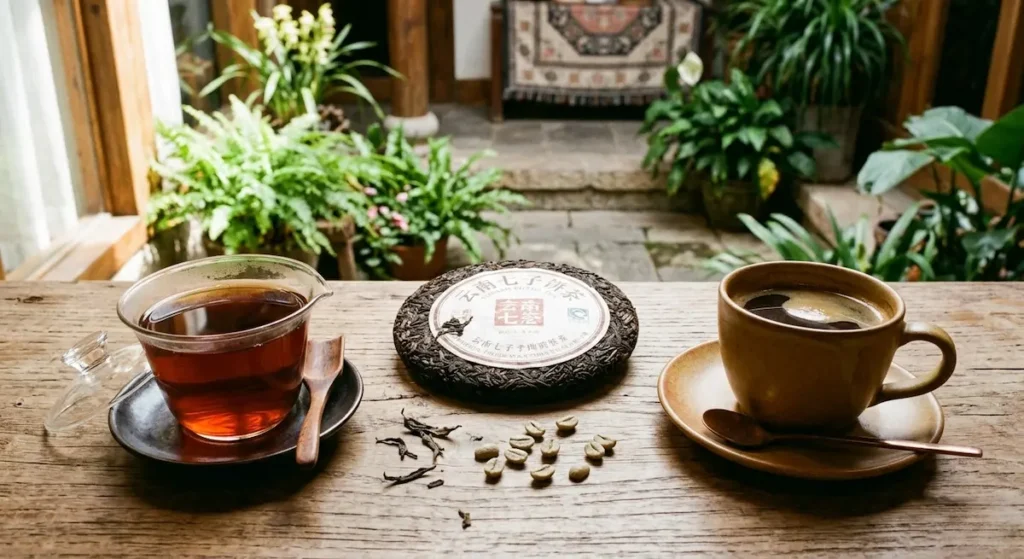
While you’re eating your way through the province, don’t overlook what’s in your cup. China yunnan tea is world-famous, and for good reason. The province is the birthplace of pu’erh—a fermented dark tea that develops deep, earthy complexity as it ages. Yunnan pu erh tea can improve digestion and cut through the richness of oily dishes, which makes it the perfect companion to a multi-course Yunnan meal.
Yunnan black tea, often called Dianhong, offers a completely different profile. It’s malty and robust, with golden-tipped leaves that produce a bright red infusion. Yunnan tea benefits include high antioxidant content and gentle energy without the crash some coffee drinkers experience.
Then there’s yunnan coffee. Surprising to many visitors, Yunnan produces the vast majority of China’s coffee crop. Arabica yunnan coffee beans grow in the province’s mountainous southern region, and the resulting brew is smooth, mildly acidic, and notably clean-tasting. Local roasters in Kunming and Dali have sparked a small but passionate specialty coffee scene. Pick up a bag of yunnan coffee beans or a cake of aged pu’erh as a delicious souvenir that will remind you of this trip long after you’ve returned home.
Where to sample: Kunming’s Wenlin Street area has independent cafes and tea houses within walking distance of each other. In Dali, look for shops along Renmin Road. In Xishuangbanna, the local coffee comes from nearby growing regions and tastes especially fresh.
Practical Tips for Eating Through Yunnan
Mushroom safety: When eating wild mushroom hot pot, let the staff manage cooking times. Never forage or buy wild mushrooms on your own. Restaurants follow strict protocols—trust them.
Spice levels: Yunnan food spicy intensity varies by region and dish. Dai and Jingpo cooking brings serious heat. Bai and Naxi food leans mild. If you’re not sure whether is yunnan food spicy enough to worry about, remember you can always request “less spicy” (shao la) or “not spicy” (bu la).
Best seasons for food: June through September is prime wild mushroom season. March through May brings edible flowers and tender mountain greens. Not sure when to plan your trip? Our guide on the best time to visit yunnan breaks it down season by season. Any time of year, though, you’ll eat well.
Souvenirs worth the suitcase space: Flower cakes, Xuanwei ham, pu’erh tea cakes, and Yunnan coffee beans all travel well and keep their flavor.
Budget: Yunnan is remarkably affordable for eating out. A bowl of crossing bridge noodles runs 15-40 CNY (2-7 USD). Wild mushroom hot pot averages 100-180 CNY (14-25 USD) per person. Most Must-Eat listed restaurants fall between 50-120 CNY (7-16.80 USD) per person.
Finding reliable restaurants: Look for the Dianping “Must-Eat” badge. Of Yunnan’s 50 listed restaurants, nearly 95% are small, casual spots, and 30% have been operating for over a decade. Following this list is the most reliable way to eat well.
Frequently Asked Questions About Yunnan Food
Is yunnan food spicy?
Spice levels vary widely. Dai food from Xishuangbanna and Dehong uses fresh chilies liberally and packs genuine heat. Bai food from Dali is much milder and more herbal. Tibetan food from Shangri-La uses almost no chili at all. Most restaurants can adjust spice levels on request—just say “shao la” (less spicy) or “bu la” (not spicy). For a deeper dive into this topic, read our full guide on is yunnan food spicy.
What is the most famous yunnan dish?
Crossing bridge noodles is arguably the most iconic yunnan rice noodle soup. The theatrical tableside preparation and deep chicken broth make it the dish most visitors remember.
What makes yunnan cuisine different from other Chinese food?
Yunnan cuisine pulls from 25 ethnic minority cooking traditions, uses an extraordinary range of wild-foraged ingredients (especially mushrooms and flowers), and includes dairy products like rushan that are rare elsewhere in China.
Can I find good yunnan food outside China?
Some major cities have yunnan restaurant options, often focusing on crossing bridge noodles and yunnan rice noodle soup. Yunnan tasty garden, yunnan noodle house, and similar names appear in areas with Chinese immigrant communities. The wild mushroom hot pot experience, however, is nearly impossible to replicate outside Yunnan due to ingredient availability.
What should I drink with yunnan food?
Locals often drink yunnan pu erh tea with meals—it cuts through rich, oily dishes and aids digestion. For something stronger, Yunnan’s craft beer scene has grown in recent years, and local baijiu (sorghum spirit) appears at festive meals.
From a steaming bowl of crossing bridge noodles in a 24-hour Kunming canteen to wild mushrooms sizzling in a Dali courtyard, from the sharp bite of Dai sapie near the Myanmar border to butter tea sipped at altitude in Shangri-La—the flavors of this province stay with you. Yunnan food isn’t just something you eat. It’s something you travel for.
Pack your appetite and go.

Ke Ping — Founder, Yunnan Travel Tips
Certified China Travel Specialist · Certificate details
This guide can become your real trip. Instead of figuring out complicated logistics alone, let me and our team build your perfect Yunnan journey — from sunrise at Meili Snow Mountain to tea tasting in ancient Dali.
📋 Plan My Yunnan Trip