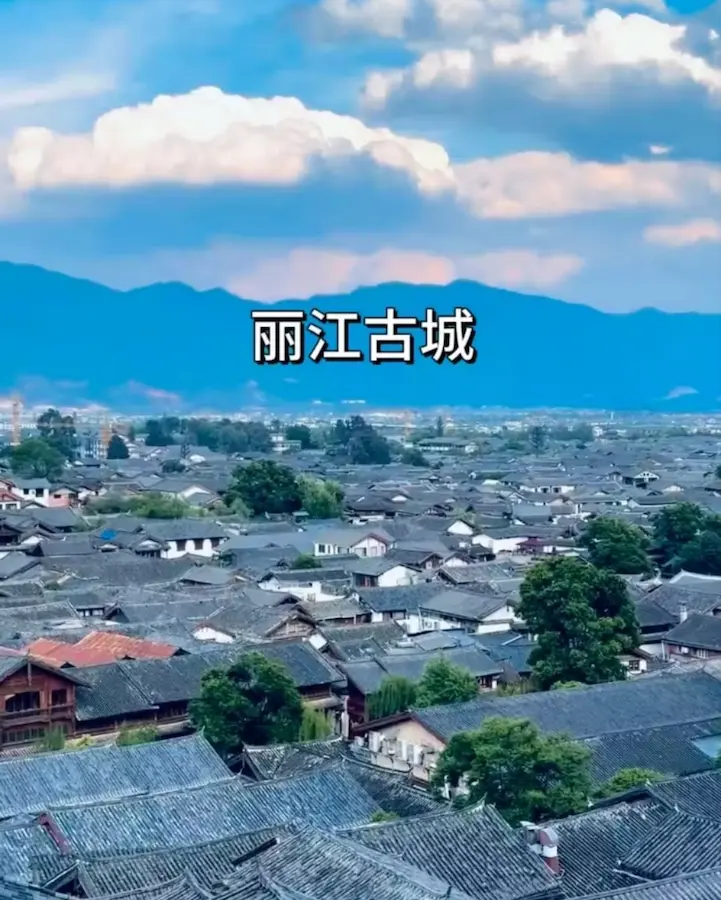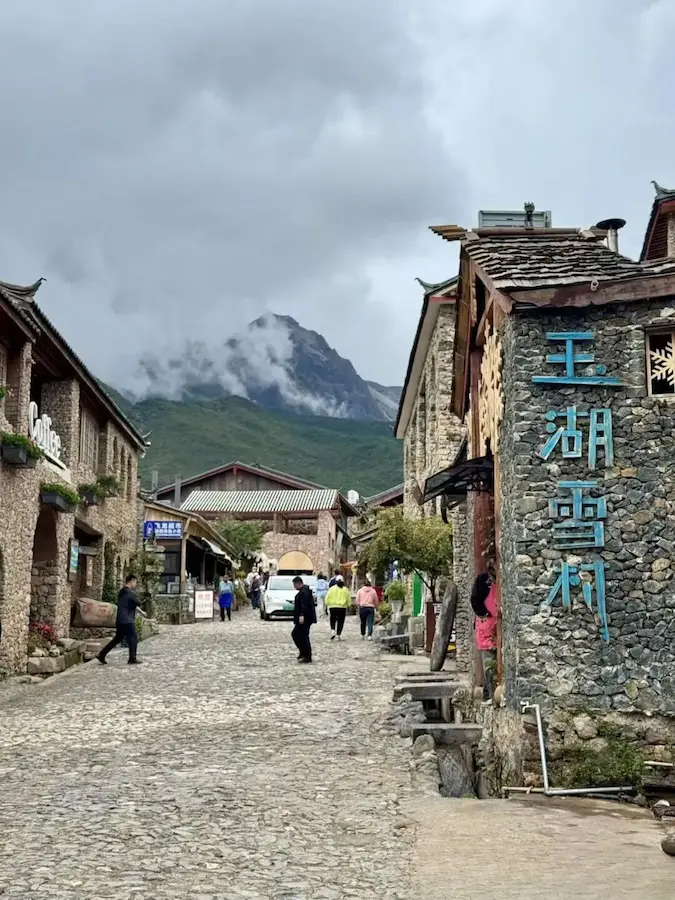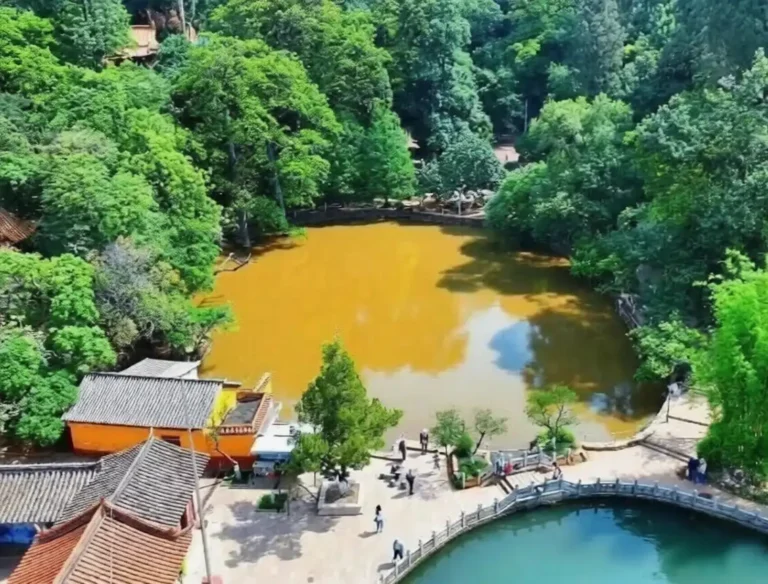
Blue Moon Valley Lijiang, Yunnan China — Complete 2026 Travel Guide
You step off the bus. The air is thinner here — crisp, alpine, carrying a faint chill off the glacier. Then you see it.
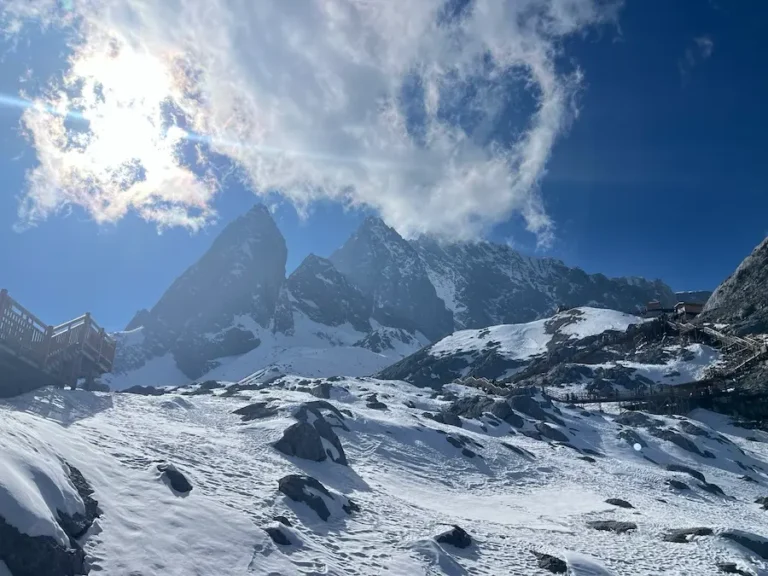
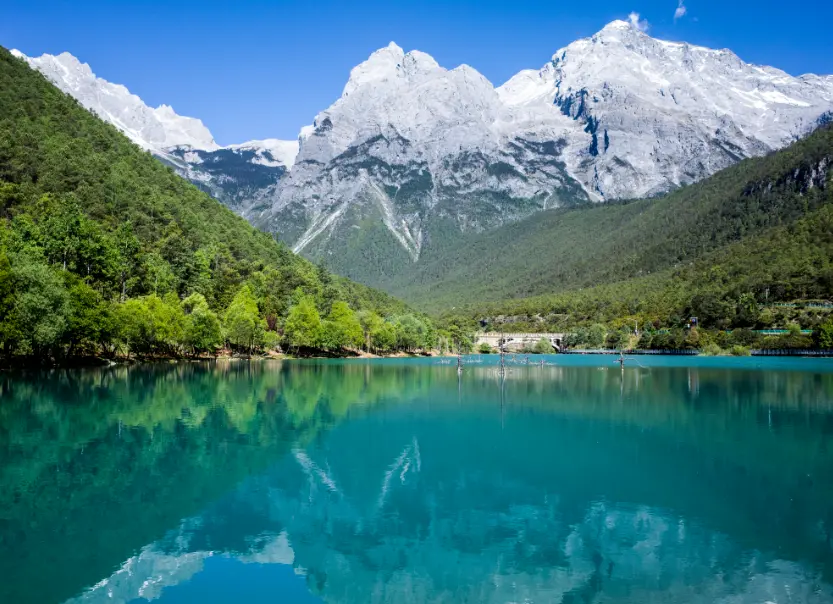
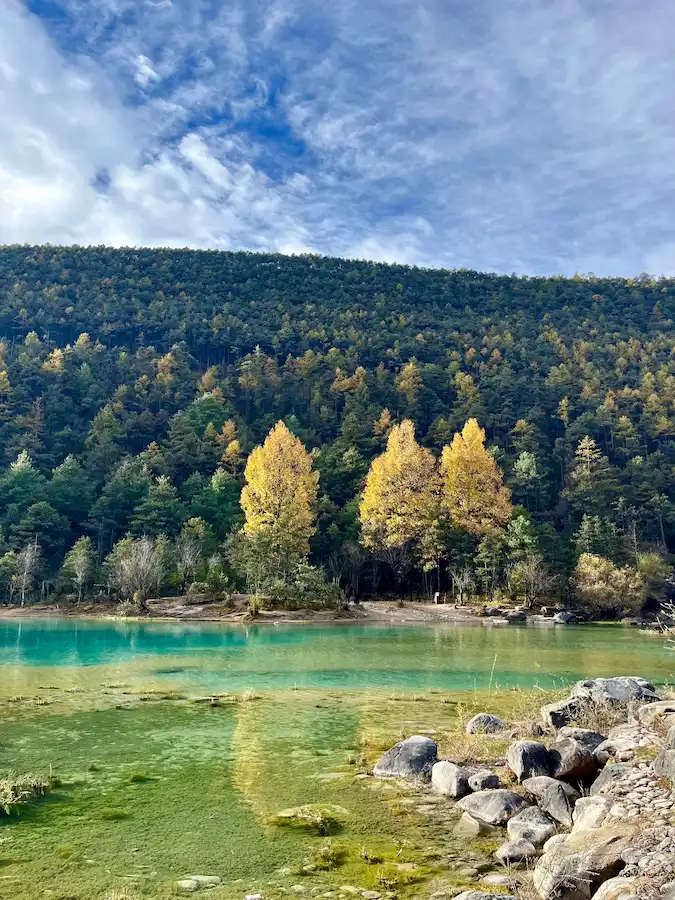
Water the color of turquoise glass. Not one shade but a dozen: pale aquamarine near the shore, deepening to sapphire where the lake runs deep, then breaking into milky white where it tumbles over limestone terraces. Behind it all, Jade Dragon Snow Mountain rises like a wall of snow and granite — thirteen peaks, one after another, vanishing into cloud.
This is Blue Moon Valley. It sits at 2,900 meters (9,500 feet) in Yunnan province, at the foot of one of China’s most sacred mountains. Photos do something to you — they make you book a ticket. But they don’t tell you how to get here without wasting money, which bus stop to skip, or why that perfect blue disappears on the wrong afternoon.
This guide covers all of it.
- First, Understand This: Blue Moon Valley Is Not a Standalone Park
- Blue Moon Valley Tickets & Fees (2025/2026)
- How to Get to Blue Moon Valley from Lijiang Old Town
- Blue Moon Valley and Jade Dragon Snow Mountain: How to Visit Both
- The 4 Lakes Walking Route
- Blue Moon Valley Weather & Best Time to Visit
- Blue Moon Valley Altitude & What to Expect
- Tourist Traps to Skip at Blue Moon Valley
- Blue Moon Valley FAQ & Quick Checklist
First, Understand This: Blue Moon Valley Is Not a Standalone Park
A lot of people search “Blue Moon Valley tickets” thinking it is a separate attraction with its own gate. It is not.
Blue Moon Valley sits inside the Jade Dragon Snow Mountain Scenic Area. You cannot visit the valley without entering the larger scenic area first. There is no separate ticket booth for the lakes, and no independent entrance. This is the single most important thing to know before you go — it determines everything about your budget and your route.
The valley was originally called White Water River (Baishui He). The name came from the riverbed: white marble and limestone fragments that made the rushing water look pale from a distance. Later, someone noticed the crescent-shaped valley and its unreal blue lakes looked exactly like the “Blue Moon Valley” described in James Hilton’s 1933 novel Lost Horizon. The name stuck. Today, when travelers talk about Blue Moon Valley in China, this is the place they mean.
Blue Moon Valley Tickets & Fees (2025/2026)
Since the valley has no separate ticket, your costs break down like this:
- Scenic Area Entry Fee (Mountain Entrance Fee): 100 RMB (approx. 14 USD) per person. Half-price with a student ID. This is mandatory — it unlocks the entire Jade Dragon Snow Mountain zone, including Blue Moon Valley.
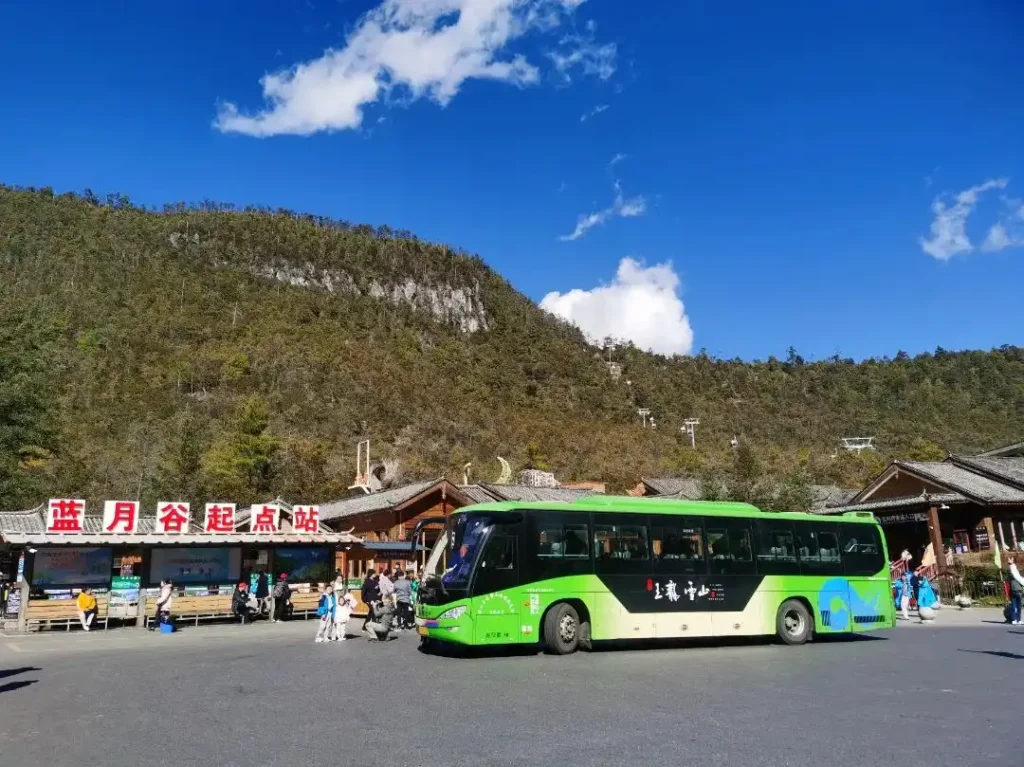
- Internal Shuttle Bus: 20 RMB (approx. 3 USD) per person, round trip. Also mandatory. This bus moves you from the Visitor Center to the lakes and back. Private cars cannot drive inside the park.
Total minimum cost to reach Blue Moon Valley: 120 RMB (approx. 17 USD).
If you also want to ride a cable car up the mountain, here is what each one adds:
- Glacier Park Cable Car (Big Cable Car) — goes to 4,506 m / 14,783 ft: 140 RMB (approx. 20 USD). Tickets are limited daily and must be booked up to 7 days in advance via the “Lijiang Tourism Group” mini-program. Hardest to get.
- Spruce Meadow Cable Car (Small Cable Car) — goes to a highland meadow at ~3,200 m: 60 RMB (approx. 8.50 USD). Easier to book, gentler on the body.
- Yak Meadow Cable Car (Middle Cable Car) — 65 RMB (approx. 9 USD). Note: this one was closed for renovation in early 2026. Check before you go.
There is also an electric cart inside Blue Moon Valley for 50 RMB (approx. 7 USD). You do not need it. The shuttle bus already drops you at the lakes. The cart just moves you along a flat boardwalk you can walk in 2–3 hours. More on that later.
How to Get to Blue Moon Valley from Lijiang Old Town
Every route starts at the Jade Dragon Snow Mountain Visitor Center. Private cars, ride-hailing cars, and taxis all stop there. From the Visitor Center, you transfer to the park’s internal green shuttle bus — the only vehicle allowed beyond that point.
By Public Bus (Bus 101 Snow Mountain Express)
Board near Zhongyi Market at the edge of Lijiang Old Town. Fare: 15 RMB (approx. 2 USD) per person, one way. The ride takes roughly one hour. Buses run from about 7:00 AM to 4:00 PM — one seat per person, extra departures in peak season. This is the cheapest way, and it works perfectly fine.
By Shared Ride or Taxi
Shared vans and SUVs gather around the old town entrances. Expect 30–40 RMB (approx. 4–6 USD) per person. A private DiDi or taxi costs about 80–110 RMB (approx. 11–16 USD) one way and takes around 40 minutes. More flexible, especially if you do not want to line up for the bus at 7 AM.
By Group Day Tour
Two common packages:
- Spruce Meadow pure-play tour: 200–260 RMB (approx. 29–37 USD) — includes entry fee, cable car, shuttle bus, round-trip transport, a down jacket rental, oxygen canister, and lunch.
- Glacier Park pure-play tour: 380–480 RMB (approx. 54–69 USD) — same inclusions but with the big cable car ticket secured. Many travelers book this just to guarantee a cable car slot they could not grab on their own.
Pick a “pure-play” tour — it means no shopping stops. Always confirm before paying.
A quick heads-up: the Snow Mountain Sightseeing Train (light rail Line 1) suspended operations in February 2026 due to low ridership. Do not factor it into your plans. Bus 101, shared rides, and tours remain reliable options.
⚠️ The One Bus Stop That Trips Everyone Up
When you board the green shuttle bus at the Visitor Center, the onboard announcement will call out “Blue Moon Valley” as a stop. Do not get off.
That stop is the starting point for the electric cart route. If you step off there, you are 4.8 km (3 miles) from the actual lakes. Your choices become: walk a long stretch of road, or pay 50 RMB (approx. 7 USD) for a golf cart you never needed.
Stay on the bus for one more stop: Shuiyuege (Water Moon Pavilion). Step off there. The turquoise water is a two-minute walk away. This single piece of advice has saved more tourists more money than anything else in this guide.
Blue Moon Valley and Jade Dragon Snow Mountain: How to Visit Both
The two are inseparable — literally. Blue Moon Valley below Jade Dragon Snow Mountain draws its water from glacial melt, and the mountain looms over every photo you take. The question is how to combine them in a single day. Here are three ways.
Option A — Easy & Photogenic: Spruce Meadow + Blue Moon Valley
Take the Spruce Meadow cable car in the morning. You will walk through a spruce forest that opens onto a high-altitude meadow with the snow mountain in full view. By midday, ride back down, walk 10 minutes to the Shuiyuege shuttle stop, and spend the afternoon strolling the lakes. Gentle pace. Good for families. Total: 180 RMB (approx. 26 USD) including entry and both rides.
Option B — Hardcore & Iconic: Glacier Park Cable Car + Blue Moon Valley
Book the earliest cable car slot you can get. You will ascend to 4,506 meters, walk the glacier viewing platforms, then descend and head straight to the lakes. This packs a lot of altitude change into one day — the thin air will slow you down. But if climbing Jade Dragon Snow Mountain is the reason you came to Lijiang, this is the combo. Total: 260 RMB (approx. 37 USD).
Option C — Minimalist: Blue Moon Valley Only
Skip the cable cars entirely. Pay the entry fee and shuttle bus — 120 RMB (approx. 17 USD) — and go straight to Shuiyuege. The mountain is your backdrop the whole time. You do not need to climb it to feel its scale. This option is underrated.
Bonus: Zhang Yimou’s Impression Lijiang outdoor spectacle performs right by the Visitor Center. Tickets: 280 RMB (approx. 40 USD) for standard seats, 346 RMB (approx. 49 USD) for VIP. Showtimes are typically around 11:10 AM and 1:30 PM. With Option A you can do Spruce Meadow in the morning, catch the midday show, then hit the lakes — a perfectly paced day.
The 4 Lakes Walking Route
From Shuiyuege a flat wooden boardwalk hugs the valley floor. Four lakes connect in sequence, fed by the same glacial stream. Walk from upstream to downstream — it is a gentle descent the whole way.
White Water Terrace (Baishuitai) — Milky travertine steps hold shallow pools of pale blue-green water. The mineral formations look almost sculptural. Fewer people stop here, which makes it a good warm-up shot.
Jade Liquid Lake (Yuye Hu) — The bluest of the four. On a clear morning the water is so saturated it looks poured from a paint can. The mountain reflection fills the entire surface. This is where most of those viral photos come from.
Mirror Pond Lake (Jingtan Hu) — Small, still, and true to its name. Crouch low with your phone. Put the lens near the water’s edge. You will catch a perfect double: the snow peak above and its mirror image below. Bridal parties crowd this spot for a reason.
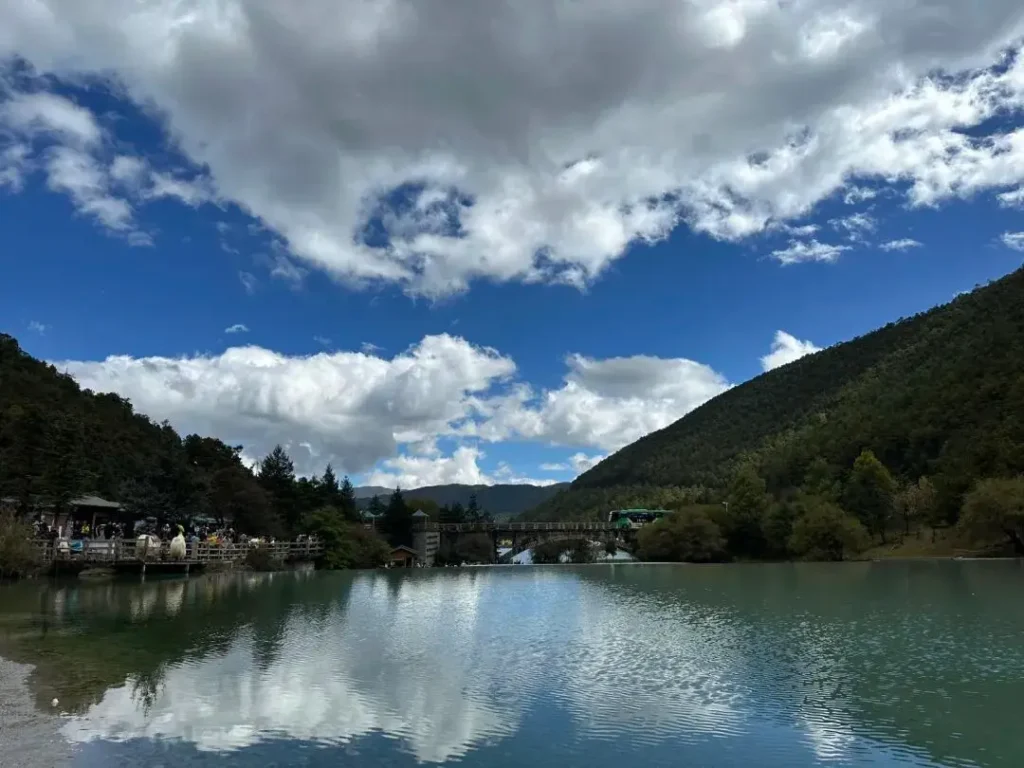
Blue Moon Lake (Lanyue Hu) — The namesake. Shaped like a crescent, with a stone arch bridge crossing one section. Stand opposite the bridge and frame the mountain through the arch — classic composition. This is the heart of the valley of Blue Moon.
Wave-Listening Lake (Tingtao Hu) — The final pool. Water spills over a stone dam at the far end, creating a low, steady rush. Sit on the wooden deck for a few minutes. The sound is the kind of white noise you wish you could record.
The full walk takes 2–3 hours at a leisurely pace. The path is flat. Strollers work. If you want to escape the crowd, look for a narrow stone footpath on the opposite bank — almost always empty, with a different angle on the mountain.
Blue Moon Valley Weather & Best Time to Visit
That famous blue? It lives and dies by the sun. Same lake, same angle — on a sunny day it glows Tiffany blue; under cloud cover it goes flat gray-green. Check the forecast.
By season:
- Autumn (Sept–Nov): The sweet spot. Dry air, clear skies, deep saturated water. Fewer domestic tourists than summer. This is the window to aim for.
- Winter (Dec–Feb): Dry and cold. The mountain wears its thickest snow. The lakes are quiet. Bundle up and you will have stretches of boardwalk almost to yourself.
- Spring (Mar–May): Variable weather but wildflowers start appearing along the paths. Sunny days deliver.
- Summer (June–Aug): Rainy season. Heavy rain can wash sediment into the lakes and turn them milky white within hours. If summer is your only option go early in the morning — before the afternoon clouds roll in.
By time of day: 9:00–11:00 AM is the golden window — soft light, vivid water, manageable crowds. 2:30–4:00 PM gives you gentle backlight for portraits. Avoid noon. The glare flattens everything.
For a broader look at regional travel windows, see this guide to the best time to visit Yunnan — it covers seasonal patterns across the province so you can plan a longer trip around the right weather windows.
Blue Moon Valley Altitude & What to Expect
Blue Moon Valley altitude ranges between 2,800 and 2,900 meters (9,200–9,500 feet). For most people this sits below the threshold for serious altitude sickness. You might notice the thinner air when climbing stairs or walking uphill. Move slower than usual. Drink water. You will adjust within an hour or two.
If you are prone to headaches or flying in from sea level the same day, a small oxygen canister is cheap insurance. Buy one at a pharmacy in Lijiang Old Town for 15–20 RMB (approx. 2–3 USD). Inside the scenic area the same canister costs 60 RMB (approx. 8.50 USD). The markup is pure geography.
For a deeper dive into how elevation affects your body in this city and surrounding mountains, read our full breakdown of altitude in Lijiang — it covers symptoms, prevention, and what normal acclimatization looks like.
Sun protection is not optional. The plateau sun is deceptive — a cool breeze off the glacier masks how strong the UV actually is. SPF 50+, sunglasses, a hat. Reapply after an hour. You are essentially standing on a reflective blue mirror.
Water safety: That blue water is glacier runoff. Temperature hovers just above freezing. Do not wade in, do not let kids splash at the edge. The rocks are slick. A slip here is not a refreshing dip — it is a hypothermia risk.
If you are spending more days in the region, Tiger Leaping Gorge is another world-class Yunnan hike about two hours from Lijiang — one of the deepest river gorges on earth and a strong addition to any Yunnan itinerary.
Tourist Traps to Skip at Blue Moon Valley
The electric cart (50 RMB / 7 USD). The boardwalk is flat, scenic, and takes about two hours. Paying to ride past it in a golf cart makes no sense unless you have limited mobility. Multiple first-hand accounts say the same thing: “The walk is short. Save your money.”
“Free” souvenir photos. Near the electric cart drop-off attendants wave you over for a “free photo.” What you get: one blurry thumbnail print, free. What they then sell you: a 7-inch version for 20 RMB (approx. 3 USD). If you do not want your photo sitting in a stranger’s collection you can negotiate — 10 RMB usually works. Or just say no and use your own phone.
Oxygen canisters inside the park (60 RMB / 8.50 USD). Same product, triple the price of Lijiang Old Town pharmacies. Buy before you leave the city.
Yak photo ops. White yaks draped in Naxi-style woven saddles stand by the shore. They charge for photos. The scenery behind them — free and better — is the same lake you already paid to see.
For another classic Jade Dragon Snow Mountain reflection shot closer to town, Black Dragon Pool Park in Lijiang delivers a postcard-perfect mirror effect with a traditional pagoda framed against the mountain.
Blue Moon Valley FAQ & Quick Checklist
Do I need a separate ticket for Blue Moon Valley?
No. The 100 RMB scenic area entry fee covers it. There is no extra charge at the lakes.
Is Blue Moon Valley wheelchair or stroller accessible?
Yes. The boardwalk is flat, wide, and runs the full length of the valley. The shuttle bus has space for folded strollers.
Can I fly a drone?
No. The entire Jade Dragon Snow Mountain scenic area — including Blue Moon Valley — is a no-fly zone. The same goes for Lijiang Old Town. Security patrols enforce it. Leave the drone packed away.
How long do I need?
Two to three hours for the lakes alone. A full day if you combine with a cable car or the Impression Lijiang show.
What should I wear for photos?
Solid, bright colors. White, cream, red, yellow — all pop hard against turquoise water. Dark blue or green will blend into the background. A light jacket or windbreaker belongs in your bag no matter the forecast.
Before-you-go checklist:
- Sunscreen (SPF 50+), sunglasses, hat
- Water bottle — fill it in town
- Snacks (chocolate, granola bar — food inside is overpriced and limited)
- Oxygen canister from a Lijiang pharmacy (only if you are concerned about altitude)
- Power bank — the lakes will drain your phone battery
- Light jacket or windbreaker even on sunny days
- Non-slip shoes — the boardwalk gets slick after rain
Stand at Wave-Listening Lake long enough and the sound of rushing water starts to erase every noisy thought you carried up the mountain. The snow peak sits there, silent. The water shifts from sapphire to aquamarine as a cloud passes. You pull out your phone, take one more photo, and realize it still does not look quite like the real thing.
Some shades of blue you just have to see for yourself.
Ke Ping — Founder, Yunnan Travel Tips
Certified China Travel Specialist · Certificate details
This guide can become your real trip. Instead of figuring out complicated logistics alone, let me and our team build your perfect Yunnan journey — from sunrise at Meili Snow Mountain to tea tasting in ancient Dali.
📋 Plan My Yunnan Trip