Lijiang Old Town Yunnan: Best Things to Do in the Old Town of Lijiang, China
6:30 in the morning. The cobblestones are still wet — not from rain, but from snowmelt trickling down from Jade Dragon Snow Mountain, following canals carved eight centuries ago. The whole of Lijiang Old Town is still half-asleep. You walk toward Sifangjie, the central square, hearing nothing but your own footsteps and the creak of the Water Wheel up ahead. A Naxi grandmother crouches in her doorway watering marigolds. She looks up. Smiles. The air smells of charcoal and freshly baked Lijiang baba flatbread.
This is the Old Town of Lijiang, China — not the postcard version crammed with tour groups, not the bar street with speakers cranked to eleven. This version is quieter. It belongs to water and morning light and the twenty thousand Naxi people who still call it home. If you are planning a longer trip, check out our Yunnan travel guide to connect the dots across the province.
- Lijiang Old Town vs Lijiang Ancient Town — Same Place, Three Names
- Lijiang Old Town Map & Orientation — Finding Your Way
- Lijiang Old Town Entrance Fee & Tickets Explained
- Top Things to Do in Lijiang Old Town
- How to Tour Lijiang Old Town — Self-Guided or Hire a Guide?
- Shuhe Ancient Town — Lijiang's Quieter Old Town
- Where to Stay, What to Eat & When to Visit Lijiang Old Town
- Lijiang Old Town FAQ & Quick Checklist
Lijiang Old Town vs Lijiang Ancient Town — Same Place, Three Names
Let’s clear up the confusion before you go.
Lijiang Old Town, Lijiang Ancient Town, and Dayan Old Town (大研古镇) — are they the same place?
Yes. And no.
The UNESCO World Heritage site called “Lijiang Old Town” is actually a cluster of three settlements: Dayan (the main old town), Shuhe Ancient Town, and Baisha Ancient Town. When people talk about “Lijiang Old Town,” 95% of the time they mean Dayan. That’s where the Water Wheel is. That’s where the lantern-lit bar street winds along the canals. That’s what you see in every travel photo. The Old Town of Lijiang spans roughly 3.8 square kilometers within Dayan alone — small enough to walk across, dense enough to get lost in for hours. If you need more context on the region, our Lijiang China overview covers the broader area beyond the old town.
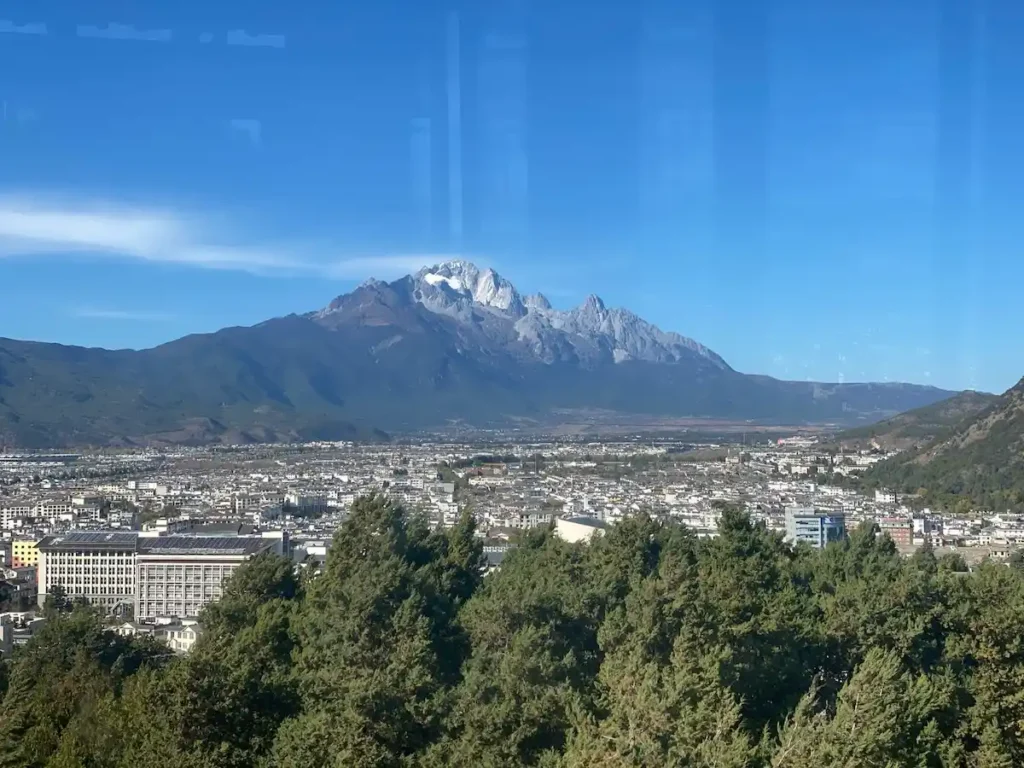
So here’s the short version: Lijiang Old Town = Lijiang Ancient Town = Dayan. Add a geographic anchor and you get Yunnan Lijiang Old Town — a cobbled maze perched at 2,400 meters in southwest China, right beneath the snow-capped peak of Jade Dragon Snow Mountain. (Curious about how the altitude might affect you? We have a detailed breakdown at altitude of Lijiang.)
Lijiang Old Town Map & Orientation — Finding Your Way
Here is something you won’t hear about many Chinese ancient towns: Lijiang Old Town was never built with walls. Not torn down. Never constructed. The Naxi chieftains who ruled this region for 470 years made a deliberate choice — the mountains would be the walls. Lion Hill to the west. Elephant Hill to the north. Jade Dragon Snow Mountain looming to the south.
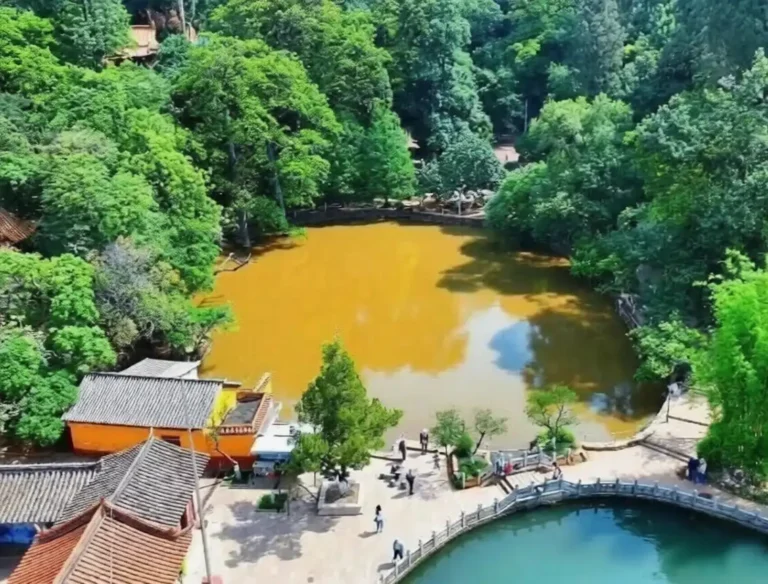
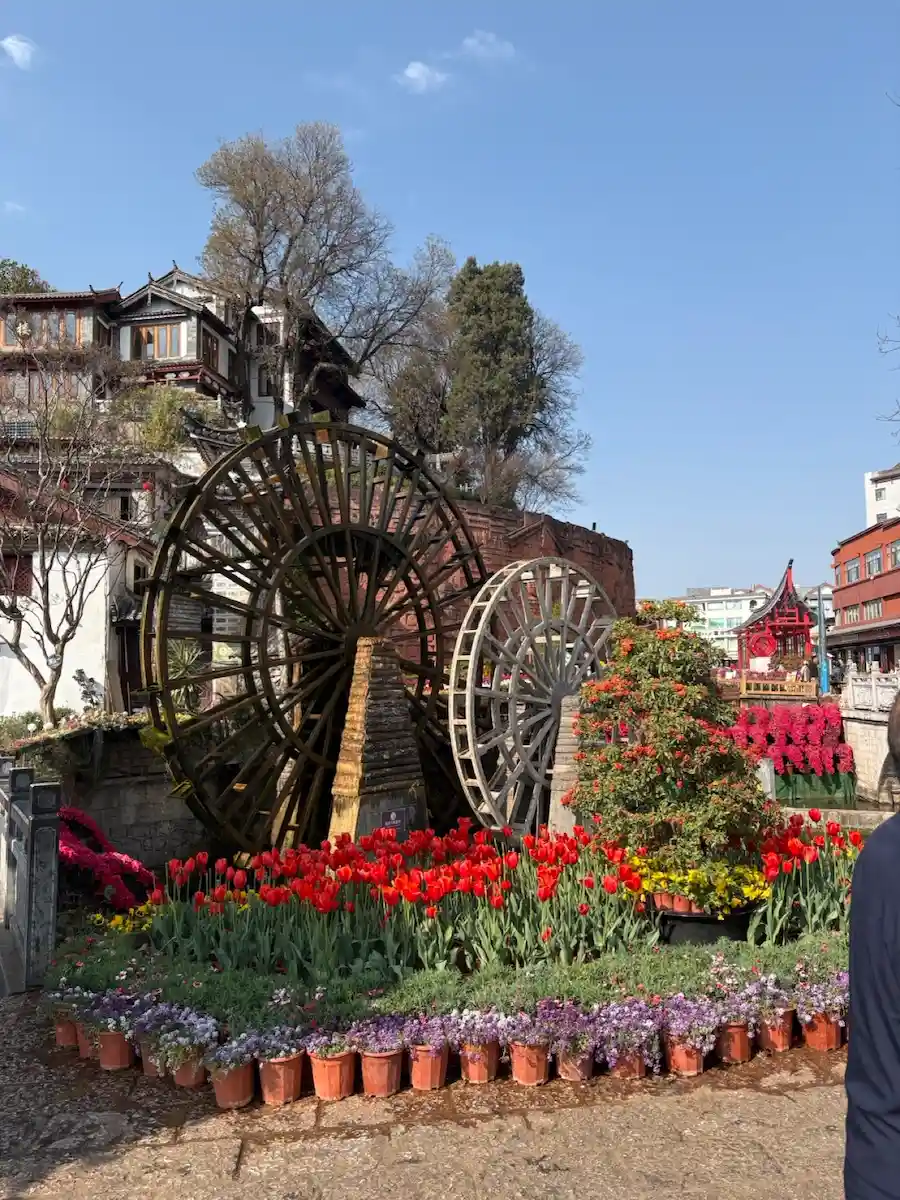
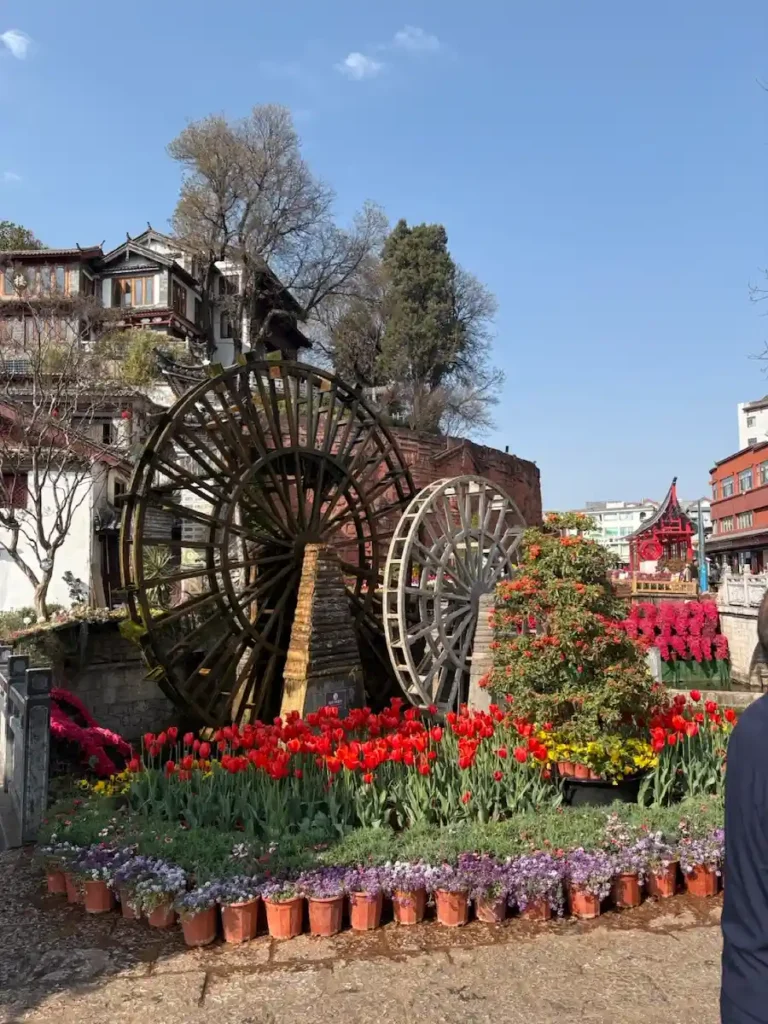
Instead of fortifications, they built water. Spring water from Black Dragon Pool Park flows to the Water Wheel, where it splits into three arteries — the East River, Middle River, and West River. Those three then branch into dozens of channels that snake past every doorstep in town. Over the centuries, more than 350 stone bridges have been stitched across these waterways. The result is a pedestrian-only labyrinth where streets run parallel to streams and canals crisscross beneath your feet.
This gives you the simplest navigation rule you will ever need: follow the water downstream to enter the old town; walk against the current to find your way out. Lost? Find a canal, turn around, and walk against the flow. It works. Every single time.
If you are looking for a map of Lijiang Old Town, most hotels hand out free sketch maps at check-in. They are rough — deliberately so. Part of the experience is surrendering to the streets.
Lijiang Old Town Entrance Fee & Tickets Explained
Let’s answer the question directly: walking into Lijiang Old Town is free. No ticket booth. No turnstile. You just walk in through the North Gate, South Gate, or any side entrance near Zhongyi Market.
There is, however, an “Ancient Town Maintenance Fee.” As of August 1, 2025, here is what changed:
- Price dropped: 50 CNY per person (about 7 USD), down from the old 80 CNY rate.
- Validity extended: one full year — 365 days of unlimited entry across all three old towns: Dayan, Shuhe, and Baisha.
- How to pay: scan a QR code at any major entrance checkpoint, or pay in advance through the official mini-program and keep a screenshot of the receipt.
Eight groups are exempt: children under 1.2 meters, adults 60 and above, active-duty military personnel, certified individuals with disabilities, national model workers, and a few other categories.
In practice, casual visitors wandering Dayan and Shuhe are rarely checked. But if you enter certain heritage buildings within Shuhe, or encounter a spot inspection, you will need to show proof of payment. Fifty yuan for a whole year? Reasonable.
Two standalone attractions inside the Old Town of Lijiang require separate tickets:
- Mu Mansion: 40 CNY (about 5.7 USD). Online platforms usually knock off 2–5 CNY.
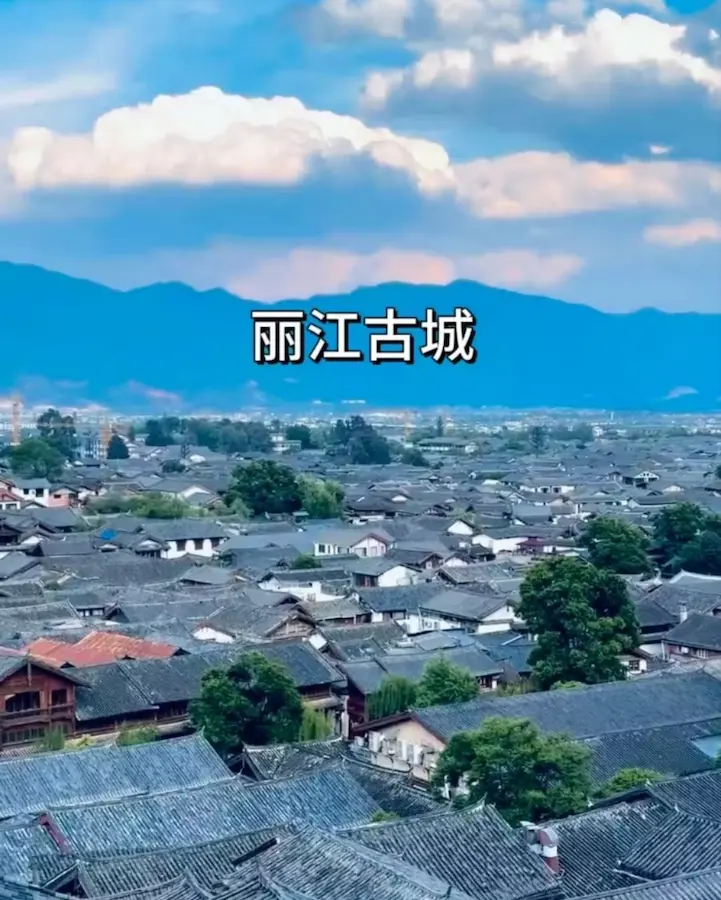
- Lion Hill & Wangu Pavilion: 35 CNY (about 5 USD). The pavilion sits on Lion Hill’s peak — the single best vantage point for a panoramic view of Dayan’s rooftops with Jade Dragon Snow Mountain in the background.
Top Things to Do in Lijiang Old Town
Do not treat Lijiang Old Town like a checklist of attractions. It is a walking experience. Follow a route, not a list.
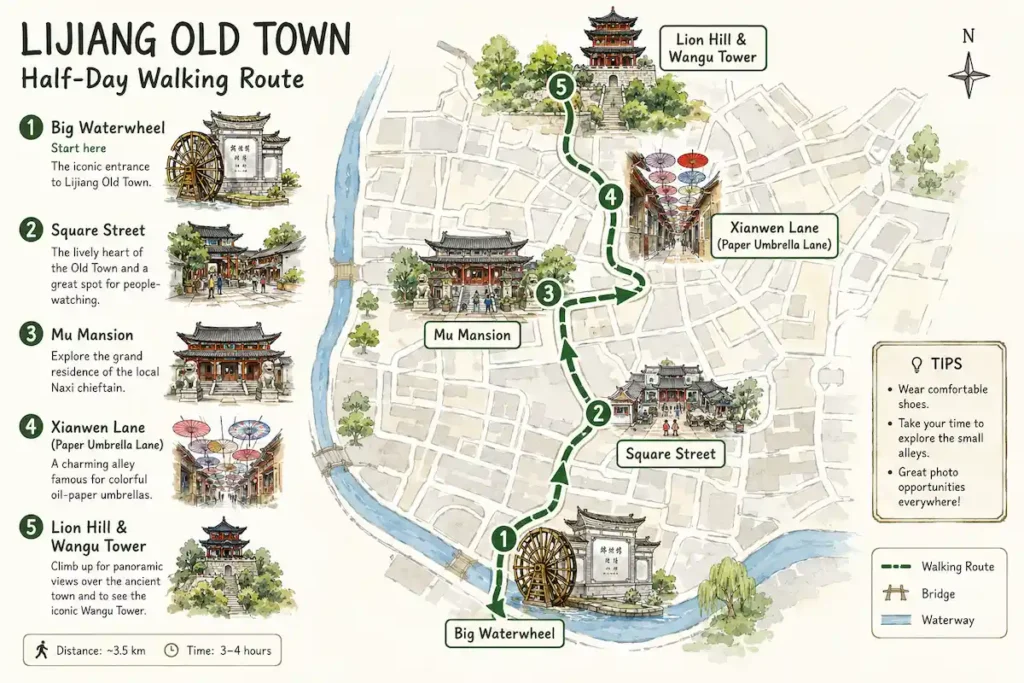
The Half-Day Walking Route (3.5–4 Hours)
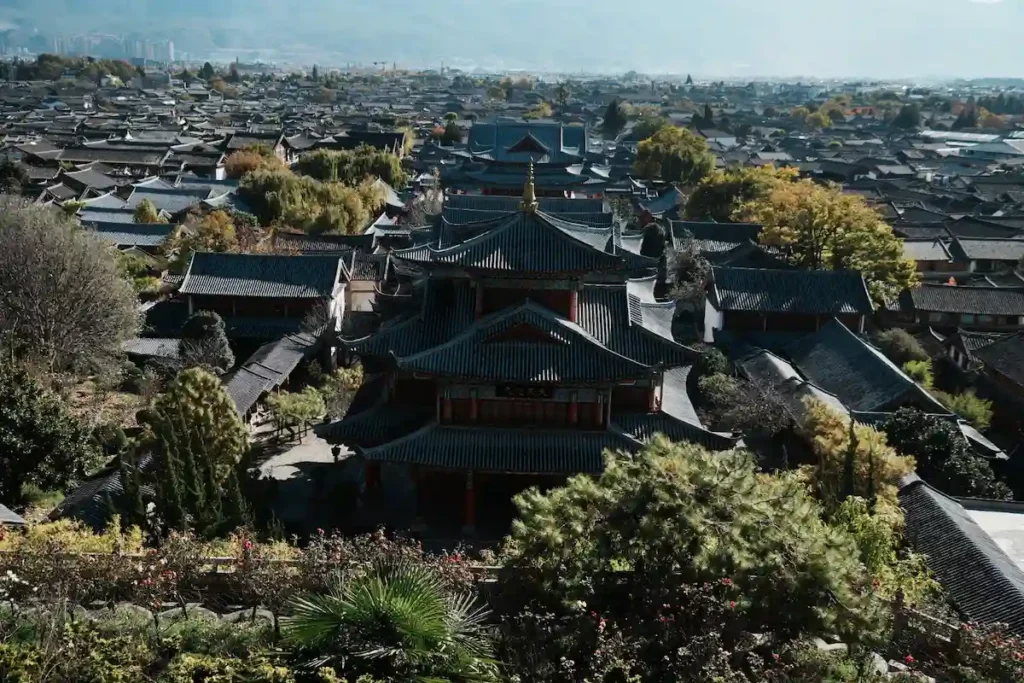
Start at the Water Wheel at the North Gate → follow East Street to Sifangjie (Square Street), the old town’s pulsing heart where all alleyways converge → head down Qiyi Street past Guamenkou → arrive at Mu Mansion. Spend about an hour here. The mansion spans 46 mu (roughly 3 hectares), with a central axis stretching 369 meters. Locals call it “the Forbidden City of Yunnan” — a fitting nickname for the seat of Naxi chieftain power.
Exit Mu Mansion and step into Xianwen Lane. Look up. The entire alley is canopied with hand-painted oil-paper umbrellas in red, blue, and gold, swaying gently in the breeze. From here, head uphill along Xinhua Street or take the quieter Lion Hill footpath to Wangu Pavilion. Climb to the top. The view: grey-tiled rooftops rolling like waves, and the snow peak of Jade Dragon Snow Mountain anchoring the horizon.
Pure walking time: about 1.5 to 2 hours. With stops at Mu Mansion and Wangu Pavilion, budget 3.5 to 4 hours total.
Along the way, pause at Great Stone Bridge — a double-arch bridge built during the Ming Dynasty. On a still day, the reflection in the water below is mirror-perfect.
Visit Mu Mansion — The “Forbidden City of Yunnan”
If you only pay to enter one place in Lijiang Old Town, make it Mu Mansion. The Mu clan ruled丽江 for over 470 years across the Yuan, Ming, and Qing dynasties. The architecture fuses Naxi, Bai, Tibetan, and Han Chinese styles — carved beams, staggered courtyards, gardens woven into palace halls. Climb to the Sanqing Pavilion at the rear of the complex. From there you can look down across the entire Old Town of Lijiang, China. The view alone justifies the 40 CNY ticket.
Lijiang Old Town at Night — Lanterns, Bars & Live Music
When dusk settles over Lijiang Old Town, the energy shifts. Red lanterns flicker on. The canals catch their glow. Around 7:00 PM every evening, a bonfire is lit on Sifangjie Square. Naxi grandmothers — some in traditional blue aprons embroidered with the “seven-star” pattern — start dancing in a circle. Within minutes, strangers from a dozen countries join in. Nobody cares if your steps are wrong. (The bonfire dancing runs from 19:00 to 20:30 daily, rain cancels.)
After the fire dies down, you have two options. One: follow the lantern-lit bar street along Xinhua Road, where acoustic guitar and folk ballads drift from open windows. Two: head to the Dayan Naxi Ancient Music Hall for a performance of Naxi ancient music (starts 19:30 nightly). Elderly musicians — some in their eighties — play erhu fiddles and cloud gongs. The sound is ancient, mournful, and utterly unlike anything you have heard before. UNESCO recognizes the Dongba script of the Naxi people as part of the Memory of the World register. Hearing their music feels like touching the same thread.
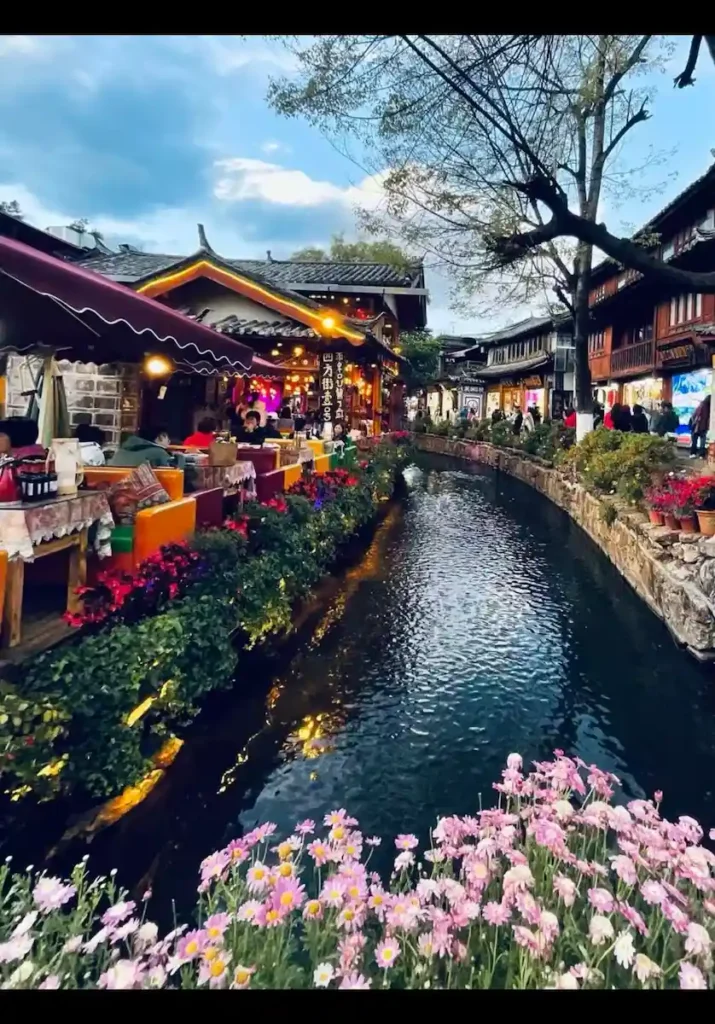
12 Free Photo Spots in Lijiang Old Town
You do not need a ticket to take great photos here. These twelve spots are all free:
- Black Dragon Pool — Enter through the west gate, walk straight to Suocui Bridge. The reflection of Jade Dragon Snow Mountain in the still water is iconic. Best at dawn.
- Water Wheel — Stand on the slope beside it and look back. Better composition than shooting head-on.
- Wenchang Palace — Rooftop views over the old town, great for sunrise.
- Dongba Graffiti Wall — Halfway up the hill to Wenchang Palace. Colorful Naxi pictographs on weathered walls.
- Great Stone Bridge — Ming Dynasty arches plus water reflection.
- Eye of Lijiang — Panoramic terrace, best at sunset.
- Dayan Flower Alley — Rainbow staircase, wish cards, artisan shops.
- Oil-Paper Umbrella Lane (Xianwen Lane) — Shoot straight up.
- Yinyu Alley — Koi-shaped lanterns “swimming” overhead.
- Baisui Fang — Classic “small bridge, flowing water, old houses” frame.
- Facing the Water Wheel, look back — Water, bridge, eaves, snow mountain in one shot.
- Sifangjie at dusk — Bonfire glow and lanterns.
How to Tour Lijiang Old Town — Self-Guided or Hire a Guide?
You can absolutely explore Lijiang Old Town on your own. The streets twist and fork and double back, but the water rule — downstream in, upstream out — will always get you home. Getting lost is half the fun. Around the next corner might be a bougainvillea bush bigger than your car, or a Naxi courtyard garden smelling of aged pu’er tea.
But if you want to understand what you are looking at — the Dongba pictographs carved above doorframes, the stories locked inside Mu Mansion, why there are no city walls — a guide transforms the same cobblestone walk into something deeper.
English-speaking guide rates:
- Half-day (2–3 hours, old town only): 350–500 CNY (about 50–71 USD)
- Full-day (8 hours, old town + Jade Dragon Snow Mountain or Shuhe): 600–900 CNY (about 86–129 USD)
Book through Viator, TripAdvisor, or Klook for vetted English private tours. On Chinese platforms like Ctrip or Meituan, filter for “English” in the local guide section. Boutique guesthouses and hotel concierges can also connect you with reliable guides.
Shuhe Ancient Town — Lijiang’s Quieter Old Town
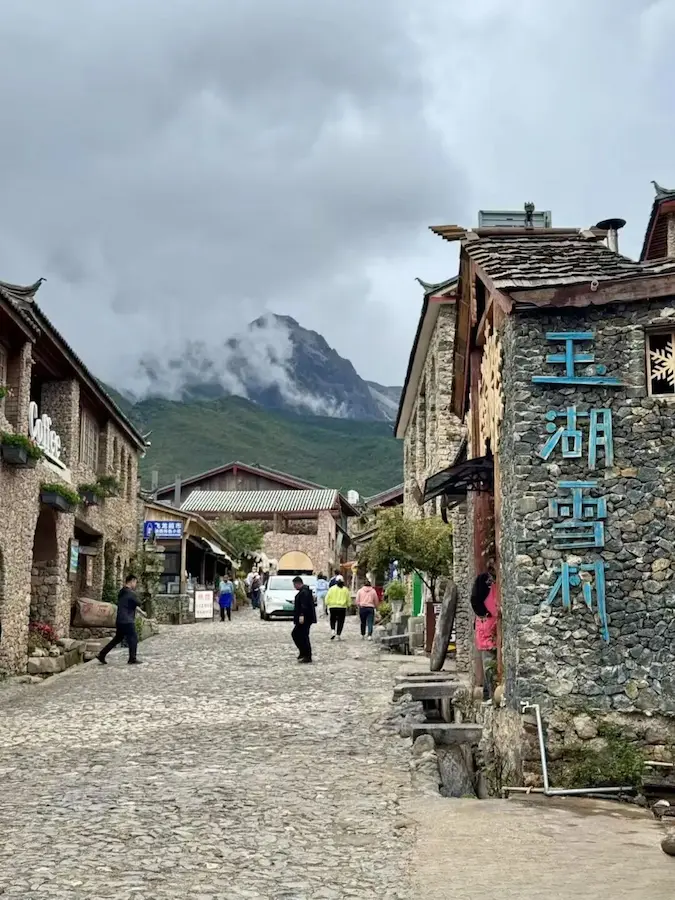
Four kilometers from Dayan sits Shuhe Ancient Town, once a crucial trading post on the Tea Horse Road. The Naxi call it “Shaowu” — the village beneath the high peak. Compared to Dayan’s bustle, Lijiang Shuhe Ancient Town feels like stepping into a different century.
Here is what to do: sit on Qinglong Bridge — a stone arch bridge built during the Ming Wanli era, four hundred years ago — and listen to the river run beneath you. Find a canalside café and drink a cup of Yunnan small-batch coffee while doing absolutely nothing. Browse leather workshops and silver smithies where artisans still make things by hand. At night, the bonfire dancing in Sifang Tingyin Square (20:00–21:00) is smaller and more local than Dayan’s version.
Entrance: no gate ticket required. But Shuhe falls within the maintenance fee zone, so keep that 50 CNY receipt handy just in case.
Where to Stay, What to Eat & When to Visit Lijiang Old Town
Sleeping Inside the Old Town — Worth It?
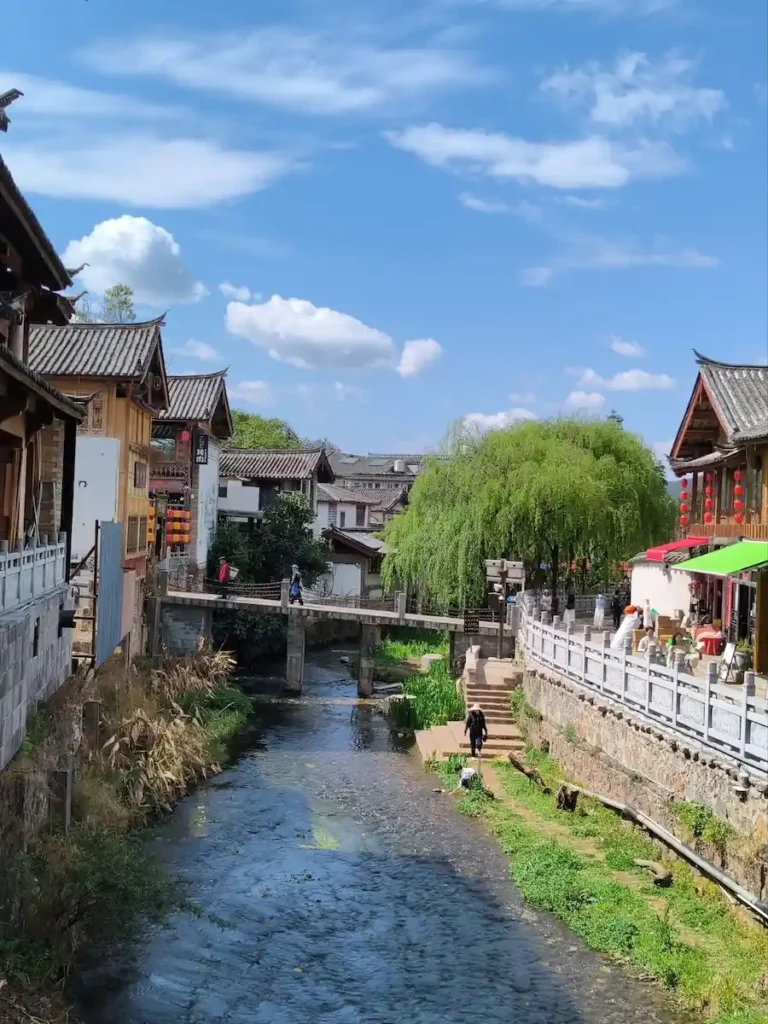
Waking up inside Lijiang Old Town means pushing open a wooden window to a sea of grey-tiled rooftops and the sound of water running through stone channels. Naxi courtyard guesthouses — built in the traditional “three houses and one screen wall” layout, gardens spilling over with flowers — are an experience in themselves.
The trade-off: cobblestone streets are merciless on suitcase wheels (the kind that snap off halfway to your guesthouse). Rooms near the bar street stay noisy until 11 PM or later. Book near the South Gate or Zhongyi Market instead — quieter, with easier access.
Staying outside the old town means lower prices but less immersion. A solid compromise: one night inside to soak up the Naxi courtyard experience, then move to Shuhe or a town hotel.
Food Worth Your Stomach Space
Yunnan cuisine can be fiery. It can also be gentle, fragrant, and deeply satisfying. Here are four dishes that work beautifully for visitors unfamiliar with Chinese food:
- Steam Pot Chicken (汽锅鸡) — Clear broth, tender chicken, zero chili. The soup is condensed from steam in a clay pot. Acceptance rate: 100%.
- Lijiang Baba (丽江粑粑) — A traditional Naxi flatbread, flaky like a savory scone. Available sweet or salty.
- Stir-fried Wild Mushrooms — Earthy, aromatic, uniquely Yunnan. Tell the kitchen: “less oil, mild or no chili.”
- Fried Rushan Cheese (大理夹沙乳扇) — Yunnan’s local dairy product, deep-fried and served with a touch of sweetness. Unusual and easy to love.
Two restaurants worth noting: Ama Yi (marble-pot fish, set in a Naxi courtyard, good hygiene standards) and Xiaoshi de Guangnian (refined Yunnan dishes with a terrace view). For something fast and cheap, the night market at Zhongyi Market delivers grilled fish, chicken feet, wild mushroom hotpot, and piles of fresh Yunnan fruit at prices that feel like a loophole in the economy.
What to skip: grilled tilapia (bones everywhere, heavy chili) and Naxi cured pork ribs (too salty and chewy for palates not raised on preserved meats).
Best Time to Visit
For a broader seasonal breakdown across the province, see our best time to visit Yunnan guide. Here is what it means specifically for Lijiang Old Town:
Spring (March–May): Flowers everywhere, comfortable temperatures. March can be windy.
Summer (June–August): Rainy season, but mostly short showers. Peak crowds in July and August. Evenings are cool (15–20°C). Summer brings the Lijiang Folk Music Festival (July 10–August 9, free live performances near the Water Wheel daily from 15:00–18:00 and 19:30–21:30) and a cultural courtyard passport challenge where visitors collect stamps for prizes.
Autumn (September–November): The sweet spot. Clearest skies. Sharpest light. Snow accumulation on the mountain starts building up. Fewer crowds than summer.
Winter (December–February): The quietest season. From October through March, you have a shot at catching “Rizhao Jinshan” — the moment when the first sunlight hits Jade Dragon Snow Mountain and turns the peak gold. Morning temperatures can drop below freezing.
Within a single day, the golden window is 6:30 to 8:30 AM — before the tour buses roll in. The streets belong to dog-walkers and street sweepers. The water in the canals runs clearest in the morning. For photography, dawn and dusk are unbeatable.
Lijiang Old Town FAQ & Quick Checklist
The Short Answers
Do I need a ticket to enter Lijiang Old Town?
Entry is free. The maintenance fee is 50 CNY (about 7 USD), valid for one year across Dayan, Shuhe, and Baisha.
How many days do I need?
Half a day covers Dayan’s highlights. Two to three days lets you explore all three old towns at a relaxed pace.
Is Shuhe worth the trip?
Yes. If Dayan feels too loud, Shuhe will probably be your favorite part of the trip.
Should I hire a guide?
Not essential. But if history and culture matter to you, a good English-speaking guide turns the same streets into a story.
Will I get lost?
Definitely. And you will definitely find your way out. Follow the water.
Is it safe?
Very. The only danger is the cobblestones. Do not wear heels.
Before You Go — Screenshot This
- Book accommodation near South Gate or Zhongyi Market (quieter, easier access)
- Download an offline map (alleyways can have spotty signal)
- Pack flat, comfortable shoes — every single road is cobblestone
- Sunscreen, hat, sunglasses (2,400m altitude, the UV does not mess around)
- Lip balm and hand lotion (the plateau air is dry)
- A light jacket — the temperature drops fast after sunset, even in summer
- Pay the maintenance fee in advance on the mini-program; screenshot the receipt
- If Jade Dragon Snow Mountain is on your plan: book the large cableway ticket at least 3 days ahead; buy an oxygen canister in town (cheaper than at the mountain)
- You won’t need much cash — WeChat Pay and Alipay cover virtually everything
The water in Lijiang Old Town still flows at the same pace it did eight hundred years ago. The grandmothers still dance in the square every evening, whether ten people show up or three hundred. The cobblestones are worn smooth from centuries of footsteps — mule caravans, silk traders, backpackers, you.
The only question that matters: when are you showing up? If you are ready to build the rest of your itinerary, our plan your Yunnan trip page has route ideas, transport tips, and itineraries that connect the dots.

Ke Ping — Founder, Yunnan Travel Tips
Certified China Travel Specialist · Certificate details
This guide can become your real trip. Instead of figuring out complicated logistics alone, let me and our team build your perfect Yunnan journey — from sunrise at Meili Snow Mountain to tea tasting in ancient Dali.
📋 Plan My Yunnan Trip