
Things to Do in Xishuangbanna: 15 Best Attractions & Rainforest Experiences
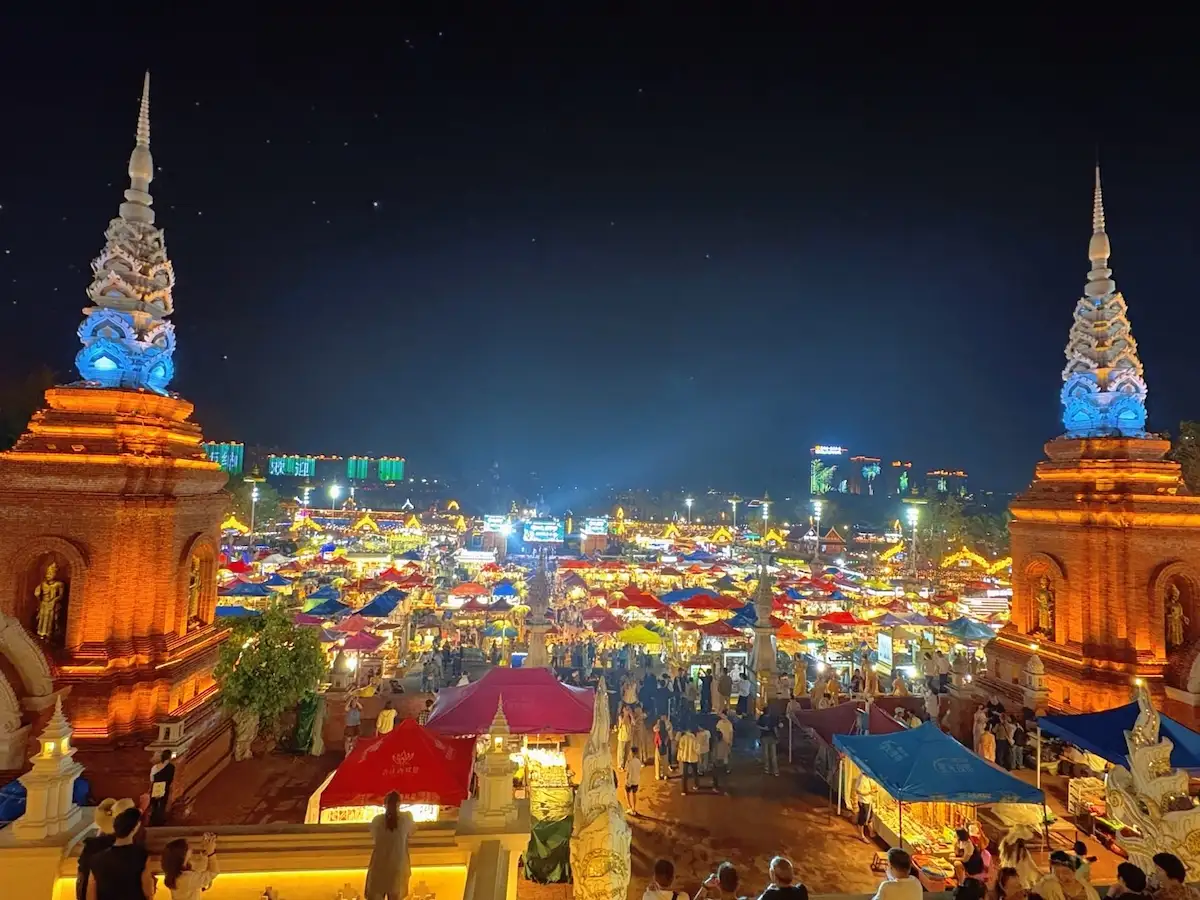
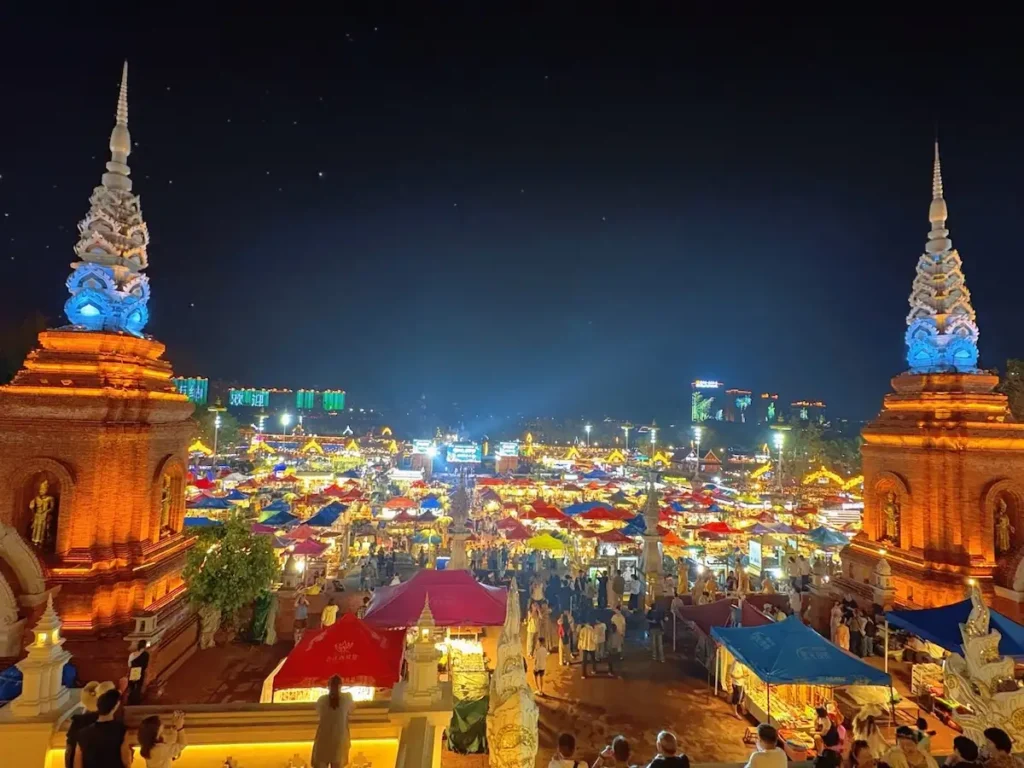
Seven in the evening, and the wind off the Lancang River still carries the day’s heat. I’m standing on the steps of the Golden Pagoda in Gaozhuang as its 66.6-meter spire lights up, one lamp at a time, while the Starlight Night Market below unfurls like an overturned galaxy — three thousand stalls spilling toward the water. The air is a tangle of chili and lime from the salad stalls, charcoal smoke from lemongrass-grilled fish, and the sweet condensed-milk smell of Lao iced coffee.
This stretch of rainforest just north of the Tropic of Cancer is more than 80% forest cover, and it’s the only place in China where you can safely see wild Asian elephants — most of the country’s last 300-plus wild elephants live here and in the surrounding area. Most travelers come for two words, “tropical China.” They stay for the tangle of rainforest, temples, night markets, and a water fight that swallows the whole city. If you’re sketching out your own list of things to do in Xishuangbanna, here are 15 I’ve already tested for you. (It slots neatly into a wider things to do in Yunnan route, too — or jump to our complete Xishuangbanna travel guide.)
- Step Into the Rainforest
- Walk Through Dai Villages and Temples
- Eat, Drink and Stroll the Night Market and the Lancang River
- Festivals and Nightlife
- My First-Hand Account: Splashed Into the New Year
- How to Plan Your Trip: Things to Do in Xishuangbanna in 3 or 5 Days
- Avoid These Mistakes in Xishuangbanna
- Xishuangbanna FAQ
- Explore More of Yunnan
- Plan Your Trip
Step Into the Rainforest
Most of the best Xishuangbanna attractions live in the green belt that rings Jinghong, the prefectural capital. If you’re ranking the top things to do in Xishuangbanna, these five come first — for the trees, the elephants, and air you can actually chew.
1. Xishuangbanna Tropical Botanical Garden
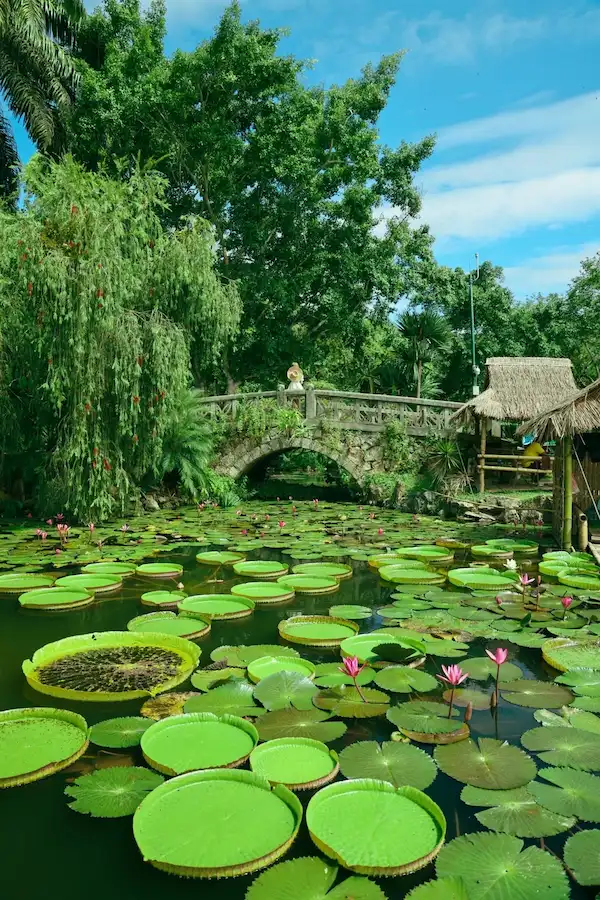
Start here, and give it a full day. The Xishuangbanna Tropical Botanical Garden — run by the Chinese Academy of Sciences — spreads across roughly 1,125 hectares and holds over 13,000 living plant species, making it the largest and richest tropical botanical garden in China. The west section is the highlight: giant water lilies strong enough to hold an adult (usually June to October, 40 kg limit, about ¥50–70 / USD 7–10 to stand on one), dancing grass that sways to music, and touch-me-nots that fold at the lightest tap. The east section is raw Xishuangbanna rainforest — strangler figs, buttress roots, and flowers blooming straight off the trunk.
Entry is ¥80 / USD 11, with the west-section shuttle at ¥50 / USD 7. Don’t skip the shuttle; the park is big enough to eat a whole day. Perfect for plant nerds, families, and anyone chasing that green-jungle photo — for most travelers, it’s the single most essential thing to do in Xishuangbanna, the one spot that earns a full day no matter how short your trip.
2. Xishuangbanna Primitive Forest Park
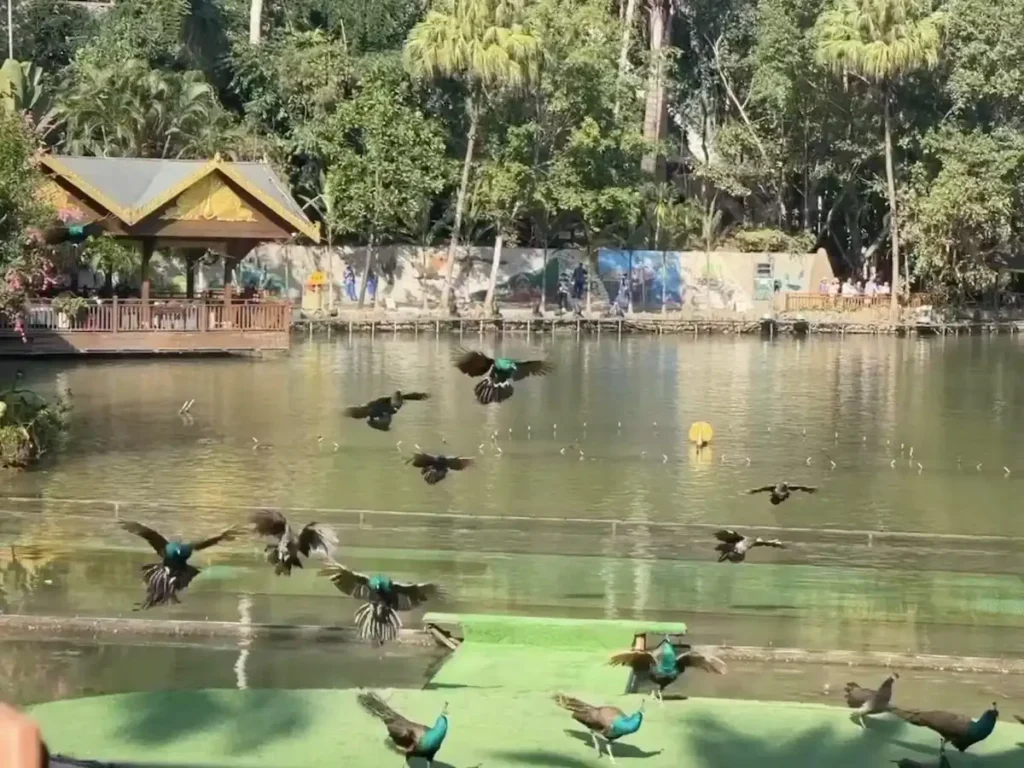
Only eight kilometers from downtown Jinghong, the Xishuangbanna Primitive Forest Park is the nearest patch of genuine jungle. Don’t let “park” fool you — it’s 98% forest cover, a shaded tropical ravine the moment you step in. The signature show is the daily peacock release, three times a day: hundreds of peacocks glide down from the hilltop onto the Golden Lake. It gets a genuine “wow” the first time. The Aini village runs free bamboo-pole dances, and the brave can try the jungle zipline.
Tickets run ¥45 / USD 6.5, with the shuttle at ¥60 / USD 9 round trip — worth it, the sights are spread out. Good for anyone short on time who still wants a hit of rainforest close to town.
3. Wild Elephant Valley
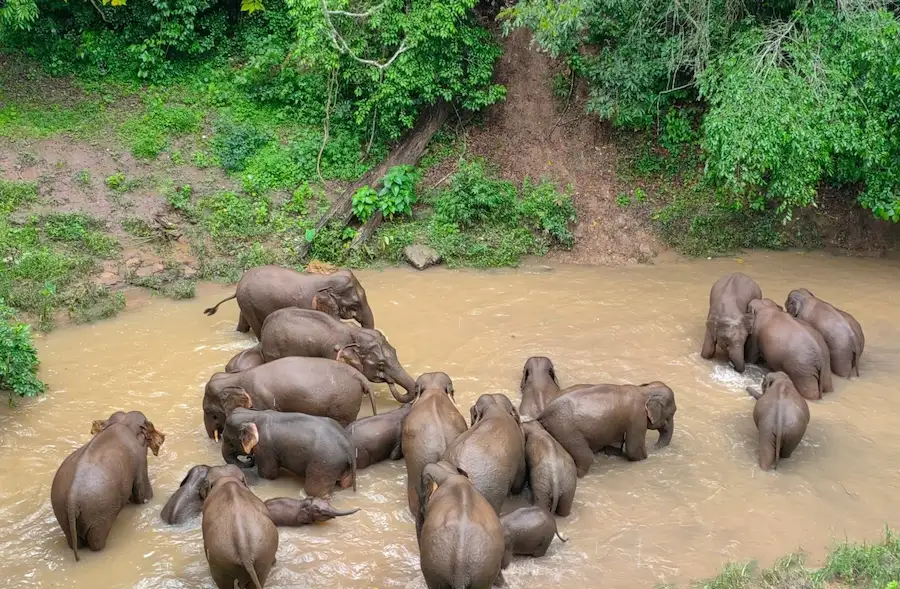
This is the only place in China where you can see wild Asian elephants up close — “can” being the honest word. A raised observation walkway runs through the canopy, right above the river valley the herds frequent. The real draw these days is the elephant education center, where you can watch rescued elephants during their daily health checks and natural behavior demonstrations, alongside the popular (though still traditional) elephant show. For something deeper, book the “jungle walk” experience and walk beside the elephants with their keepers.
Entry is ¥60 / USD 8.5, with the cable car at ¥50 / USD 7 one way. Will you actually spot a wild elephant? I’ll be straight with you in the mistakes section below.
4. Wangtianshu Rainforest
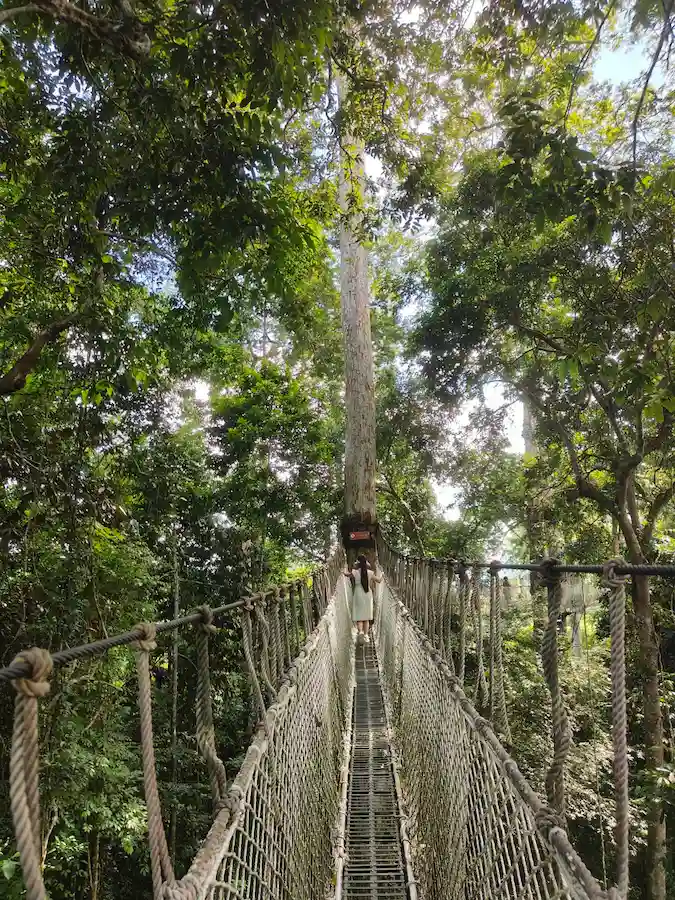
Want to see what a real tropical rainforest looks like? Come here. Wangtianshu trees climb to 80 meters, and the park strings a 500-meter canopy walkway through the treetops — Guinness-certified as the world’s highest and China’s first. Your legs will wobble. The wind in your ears is worth every step. Strangler figs, giant buttress roots, and resurrection wood line the whole route — a living textbook.
Tickets are ¥55 / USD 8, or ¥198 / USD 28 for the combo (entry + canopy walkway + boat). The only cost is distance: it’s a 2.5-hour drive from Jinghong.
5. Rainforest Trekking with Jinuo Guides
If walkways aren’t enough, follow a Jinuo guide into genuine, untamed rainforest. The route runs about four kilometers: crossing streams on stepping stones, climbing a thousand-year-old banyan to rappel down, and swinging on jungle vines. Lunch comes served on banana leaves, drinks in bamboo tubes, and your guide will show you how to grind face paint from river stones. Group tours run about ¥200–300 / USD 29–43, guide and lunch included. It’s one of the few places where you can truly feel how wild the Yunnan rainforest still is.
Walk Through Dai Villages and Temples
Xishuangbanna is Dai country, and its culture shows up in gilded temples, stilted villages, and a pace of life that feels a world away from the rest of China. The cultural Xishuangbanna attractions below are the other half of your things to do in Xishuangbanna list.
6. Manting Park
Manting Park was the royal garden of the Dai kings, laid out more than 1,300 years ago. The Dai name, “Chunhuan,” means “garden of the soul” — legend says a visiting princess was so taken by the scenery her soul stayed behind. Ancient trees, red walls, and a gilded Dai palace make it one of the most photogenic corners of the city. Basic entry is ¥40 / USD 6.
7. Zongfo Temple
Step through the back gate and you’re in Zongfo Temple, the highest-ranking Theravada Buddhist temple in Xishuangbanna, founded around 690 AD. It’s completely free to enter from its main gate. However, because its grounds connect directly to Manting Park via a back gate, most travelers combine both in one visit by purchasing the ¥40 entry ticket for Manting Park (or ¥54 / USD 8 with the internal shuttle). Golden and silver pagodas, a seated golden Buddha. Keep shoulders and knees covered, and take off your shoes before entering the hall. Both spots suit travelers who want architecture and photos, and half a day covers them.
8. Dai Minority Park
For an authentic Dai village, head to Dai Minority Park — five well-preserved natural Dai villages, including Manjiang and Manchunman. There’s a “daily water splashing” at 13:30 and 15:30, so even if you miss April, you can still take part in the blessing. Entry is ¥45 / USD 6.5, shuttle ¥40 / USD 6. Bring a change of clothes if you plan to get soaked (you will).
9. Jinuo Mountain Village
The Jinuo are one of China’s smaller ethnic minority groups — the name means “descendants of the uncle,” and they’re said to have walked straight out of primitive society. Jinuo Mountain Village is the one place that concentrates their culture: live performances, traditional houses, and dress that’s still very much alive. Quieter than the commercialized sights, and worth a look if you’re passing.
Eat, Drink and Stroll the Night Market and the Lancang River
By night, the city flips. This is where the food, the river, and the party half of the Xishuangbanna attractions come alive — the most fun stretch of any things to do in Xishuangbanna list.
10. Gaozhuang Night Market & the Golden Pagoda
Free, and it’s the soul of Xishuangbanna after dark. The Golden Pagoda is the landmark — the main spire stands for Jinghong, and the four side pagodas face Myanmar’s Kengtung, Thailand’s Chiang Rai and Chiang Mai, and Laos’s Luang Prabang. One pagoda, half of Southeast Asia. When the 3,000-plus stalls light up, it becomes the largest night market in Southeast Asia.
Must-eats: pounded chicken feet (a spicy lime-and-herb salad, ¥20–35 / USD 3–5), lemongrass-grilled fish (¥15–25 / USD 2–4), purple sticky rice in pineapple, pao lu da, and Lao iced coffee (about ¥10 / USD 1.5, everyone carries one in a bag). Haggle — start at half the asking price. Go hungry.
11. Taste Real Dai Food
Dai cooking is bright, sour, spicy, and built on fresh herbs — the opposite of heavy Chinese stir-fry. Beyond the market, sit down for a proper Dai spread: pineapple rice, sour bamboo shoots, and grilled river fish wrapped in banana leaf. For a deeper dive into Yunnan food, our Pu’er tea and Dai cuisine guide covers both in detail.
12. The Lancang River
The market sits right on the Lancang River — the same river that, once it crosses the border, becomes the Mekong and links six countries. You don’t need to schedule it. Stroll the bank after the market, feel the wind, watch the far bank light up. During the Water Splashing Festival it hosts the dragon-boat races and the mass lantern release. Want more? Take a night cruise — an easy, breezy way to round out your things to do in Xishuangbanna day.
13. Pu’er Tea
Xishuangbanna is the birthplace of Pu’er tea, grown on the ancient tea mountains just outside town. Stop at a teahouse, sit through a proper gongfu session, and let someone pour you a cup that’s been aged longer than most wines. Even if you’re not a tea drinker, the ritual is worth an hour — and it’s the kind of quiet thing to do in Xishuangbanna that most itineraries skip.
Festivals and Nightlife
Time your trip around these, and the city transforms. Two of the best Xishuangbanna attractions are seasonal — they anchor any things to do in Xishuangbanna list worth its salt.
14. The Water Splashing Festival (April 13–15)
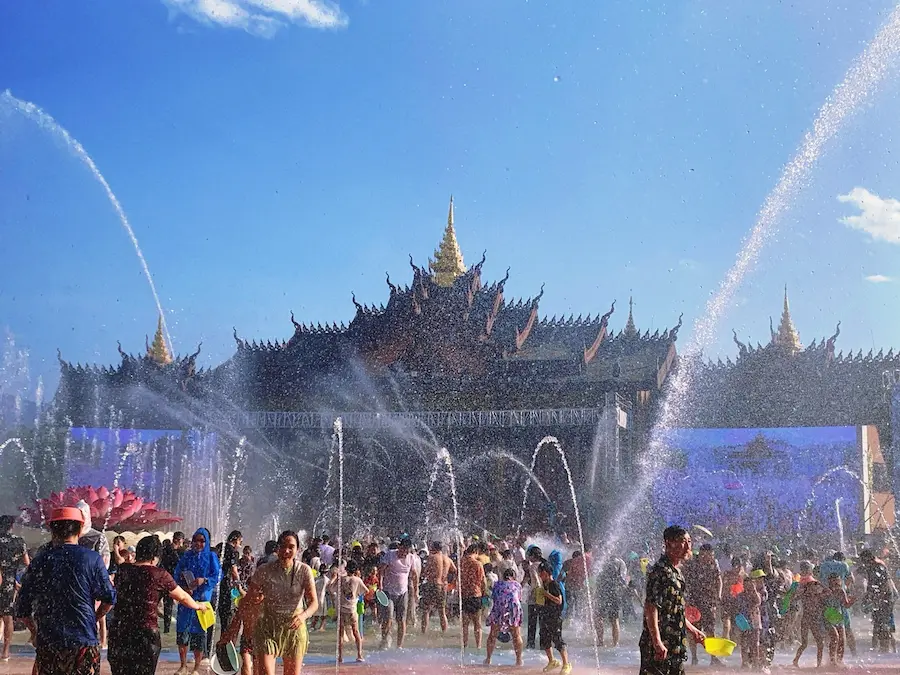
The Dai New Year, fixed to April 13–15, is the loudest three days of the year. On the 13th, thousands release sky lanterns over the Lancang River. On the 14th, a grand ethnic parade and floating water lanterns. On the 15th, from 11 am, the whole city becomes a battlefield — the water square and every street, a mass water fight with a DJ on stage and everyone soaked. Hundreds of thousands of visitors pack Jinghong in just three days. Come for the dates, or catch the daily version at Dai Minority Park if you miss it. Book lodging one to two months ahead — prices triple to quintuple. More on that below.
15. Manting Park’s Evening Bonfire Show
After dark, Manting Park turns into “The Night of the Mekong” — a Dai song-and-dance show that ends around a bonfire. It’s touristy, but the costumes and fire are fun, and it’s the easiest way to see Dai performance art up close. Expect to pay around ¥280 / USD 40.
My First-Hand Account: Splashed Into the New Year
If there’s one event that defines the Xishuangbanna Water Splashing Festival, it’s the morning of April 15. At eleven, the moment the water gates at the plaza opened, there was no more “watching.” One second I was at the edge holding my phone; the next, a basin of water came down over my head and the lens went blurry. I shoved the phone into a waterproof pouch, grabbed a water gun, and joined in.
No tourists, no locals — just kids chasing adults with pistols, an old man emptying a bucket on anyone who passed, everyone yelling “soak them wet, bless them for life.” The DJ booth sat in the middle of the square, tens of thousands of people dancing in the water, music and spray and screaming all tangled together.
That’s when you get it: this isn’t entertainment. It’s a city turning a whole year of blessings into water. Walking back soaked that evening, everyone still smiled and splashed — being drenched by strangers is a feeling that stays. It’s the single most memorable thing to do in Xishuangbanna I know.
How to Plan Your Trip: Things to Do in Xishuangbanna in 3 or 5 Days
Three days or five? Here’s the short version of how to fit all these things to do in Xishuangbanna into a real itinerary, so you can stop planning and start packing.
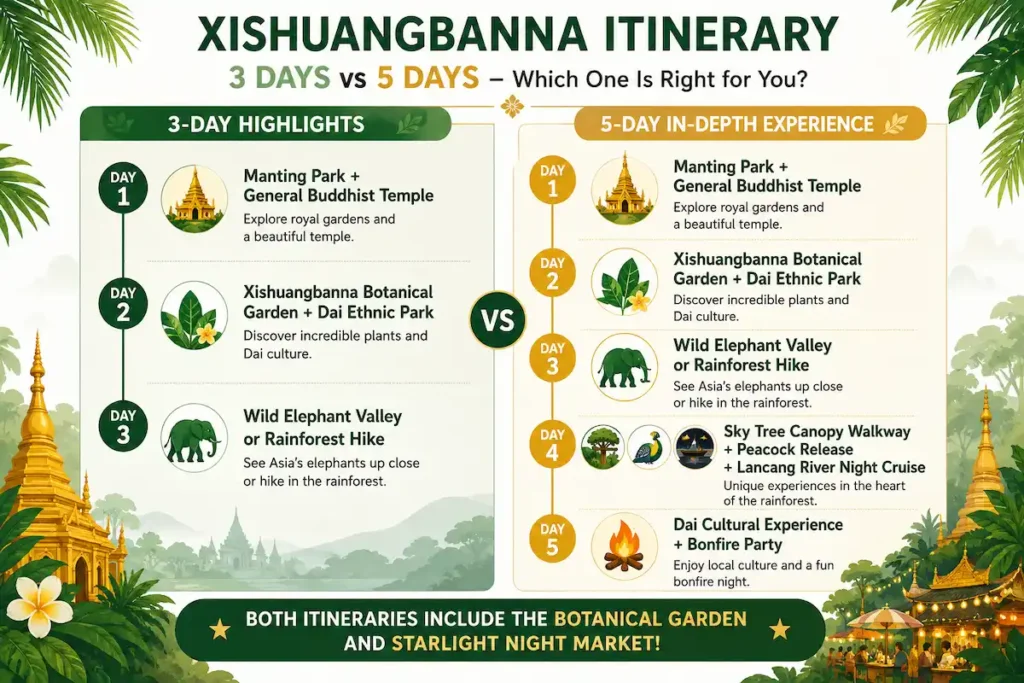
Three days is enough for the essentials: Day 1, Manting Park, Zongfo Temple, and the night market; Day 2, a full day at the Xishuangbanna botanical garden plus Dai Minority Park; Day 3, Wild Elephant Valley or a rainforest trek, then out. Five days gives you room for Wangtianshu’s canopy walk, the peacock release, and a night cruise or bonfire show. Whichever you choose, keep the botanical garden and the night market. Need more on pacing? See how many days to spend in Yunnan.
Where to stay: Gaozhuang or downtown Jinghong. First-timers who want to step out into the night market should stay in Gaozhuang — the Golden Pagoda and Starlight Market are downstairs, and most scenic-area shuttles leave from here. The downside is noise and peak-season prices. For quiet and value, stay near the Water Splashing Square downtown: about half the price, more local life, better old-school Dai restaurants, and Manting Park is a short walk. A taxi to the market runs ¥10–15 / USD 1.5–2. Wherever you stay, most Xishuangbanna tourist attractions sit within a 40-minute drive.
How to get there: fly or rail. The airport is Xishuangbanna Gasa International (IATA code JHG), just 5–8 km from the city center — a 15–20 minute taxi. The better option is the China-Laos high-speed rail: about three hours from Kunming, second-class seats around ¥170–220 / USD 24–31, with frequent departures. Once you’re here, taxis and scenic shuttles get you around — flag fares start at ¥8 / USD 1, and a direct shuttle to the botanical garden is about ¥50 / USD 7. For the full breakdown, read our guide to getting to Xishuangbanna.
Avoid These Mistakes in Xishuangbanna
Five things nobody tells you upfront — and a few that will keep your things to do in Xishuangbanna trip from turning sour.
- You probably won’t see a wild elephant. The odds of spotting one from the observation walkway are under 10–20%. Don’t make “see an elephant” your only goal, or you’ll leave disappointed. Focus on the walkway, the education center, and the science — a wild elephant is a bonus, not a given.
- Water Splashing Festival lodging is 3–5x normal. Hotels across the city spike from April 13–15. Book one to two months ahead, and skip driving near Gaozhuang and the water square — roads close, and holiday taxis add a surcharge.
- Bring the right bug spray. Jungle and riverside mosquitoes ignore regular repellent. Look for DEET or picaridin. Sunscreen should be waterproof — the UV is brutal.
- Haggle at the market. Silver, jade, and pricey tea are deep water for outsiders — skip them unless you know what you’re doing. For the Dai-costume photo packages (¥199–599 / USD 28–86), ask exactly how many outfits, retouched shots, and hidden fees.
- Don’t take unlicensed taxis. Touts at the airport and stations inflate prices — a black-market ride to Wild Elephant Valley can run ¥150 / USD 21 when a licensed app charges ¥80 / USD 11. Use ride-hailing apps in town, and shuttles or private cars for the far sights.
Xishuangbanna FAQ
What are the best things to do in Xishuangbanna?
The tropical botanical garden, a rainforest trek, Wild Elephant Valley, Manting Park, the Gaozhuang night market, and — if you can time it — the Water Splashing Festival. Most Xishuangbanna tourist attractions cluster in two easy zones: the rainforest belt outside Jinghong and the riverside around Gaozhuang.
Is Xishuangbanna safe?
Very. Social order is good and tourism is mature; just watch your step on riverside and jungle paths, and keep an eye on your belongings.
When’s the best time to visit Xishuangbanna?
November to April is the dry season — cool and dry (18–28°C), the ideal window. Mid-April brings the Water Splashing Festival, the liveliest but priciest. May to October is the rainy season: short showers, cheap fruit, fewer crowds, and the greenest jungle. For a month-by-month breakdown, see best time to visit Xishuangbanna and Xishuangbanna weather.
How many days do I need?
Three to five. Three covers the essential things to do in Xishuangbanna; five adds a rainforest trek and the deeper experiences.
How do I get to Xishuangbanna?
Fly into Gasa Airport (JHG) or take the China-Laos high-speed rail, about three hours from Kunming — most Xishuangbanna tourist attractions are within an hour of the station or airport.
Is it worth visiting?
If you want China’s only tropical rainforest, wild Asian elephants, and Dai culture — and you can handle proper tropical heat and humidity — yes, it earns a dedicated trip. There simply aren’t this many things to do in Xishuangbanna packed into one prefecture anywhere else, and the Xishuangbanna tourist attractions are genuinely unlike the rest of China.
In Xishuangbanna, a temple and a night market sit a wall apart — monks in saffron robes pass young people heading out to dance at dusk. Come, stand on the Lancang River bank as the evening wind picks up, and you’ll understand why this patch of rainforest keeps people for five days — and why the list of Xishuangbanna attractions never really ends.
Explore More of Yunnan
Xishuangbanna is one corner of a huge province. If you’re routing onward: things to do in Dali, things to do in Kunming, things to do in Lijiang, or things to do in Shangri-La.
Plan Your Trip
Ready to make it happen? Plan your Yunnan trip with us, or pair this page with our complete Xishuangbanna travel guide.
Ke Ping — Founder, Yunnan Travel Tips
Certified China Travel Specialist · Certificate details
This guide can become your real trip. Instead of figuring out complicated logistics alone, let me and our team build your perfect Yunnan journey — from sunrise at Meili Snow Mountain to tea tasting in ancient Dali.
📋 Plan My Yunnan Trip