Cangshan Dali: Which Cable Car, Which Trail, How Long
The gondola swayed again as it punched through a cloud bank. I pressed my face to the window. Erhai Lake had shrunk to a thin silver thread below, and Dali Old Town looked like gravel scattered across the basin. This was the Ximatan cable car climbing Cangshan Dali — already past 3,000 meters and still rising.
Cangshan Dali is not one peak but a wall of nineteen, most of them rising above 3,500 meters and seven topping 4,000. The highest, Malong Peak, reaches 4,122 meters. Locals don’t say “the mountain.” They say Cangshan the way you’d say a neighbor’s name. You’ll also see the same ridge written as Cang Mountain, or Diancang Shan.
That morning I’d grabbed a short taxi from the old town to the cable car station. The houses thinned out fast, and pine forest and granite gorges flicked past the window. When the gondola broke through the clouds, the basin, the lake, the villages — they all unfolded at once, like someone shaking out a painting in midair.
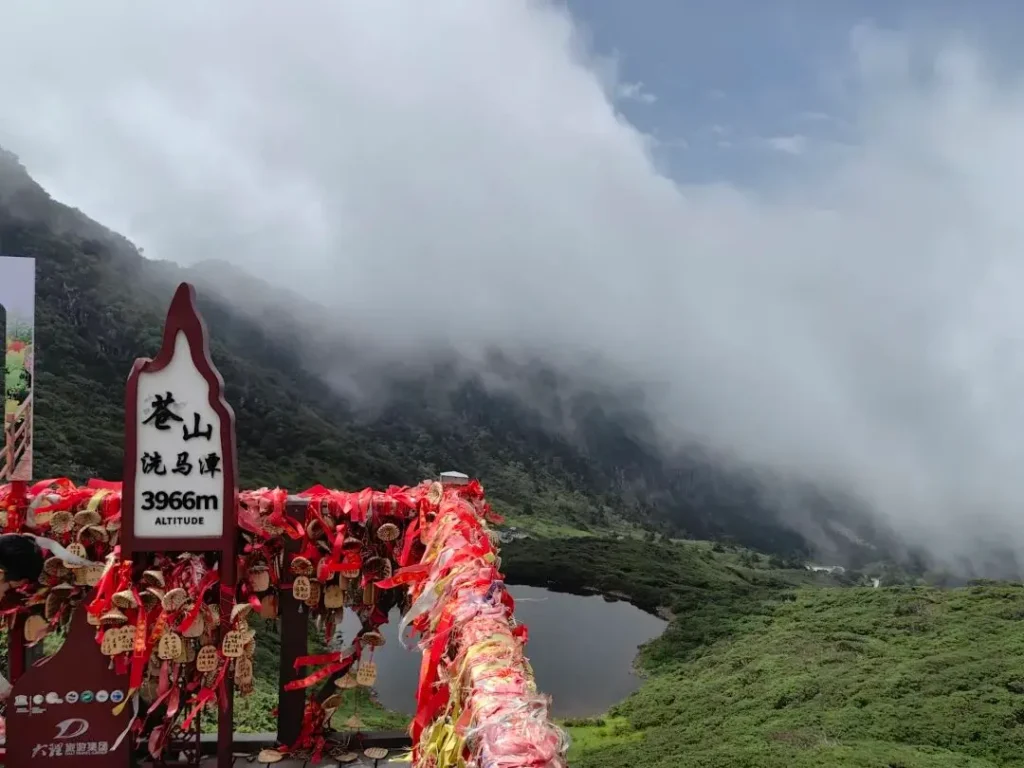
On the Ximatan viewing platform, the wind bit. The lake below sat in a glacial hollow, water so green it looked almost blue, framed by bare granite and leftover snow. Turn around, and the whole Dali basin lay at my feet. That was the moment I understood why people come to Dali and look up at this mountain first — before the old town, before anything else. (For the bigger picture around town, start with our Dali travel guide.)
Cangshan Dali at a Glance: Three Cable Cars
Planning a Cangshan Dali trip comes down to three questions: which cable car, what it costs, and what you actually see at the top. Here are all three, side by side.
The mountain runs three cable cars, north to south: Zhonghe, Ximatan, and Gantong. They are not three versions of the same ride. They are three different days.
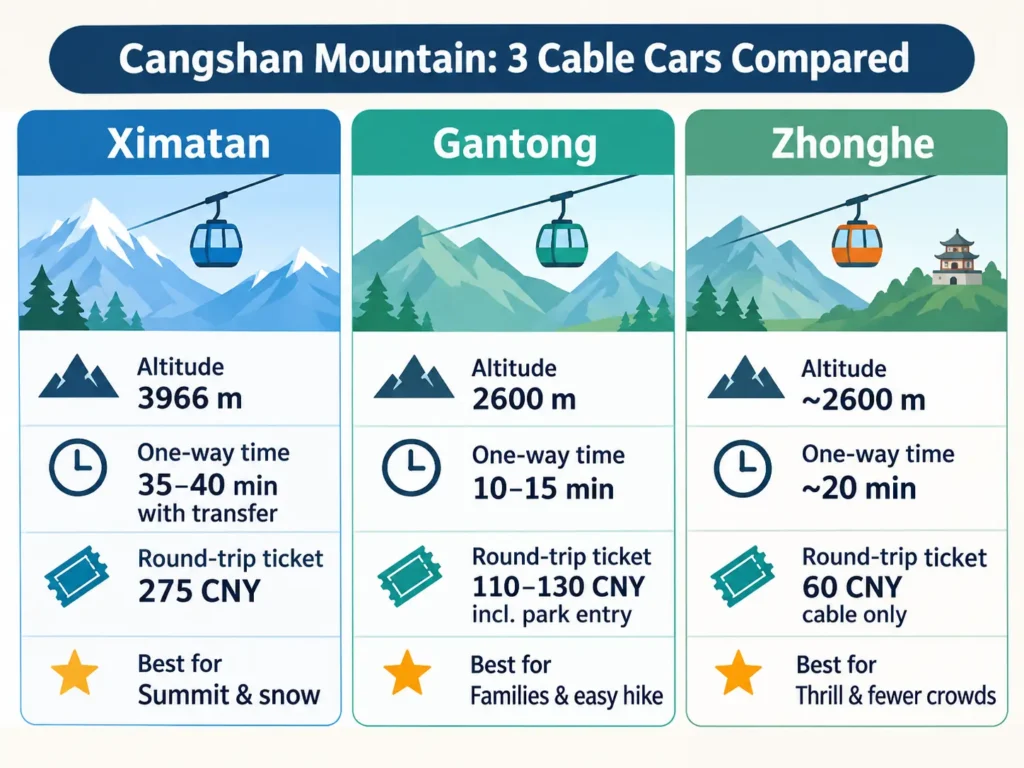
Ximatan Cableway (the “big” ropeway) is the only one that reaches the summit. Its lower station sits by Tianlong Babu Film Studio, about 3 km from the old town. The full one-way ride takes 35 to 40 minutes, because you must get off and transfer at the Qilongnu Pond middle station (if you’re not touring the middle station, it’s a one-to-two-minute walk to the next gondola — no extra ticket). The top viewing platform sits at 3,966 meters, the closest you’ll get to snow and alpine lakes. A round-trip ticket costs 275 CNY (about 39 USD) on the official WeChat mini-program; Ctrip often lists it at 260 CNY (about 37 USD). The ticket includes the park entry fee.
Gantong Cableway is the most popular. Its lower station is in the Gantong Temple area (Qiliqiao), about 5 km south of the old town. The one-way ride is only 10 to 15 minutes (closer to 20 on crowded days), and it drops you at 2,600 meters, right at the Qingbi Stream section of the Jade Belt Cloud Road. It doesn’t reach the summit — it shows you the mid-mountain streams, temples, and the Cangshan Grand Canyon. Tickets follow the same split as Zhonghe: the window sells a cable-only round trip for 100 CNY (single 65 CNY), no park entry, while online platforms mostly sell a combined ticket around 110–130 CNY that includes entry.
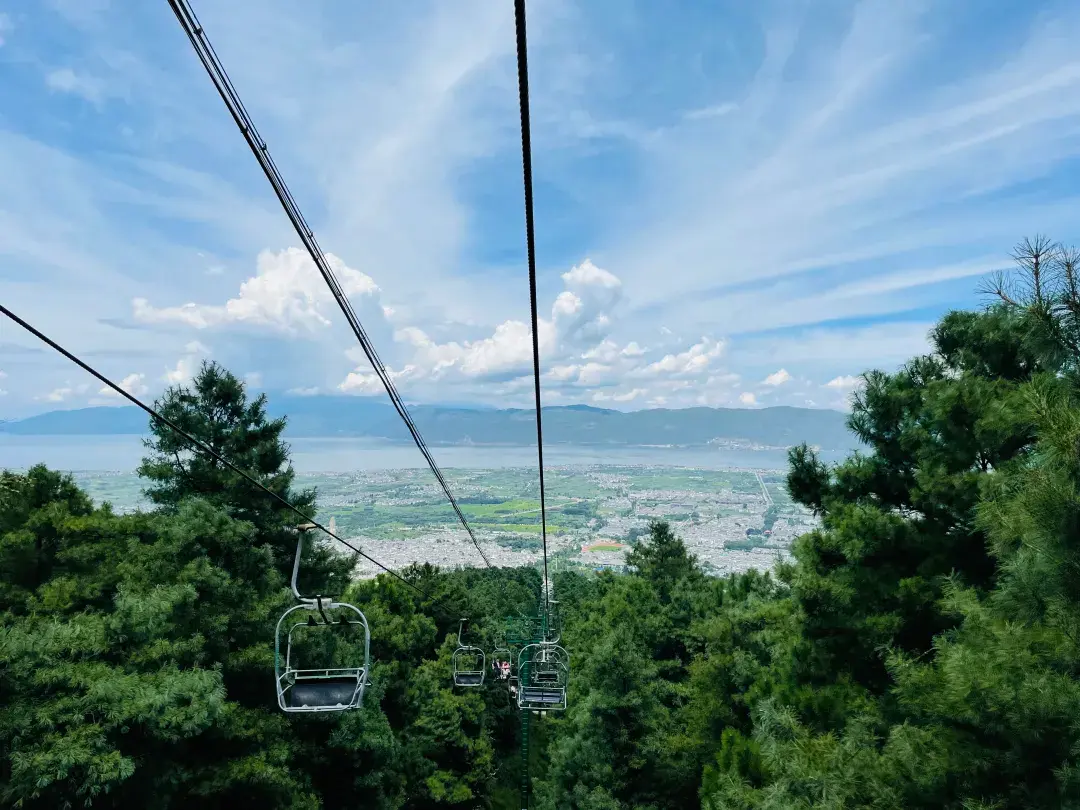
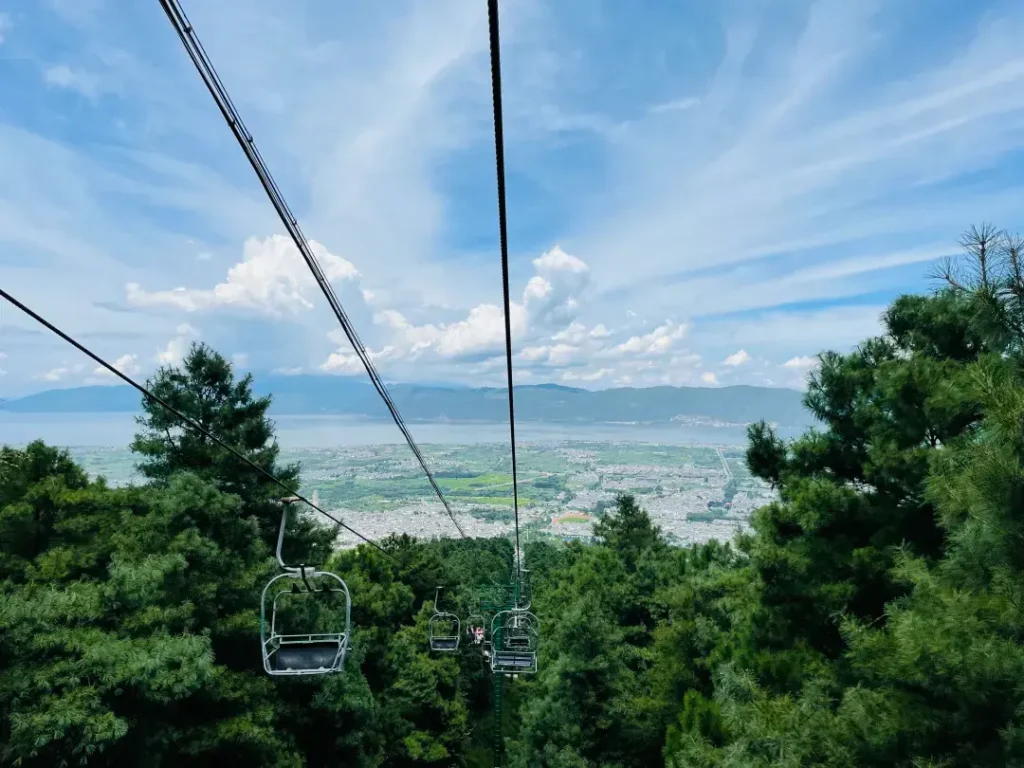
Zhonghe Cableway is the odd one out — an open-air two-person chairlift, no enclosed cabin, wind straight in your face. Its lower station is the closest to the old town, a short uphill walk from Honglongjing or Sanyue Street. The ride takes about 20 minutes (anywhere from 15 to 25), ending at Zhonghe Temple. Tickets split two ways: the window sells a cable-only round trip for 60 CNY (about 9 USD), single 30 CNY, no entry fee; online platforms mostly sell a combined ticket around 95 CNY that includes entry.
One line to point you the right way:
- Want snow, summit views, or an alpine lake → Ximatan
- Bringing kids, want it easy, first time here → Gantong
- Want a thrill, want to dodge the crowds, on a budget → Zhonghe
How to pick? More below.
Cangshan Dali: How to Get There & Buy Tickets
Three lower stations, all on the west side of town at the foot of the mountain, but at different distances from Dali Old Town. Wondering how to get to Cangshan Mountain Dali? Here’s the practical version.
Zhonghe is the closest. Walk uphill from Honglongjing or the Sanyue Street exit and you’re basically there. A taxi runs 10–15 CNY (about 2 USD).
Ximatan sits by the film studio, about 3 km out. A taxi from the old town costs 10–15 CNY and takes a few minutes; bus 4 or the old town’s C10 line also reaches the film studio. Coming from Xiaguan (downtown Dali), budget 35–45 CNY.
Gantong is in the Gantong Temple area, about 5 km south. There’s a direct tourist shuttle from the old town’s south gate for 10 CNY, or a 15–20 CNY taxi taking about 15 minutes. From Xiaguan, take bus 9 to the Gantong Temple stop and switch to a shuttle, or just take a taxi for 30–40 CNY.
Now the part that trips people up: the Cangshan Park entry ticket has a listed price of 40 CNY, but the actual price you pay is 35 CNY. You’ll almost never find a standalone entry ticket on Ctrip or the official WeChat mini-program — those are sold at the window only. What the platforms sell are combined “cable car + entry” tickets, with the 35 CNY already baked in. So if you’re riding the Gantong or Ximatan cable car, just buy the cable car ticket, and you’re covered. (For the wider picture, see our getting around Yunnan guide.)
The only time you buy the entry ticket on its own is if you’re hiking all the way up and down without a cable car. Then pay 35 CNY at the window and go.
Booking is straightforward: the official WeChat mini-program “You Yunnan,” the “Dali Culture & Tourism” official account, or platforms like Ctrip and Trip.com. For the Ximatan cable car, book 1–3 days ahead in peak season.
One note on discounts — the free and half-price deals above apply to the park entry ticket: children under 1.2 m and adults over 70 enter free; students and seniors 60–69 pay half. Cable car tickets have their own child and senior rules, so check the sign at the station.
Which Cable Car Should You Take?
Ximatan: for the summit
This is the only Cangshan Mountain cable car that gets you to the top. From the lower station, it climbs more than 1,600 meters of vertical drop, through clouds, with the basin widening below the whole way.
One thing to know: the Ximatan Cableway runs in two sections, and everyone transfers at Qilongnu Pond. If you’re not touring the middle station, it’s a two-minute walk to the next gondola — no second ticket — but count on 35–40 minutes one way in total, not “half an hour straight up.”
The top is Ximatan Lake, a glacial tarn at 3,920 meters, with the viewing platform at 3,966. Carved by Quaternary glaciers, the water sits still and blue-green, ringed by granite and unmelted snow. On a clear day, the whole Dali basin, Erhai Lake, and the villages below spread out under you.
The price is the altitude. Close to 4,000 meters, the air is thin, and people get light-headed and short of breath. The cable car is also extremely sensitive to wind — strong gusts can halt it or cut the run to the middle station. So check the weather. Go early.
Gantong: the easy default
Gantong is the comfortable one. Ten to fifteen minutes to 2,600 meters, and you step out right at the Qingbi Stream stretch of the Jade Belt Cloud Road.
Three things near the upper station are worth your time. Qingbi Stream — the most famous of Cangshan’s eighteen streams, with upper, middle, and lower pools, each a different color, plus waterfalls and cliff carvings (Xu Xiake stopped here back in the day; the pools are a few minutes’ walk from the station). The Zhenlong chess board — a giant outdoor board recreating a scene from Demi-Gods and Semi-Devils, fun for wuxia fans. And the Cangshan Grand Canyon viewpoint, a few hundred meters and some steps away, where you can see Erhai Lake, the basin, and the canyon all at once.
Down at the foot, Gantong Temple is worth a wander — old trees, quiet courtyards. Some people detour to the nearby Jizhao Nunnery for a simple vegetarian meal. Gantong suits families, older travelers, and first-timers who don’t want to exhaust themselves.
Zhonghe: open-air and crowd-free
Zhonghe is the one with personality. Open-air double chairlift, no cabin, the mountain wind in your face, nothing between you and the view. It ends at Zhonghe Temple, where you can eat a temple meal, and the route passes Taoxi Gorge and the Longyan and Fengyan caves, with views over the old town and the lake.
Two warnings. If you’re scared of heights, skip it — those seats are open. And if you have high blood pressure or heart trouble, it’s not the ride for you either. But if you’re young, want a little thrill, and don’t fancy the queues at Ximatan or Gantong, Zhonghe is the quietest of the three.
The Jade Belt Cloud Road: Cangshan Mountain Hikes
Whatever cable car you take, you almost always land on the same trail — the Jade Belt Cloud Road.
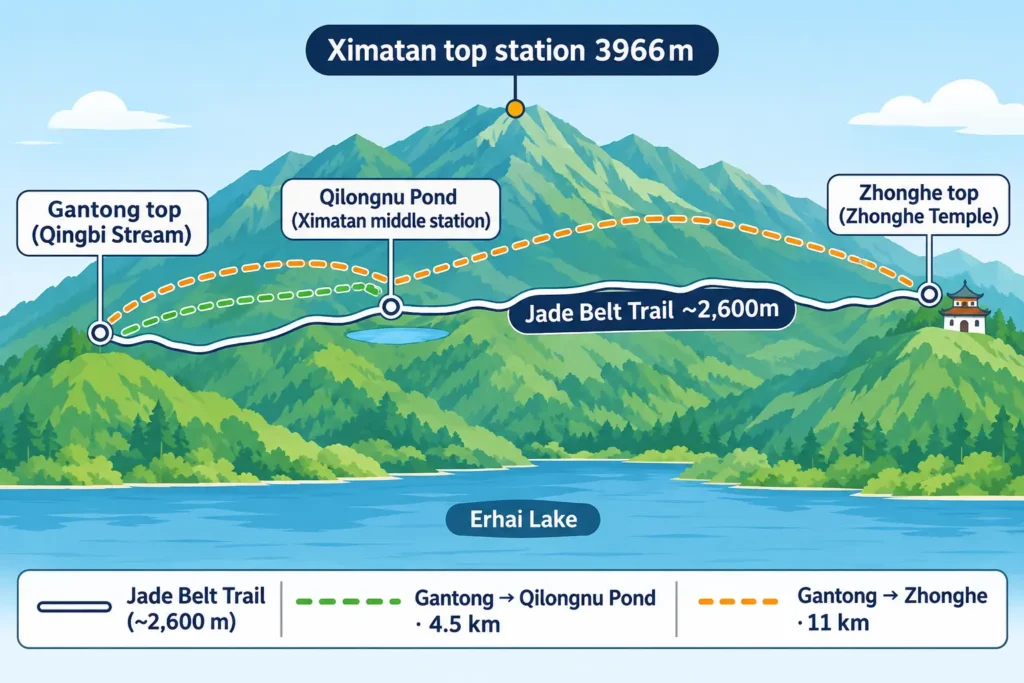
This walkway wraps around the mountain at mid-level, about 18 km long (the main line runs about 16.2 km), holding a steady 2,600 meters on a gentle stone path. It starts in the south at the Gantong upper station (Qingbi Stream), passes Qilongnu Pond, and ends in the north at the Zhonghe upper station (Zhonghe Temple) and Taoxi.
Its best feature is that it’s flat. No big climbs, easy walking, the path hugging the cliffside — sometimes through forest, sometimes opening out to the whole basin below: villages, fields, Erhai Lake, like a painting unrolling as you walk.
Two ways to hike it, depending on your legs:
- Short route: ride Gantong up, walk the Jade Belt trail about 4.5 km to Qilongnu Pond, then take the Ximatan middle station down. Easy, and most people can finish it.
- Full traverse: ride Gantong up, walk about 11 km to Zhonghe Temple, then ride Zhonghe down. No backtracking, two cable cars in one day — but it’s a real hike for people who like walking.
Just want a taste? You don’t have to go far. Walk a kilometer or two from the Gantong station, look at the streams, feel the mountain air, then turn around and ride back down. The Cangshan Mountain hike difficulty is low on the short route and moderate on the full traverse — the real challenge isn’t the trail; it’s the altitude at Ximatan.
Mistakes to Avoid on Cangshan Mountain
A few things nobody tells you before you go.
The Ximatan cable car can stop without warning. It’s extremely sensitive to wind — a strong gust halts the whole thing, or cuts it to the middle station so you never reach the summit. You can ride all the way there and only see half the mountain. Check the weather, and on windy or snowy days call the scenic area first.
Don’t mistake “Gantong to Zhonghe” for 4.5 km. Plenty of people think that route is 4.5 kilometers and discover halfway that it’s an 11 km full traverse. The 4.5 km is just the Gantong-to-Qilongnu-Pond stretch. Decide your route before you start, or you’ll be tired with a long way behind and a longer way ahead.
Queues can eat your morning. On holidays and during the summer peak, the Ximatan cable car line can run one to two hours. Get to the lower station before 8:30 am and grab the first gondola.
Altitude sickness is real near 4,000 meters. At 3,966 meters, the air is thin, and dizziness and breathlessness are common. Move slowly up there — don’t run, don’t push. If you’re prone to it, buy a portable oxygen canister at the lower station for 30–50 CNY (about 4–7 USD). That’s a purchase, not a rental. And after the gondola, you’ll still climb dozens of steps to the platform, so pace yourself.
Don’t count on signal or supplies up top. Much of the mountain has zero phone signal — don’t plan to navigate or call a car once you’re up. There are no real restaurants either, just small kiosks at the transfer stations and near Zhonghe Temple selling sausages, instant noodles, corn, and hot tea. Pack high-energy snacks and water. Toilets exist only at the upper stations, the middle station, and a few Jade Belt trail nodes (Qingbi Stream, Qilongnu Pond, Zhonghe Temple) — long stretches in between have none, so go when you pass one.
It’s cold up top — dress for it. The Ximatan station is cold year-round and windy. Short sleeves at the bottom can mean single digits at the top. Down jackets and windproof coats are available to rent at the lower and upper stations for 30–50 CNY, with a deposit. Rent one if you feel the cold; don’t tough it out.
When to Go & What to Wear on Cangshan Mountain
Cangshan runs two climates at once — one at the foot, one at the top.
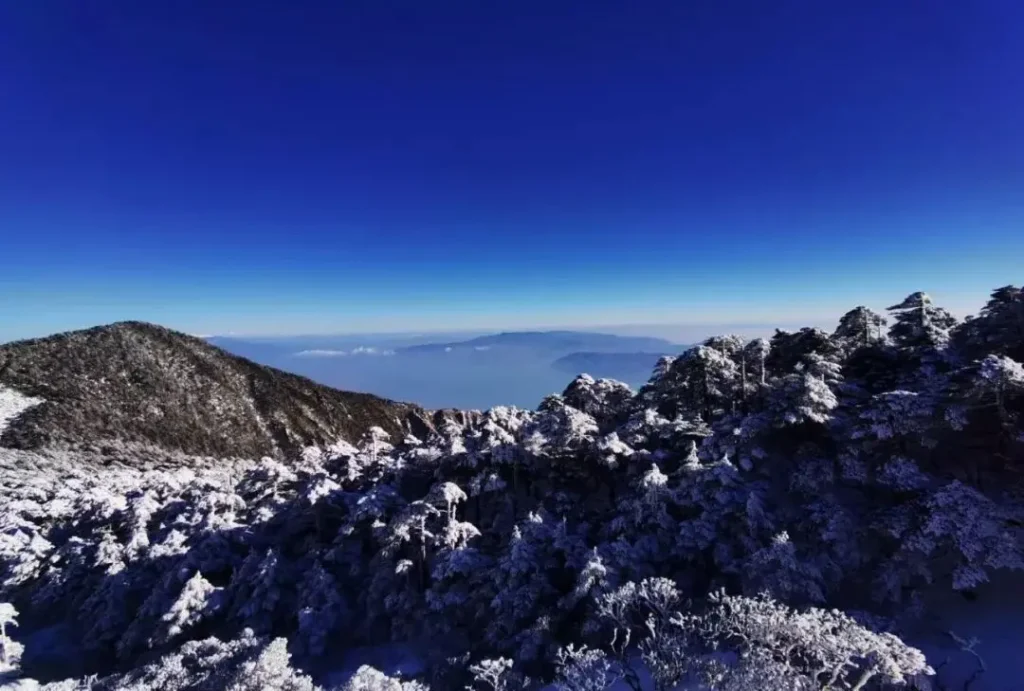
December to February, the old town sits around 5–15°C, but the Ximatan summit often drops to -5 to 5°C with hard wind, snow, and ice. Cangshan Mountain in December is the closest it gets to a real snow mountain — the first snow usually falls in mid-to-late November, and by winter the fir trees are crusted with rime and the railings hang with icicles.
Spring (March to May) is the comfortable season: 5–15°C at the top, alpine rhododendrons in full bloom, and the best hiking feel. Summer and autumn (June to October) are rainy, the summit often wrapped in cloud at 10–18°C — cool rather than cold even when the lowlands bake. Bring rain gear and a light jacket. For month-by-month Dali weather and Cangshan Mountain temperatures, see our Dali weather by month guide, and for the bigger picture, our best time to visit Yunnan page.
From the Jade Belt trail you can see the Three Pagodas of Chongsheng Temple far below — Dali’s most famous landmark, worth its own visit. On the other side of the mountain, Erhai Lake offers lake-loop cycling and winter seagulls, which is a different day entirely. Both are covered in our things to do in Dali article, so I won’t overlap here.
As for Cangshan versus Jade Dragon Snow Mountain — that’s a question worth its own article. The short version: for glaciers and getting above 4,500 meters, go to Jade Dragon Snow Mountain. For snow peaks and an alpine lake close to the old town, Ximatan on Cangshan is enough.
Cangshan FAQ
Is Cangshan worth visiting?
Yes. It’s not just Dali’s backdrop — it’s a mountain you can ride straight up to the summit and look down on the entire lake and basin. Three cable cars and one gentle trail mean almost any fitness level can find a way up.
How high is Cangshan Mountain?
Malong Peak, the highest, tops out at 4,122 meters. The highest point visitors reach is Ximatan — the lake at 3,920 meters, the viewing platform at 3,966.
How do I get to Cangshan Mountain Dali?
All three cable car lower stations sit west of the old town. Zhonghe is closest, a walk uphill from Honglongjing. Ximatan is by the film studio, a 10–15 CNY taxi. Gantong is in the Gantong Temple area, a 15–20 CNY taxi.
Is the hike hard?
It depends on how far you go. The Jade Belt Cloud Road itself is a gentle, flat stone path at a steady 2,600 meters. The short route (Gantong to Qilongnu Pond) is about 4.5 km and doable for most; the full traverse (Gantong to Zhonghe) is about 11 km and more tiring. The real challenge is Ximatan’s altitude — near 4,000 meters; slow down and don’t push.
Cangshan or Jade Dragon Snow Mountain?
For an extreme glacier-and-snow experience, pick Jade Dragon. For snow peaks and an alpine lake close to the old town, with less time and budget, Ximatan on Cangshan does the job.
People at the foot of the mountain usually just glance up at that blue-grey ridge and move on. But ride the cable car up, step onto that stone path halfway up the sky, and you realize something: you have to stand at three thousand meters before Erhai Lake and Dali Old Town ever really come into focus.
Ke Ping — Founder, Yunnan Travel Tips
Certified China Travel Specialist · Certificate details
This guide can become your real trip. Instead of figuring out complicated logistics alone, let me and our team build your perfect Yunnan journey — from sunrise at Meili Snow Mountain to tea tasting in ancient Dali.
📋 Plan My Yunnan Trip