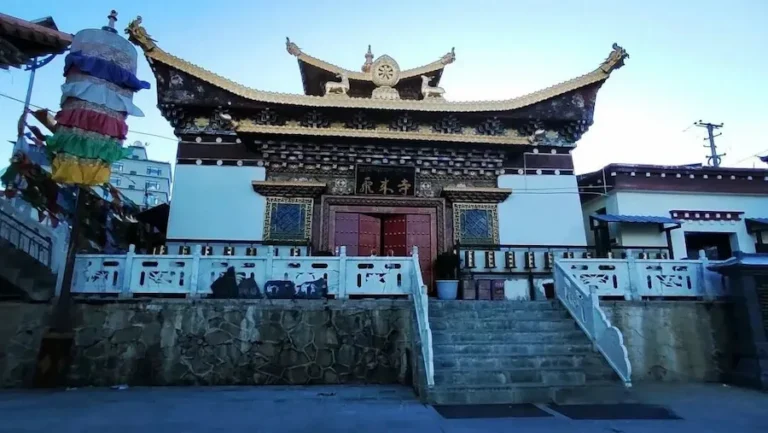
Blue Moon Valley Travel Guide: A Turquoise Fairyland at Jade Dragon Snow Mountain’s Foot (Altitude, Weather & How to Get to Blue Moon Valley Lijiang)
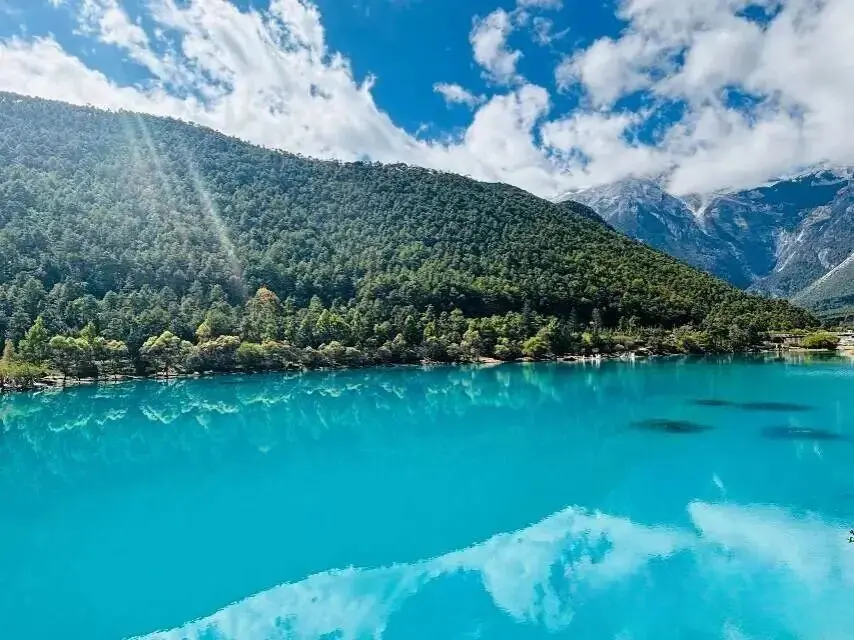
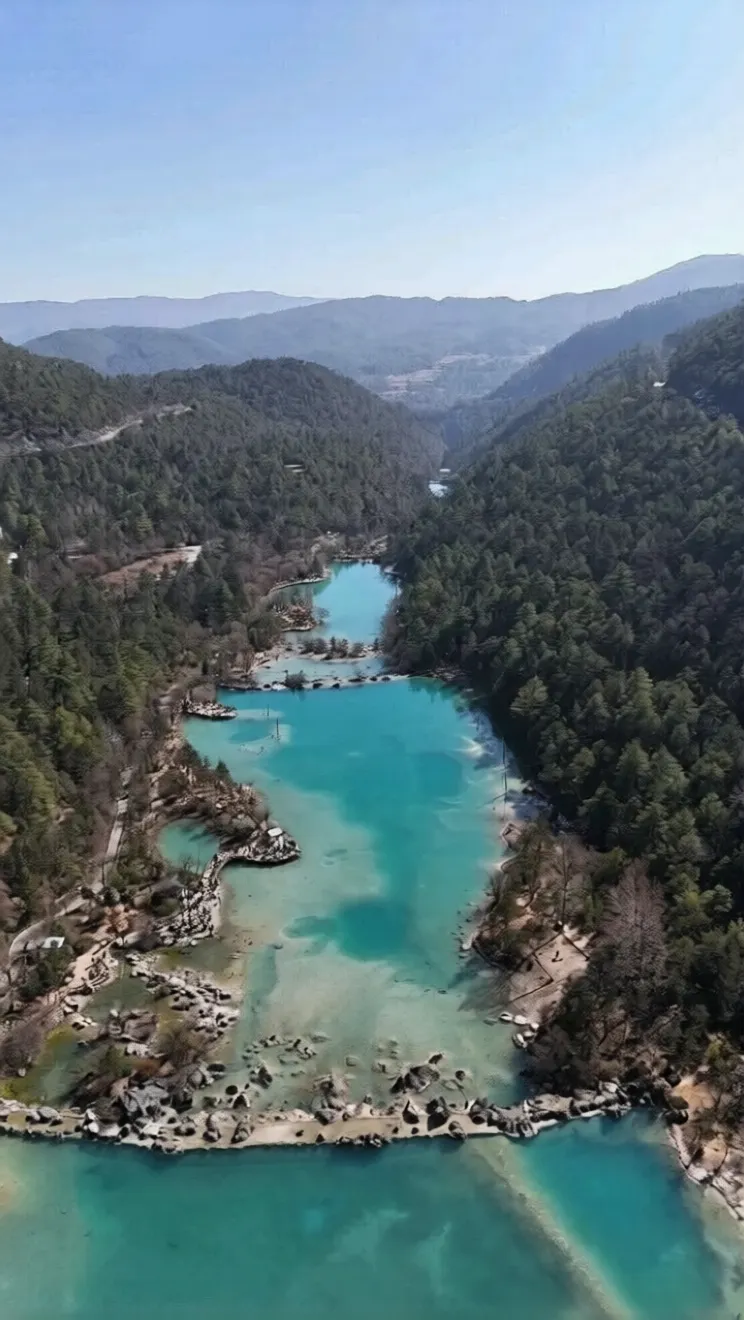
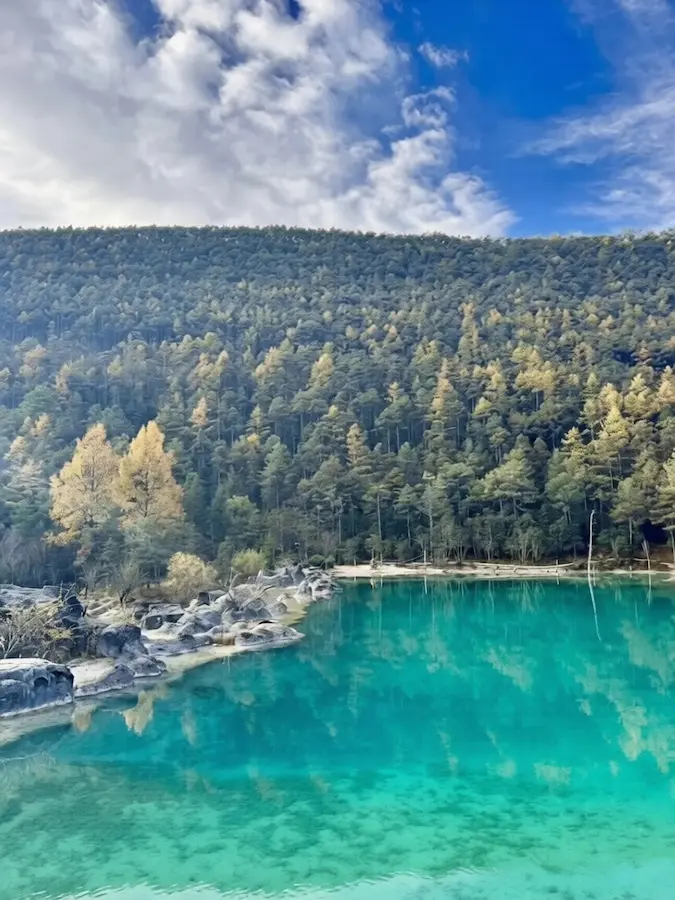
Tucked into a high mountain valley, this Blue Moon Valley travel guide unlocks one of China’s most surreal landscapes—a chain of luminous alpine lakes set against the snowy bulk of Jade Dragon Snow Mountain. If you’ve seen photos of milky-blue water mirroring a jagged white peak, you’ve already glimpsed Blue Moon Valley China. It’s not one lake but several pools fed by glacier melt, and the color has to be seen to be believed.
The valley sits inside the Jade Dragon Snow Mountain Scenic Area, about an hour from Lijiang Old Town. This guide covers exactly what you need to know: how to get there without falling for tourist traps, what tickets to buy (and skip), plus altitude notes and weather wisdom for that perfect reflection shot.
- How to Get to Blue Moon Valley Lijiang: Buses, Taxis & the One Bus Stop You Can't Miss
- Entry Fees at a Glance (And What You Should Skip)
- Walking the Lakes: The Easy, Stunning Route
- Best Time to Visit: Blue Moon Valley Weather and Seasonal Secrets
- Important Things to Know Before You Go
- Quick FAQs About Blue Moon Valley
How to Get to Blue Moon Valley Lijiang: Buses, Taxis & the One Bus Stop You Can’t Miss
Every route to the lakes starts at the Jade Dragon Snow Mountain Visitor Center. Private cars and taxis can’t drive directly to Blue Moon Valley—you’ll transfer to the park’s internal bus system.
From Lijiang City to the Visitor Center
Public Bus (Recommended)
Look for Bus 101 Snow Mountain Express. You can board near Zhongyi Market or Hongtaiyang Square on the edge of Lijiang Old Town.
- Fare: CNY 15 (approx. $2.10 USD) per person.
- Travel time: About 1 hour.
- Last stop: Jade Dragon Snow Mountain Visitor Center.
Ride-hailing / Shared Car
Apps like DiDi or shared minivans near the old town entrance will take you.
- Cost: Around CNY 20–50 (approx. $2.80–$7.00 USD) per person.
- Travel time: Roughly 40 minutes.
Taxi
A direct ride from the city center.
- Fare: About CNY 70–80 (approx. $9.80–$11.20 USD) for the whole car.
- Travel time: Around 40 minutes.
Self-Drive
Set your GPS for Jade Dragon Snow Mountain Parking Lot P3.
- Parking fee: CNY 10–20 (approx. $1.40–$2.80 USD) per day.
From there, walk to the Visitor Center.
From the Visitor Center to the Blue Water
Once you arrive at the massive Visitor Center complex, you have two quick but crucial tasks:
- Buy the Scenic Area Entry Ticket (the “Mountain Entrance Fee”). Cost: CNY 100 (approx. $14.00 USD) per person. This covers access to the entire Jade Dragon Snow Mountain zone, including Blue Moon Valley.
- Buy the Scenic Shuttle Bus Ticket. Head downstairs to the lower level and find the ticket counter for the internal park bus. Cost: CNY 20 (approx. $2.80 USD) round trip. This bus is the only way to get around the park.
The Most Important Stop Name:
Board the green shuttle bus and stay alert. You must get off at a stop called Shuiyuege (Water Moon Pavilion) .
A voice recording on the bus will announce “Blue Moon Valley” one stop earlier. Do not get off there. That’s the starting point for an optional (and unnecessary) electric cart route. If you step off at the wrong stop, you’ll face a 4.8 km (3 mile) walk or an extra fee of CNY 50 (approx. $7.00 USD) for a golf cart. Wait for Shuiyuege—step off the bus and the turquoise water is a two-minute stroll away.
Entry Fees at a Glance (And What You Should Skip)
| Item | Cost (CNY) | Approx. USD | Notes |
|---|---|---|---|
| Scenic Area Entry (Mountain Fee) | 100 | $14.00 | Mandatory. Required to enter the park boundaries. |
| Internal Shuttle Bus | 20 | $2.80 | Mandatory. Takes you from Visitor Center to the lakes and back. |
| Electric Cart (Golf Cart) | 50 | $7.00 | Skip this. Walk from Shuiyuege stop—it’s flat and scenic. |
Walking the Lakes: The Easy, Stunning Route
From Shuiyuege, you step onto a flat wooden boardwalk that loops past four distinct pools. The whole walk takes about two to three hours at a leisurely pace. The path is stroller-friendly and requires no hiking gear.
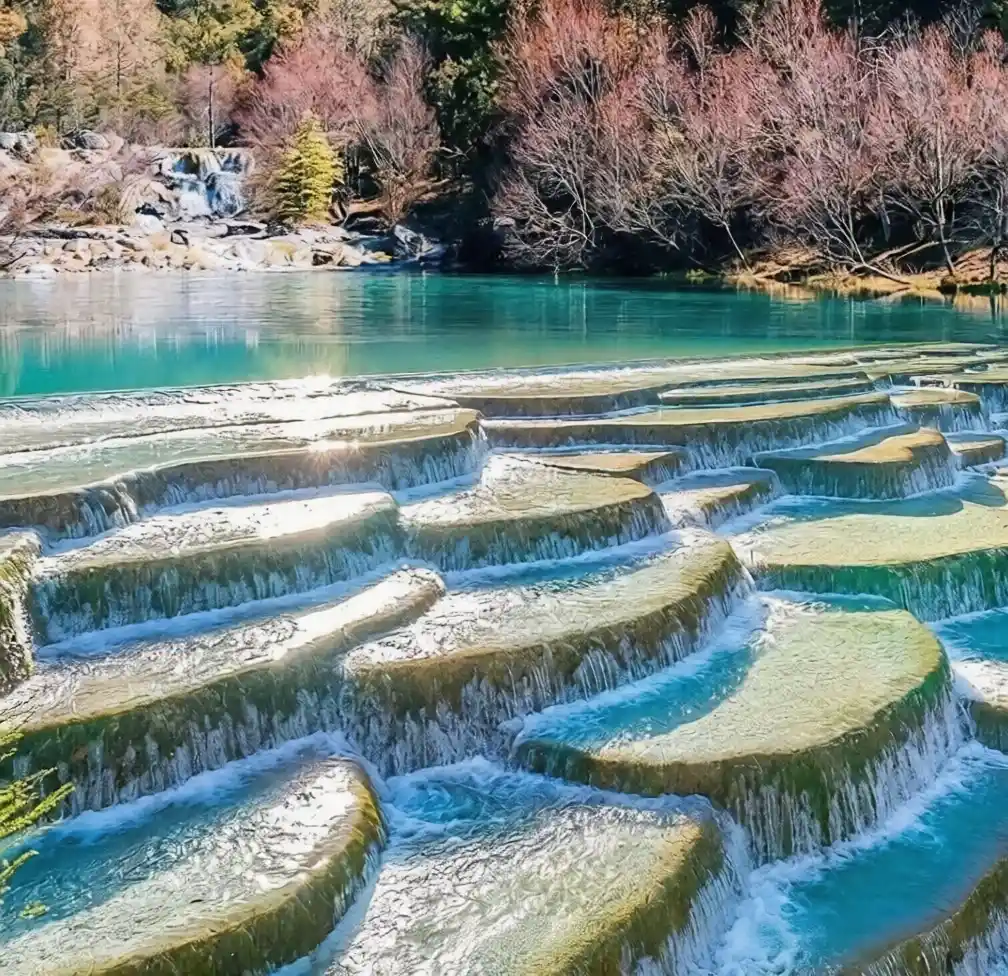
White Water Terrace (Baishuitai)
At the upstream end, the water rushes over milky travertine terraces. The cascades here look like a sculpture garden carved by mineral springs.
Jade Liquid Lake (Yuye Hu)
This is the bluest of the four. On a clear day, the water is so pure that the reflection of Jade Dragon Snow Mountain looks like a double exposure. Pause here for the classic “white mountain, blue water” photograph.
Mirror Pond Lake (Jingtan Hu)
The surface here is often still as glass. This is the spot to crouch low with your phone or camera. Put the lens close to the water’s edge to capture that perfect “sky mirror” reflection of the peak.
Blue Moon Lake (Lanyue Hu)
The namesake crescent. A stone arch bridge crosses this section. Standing on the bridge gives you a view of layered blue water stepping down into the valley. Framing the shot through the bridge arch is a classic angle.
Listening to the Waves Lake (Tingtao Hu)
Here the water tumbles over small drops and rocks, creating white noise and a lively contrast with the calm pools above.
A quiet path tip: Across from the main boardwalk, look for a stone footpath on the opposite bank. It’s usually empty and offers a different angle of the mountain’s reflection.
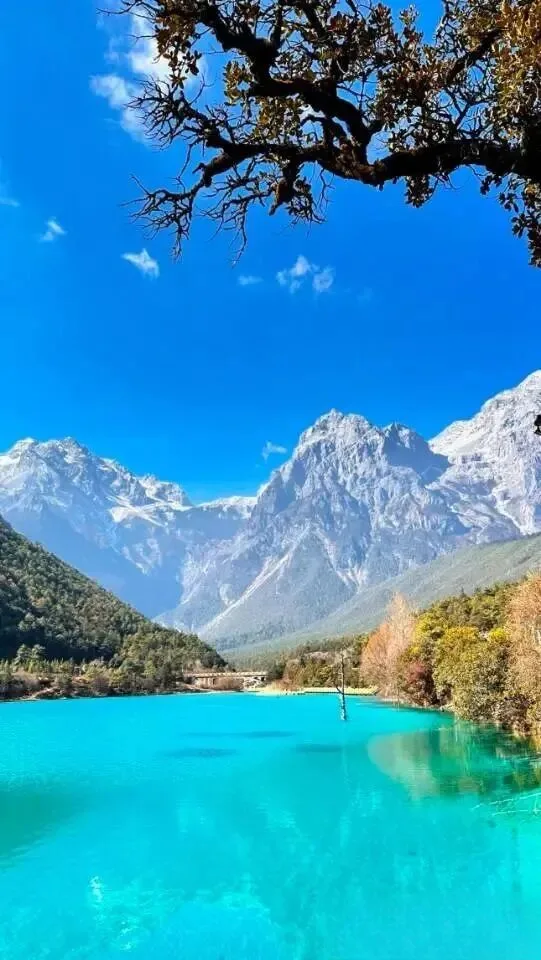
Best Time to Visit: Blue Moon Valley Weather and Seasonal Secrets
Blue Moon Valley weather is dominated by high-altitude sun and the monsoon cycle. The color of the water depends entirely on sunlight.
- Autumn (Sept–Nov): The golden window. Skies are crisp, air is clear, and the valley glows. This is when you get that deep, saturated blue in the lakes.
- Spring (Mar–May): Variable weather, but the mountain snowpack is still thick. Good visibility on sunny days.
- Summer (June–Aug): Rainy season. Clouds can obscure the peak and the water may look a bit murky gray-green. If you visit in summer, go early in the morning to beat the afternoon clouds.
- Winter (Dec–Feb): Dry, cold, and quiet. The mountain looks dramatic with fresh snow. Fewer tourists make for a serene visit, but bundle up.
Time of Day Matters More Than the Month
- 9:00 AM – 11:00 AM: Soft light, manageable crowds.
- 2:30 PM – 4:00 PM: The afternoon sun hits the water at an angle that makes the blue appear almost electric.
Avoid the harsh glare of high noon if you’re serious about photography—the contrast blows out the mountain’s details.
Important Things to Know Before You Go
Blue Moon Valley Altitude & Your Body
The Blue Moon Valley altitude ranges between 2,800 and 2,900 meters (approx. 9,200–9,500 feet) . For most people, this is below the threshold for serious altitude sickness, but you will feel the thinner air. Walk slowly. If you’re prone to headaches, a small canister of oxygen from Lijiang Old Town (about CNY 20–30 or $3–$4 USD) is cheap insurance.
Sun Protection Is Not Optional
The plateau sun is sneaky. You might feel a cool breeze off the glacier and forget the UV index is extremely high. Wear a hat, sunglasses, and SPF 50+ sunscreen. Reapply after an hour—you are essentially standing on a reflective blue mirror.
Water Safety
That blue water looks inviting, but it’s glacier runoff. The temperature is just above freezing. Stay on the boardwalk and keep children close. Slipping in is not a refreshing dip; it’s a hypothermia risk.
Packing Snacks
Food options inside the park are limited and overpriced. Eat a hearty breakfast in Lijiang before you head up. Toss a bottle of water and some nuts or a granola bar in your daypack.
Quick FAQs About Blue Moon Valley
Is Blue Moon Valley altitude high enough to cause sickness?
The Blue Moon Valley altitude is about 2,900 meters. While not as extreme as the mountain’s summit (4,500m+), it’s enough to make you winded on stairs. Take it easy and you’ll be fine.
What’s the weather like in Blue Moon Valley?
Blue Moon Valley weather changes fast. Mornings are often clear, with clouds building in the afternoon during summer. Always bring a light jacket or windbreaker, even if it’s warm in Lijiang town.
How to get to Blue Moon Valley Lijiang if I miss the 101 bus?
If you miss the public bus, the easiest answer to how to get to Blue Moon Valley Lijiang is a ride-hailing car to the Visitor Center. Just tell the driver “Yulong Xueshan Youke Zhongxin.” It should cost around CNY 70–80. For more tips on navigating the area, check out this guide on what to do in Lijiang Yunnan.
What should I wear for photos?
Wear solid, bold colors. A red dress, yellow jacket, or crisp white shirt pops like magic against the turquoise water and gray rock. Avoid blue or green shirts unless you want to blend into the background.
Photo Tip for fellow travelers: When you post these shots online, using descriptive alt text like “Blue Moon Valley weather reflection in autumn” or “Blue Moon Valley altitude boardwalk view” helps fellow wanderers find this place.
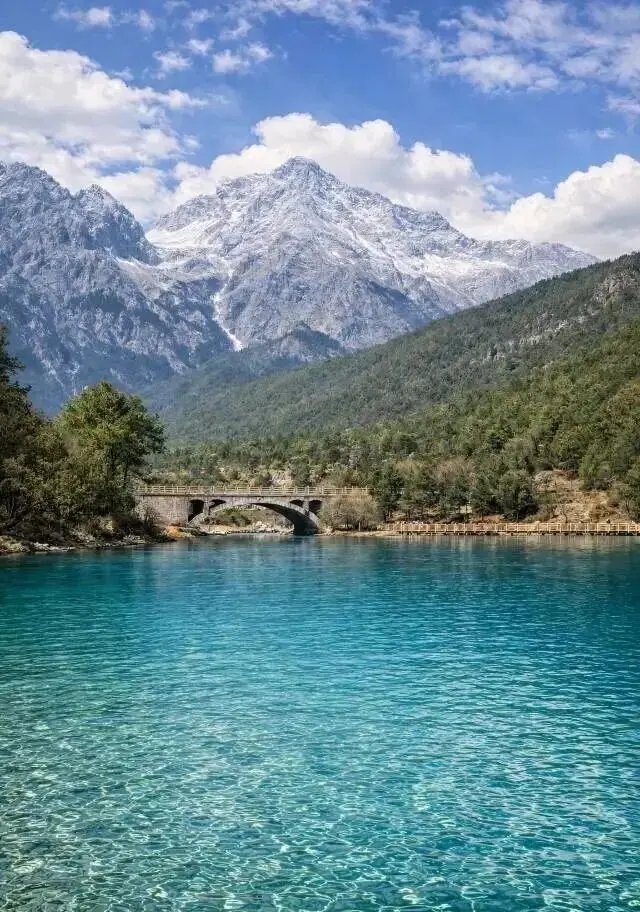
The boardwalk loops back to where you started, but the feeling stays with you longer than the walk. There’s a quiet hum in the air up here—a mix of thin wind and rushing snowmelt. Take one last look at the mountain’s reflection before the clouds roll in. You’ll find yourself scrolling through your photos later, trying to convince yourself the water really was that blue.
For a broader look at planning your trip across the region, explore more about best places to visit in Yunnan or take a virtual peek at Lijiang Blue Moon Valley photos.
Now it’s your turn to go see if the color matches the legend.