
Best Time to Visit Yunnan: A Month-by-Month Guide to Weather & Festivals (2026)
You stuff a down jacket into your backpack. Three hours later, on a high-speed train, you strip down to a T-shirt. The person next to you scrolls through photos of snow peaks. You’re checking what time Xishuangbanna’s night market opens.
This isn’t two different seasons. This is Yunnan. On the same day.
Figuring out the best time to visit Yunnan is tricky for exactly this reason. Ask ten travelers, get ten answers. Someone who froze through a 5°C April night in Shangri-La will swear spring is brutal. Someone who spent that same April in shorts at the Water Splashing Festival in Xishuangbanna will tell you it’s paradise. Both are right — they just went to different Yunnans. For a fuller picture, browse our yunnan travel guide before you plan.

- When Is the Best Time to Visit Yunnan, China? The 30-Second Answer
- Yunnan's Climate Isn't One Climate. Here's Why.
- Best Time to Visit Yunnan by Season
- What Is the Best Month to Visit Yunnan?
- Best Time to Visit Yunnan by Destination
- When to Book, What to Pay & the Crowds to Avoid
- What to Pack & How Not to Ruin Your Trip
- Quick Answers
When Is the Best Time to Visit Yunnan, China? The 30-Second Answer
October. For most travelers, when is the best time to visit Yunnan China comes down to one word: October. The monsoon has ended. The sky turns that deep, enamel blue you only get at altitude. Temperatures settle between 15–24°C (59–75°F). The National Day Golden Week crowds clear out by mid-month, and hotel prices drop back to earth.
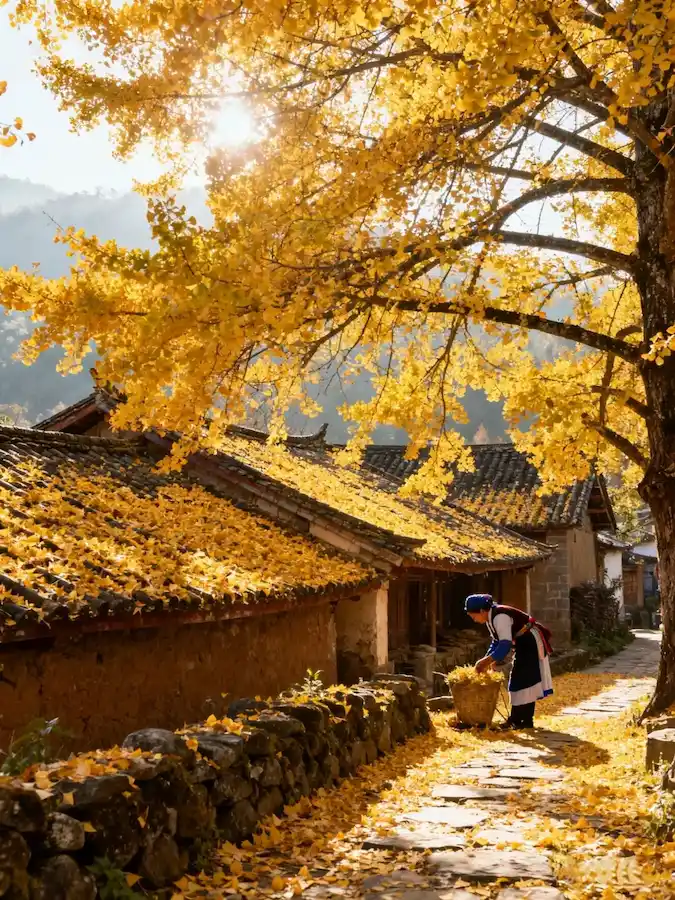
November runs a close second — Tengchong’s ancient ginkgo trees turn gold, and Yuanyang’s rice terraces start filling with water, creating thousands of mirror-like pools across entire mountainsides.
That’s the headline. Now here’s why it matters where you go.
Yunnan’s Climate Isn’t One Climate. Here’s Why.
Three things shape every weather decision here: altitude, latitude, and the South Asian monsoon. Stir them together and you get a province where temperatures can swing 40°C between two places on the same day. If you want detailed data, check our yunnan weather by month breakdown.
Yunnan’s real seasonal divide isn’t spring-summer-autumn-winter. It’s dry season versus rainy season.
Dry season (November–April): Clear skies, intense sun, the best snow-mountain visibility of the year. The trade-off: by March, crop burning across Southeast Asia can haze the sky gray-yellow.
Rainy season (May–October): Not all-day downpours. Yunnan’s rain mostly falls in short afternoon bursts or at night — hard, fast, then gone. The upside: while the rest of China sweats through 38°C (100°F) humidity, Kunming locals sip coffee in long sleeves at 24°C (75°F). The downside: mountain roads can wash out, snow peaks hide behind clouds for weeks.
Altitude then splits the province into three rough layers:
- Tropical lowlands (Xishuangbanna, 550m / 1,800ft): Summer year-round. April pushes past 35°C (95°F). Winter sits at a balmy 15–25°C (59–77°F).
- Central plateau (Kunming ~1,900m, Dali ~2,000m / 6,200–6,500ft): “Eternal spring” — mild days, a 10°C (18°F) drop after sunset, any month.
- Northwest highlands (Lijiang 2,400m, Shangri-La 3,280m / 7,900–10,800ft): Shangri-La’s annual average is just 5.5°C (42°F). Summer highs rarely break 25°C (77°F). Winter nights hit -15°C (5°F).
Once you understand these three layers, “when should I go?” becomes “which Yunnan am I visiting?”
Best Time to Visit Yunnan by Season
Spring (March–May): The Best Time to Visit Yunnan for Flowers
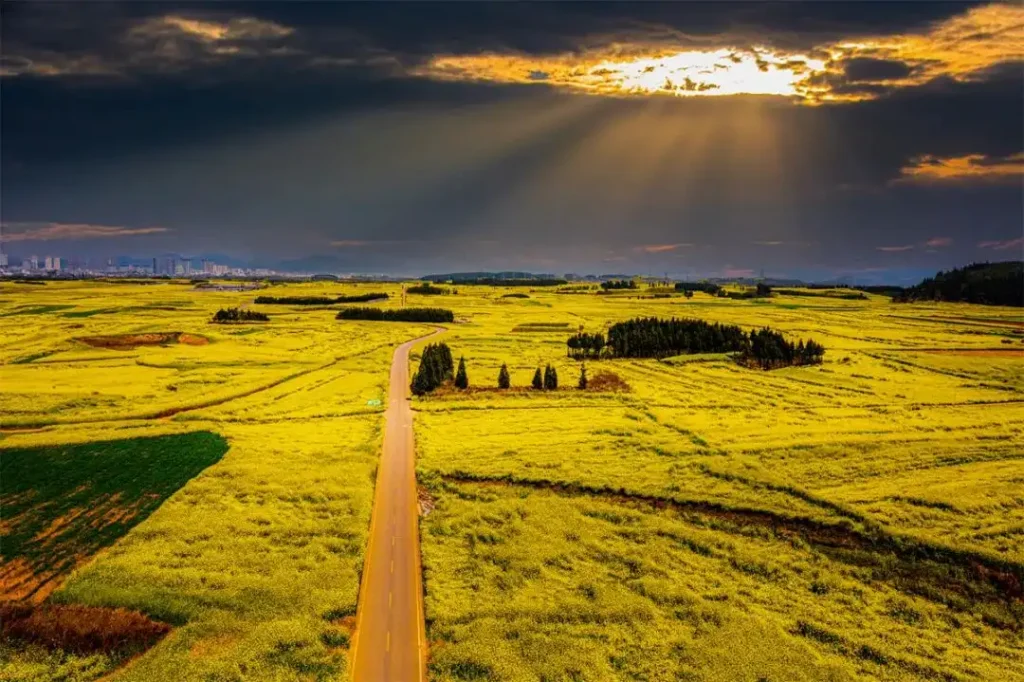
Yunnan’s spring doesn’t creep in. It detonates. Luoping’s rapeseed fields — nearly a million mu of them — turn karst peaks electric yellow by late February (viewing platforms: 20–30 RMB / 3–4 USD). Dali’s cherry blossoms paint the old town pink by mid-March. Shangri-La waits until May, then unleashes rhododendrons across entire hillsides. For blossom chasers, spring is arguably the best time to visit Yunnan province.
April brings the heavyweight: the Water Splashing Festival in Xishuangbanna (April 13–15, 2026). The whole city turns into a three-day water fight. At night, thousands of lanterns drift up from the Lancang River. Book flights and hotels three months ahead — during the festival, a room that costs 450 RMB (64 USD) in September will run 2,200–3,800 RMB (314–543 USD).
Watch out for May. It’s Yunnan’s hottest month — low-elevation valleys like Yuanjiang hit 40°C (104°F). Even Kunming briefly cracks 30°C (86°F), which locals treat as a heatwave. If spring is your best month to visit Yunnan, aim for March or April.
Summer (June–August): The Best Time to Visit Yunnan to Escape the Heat
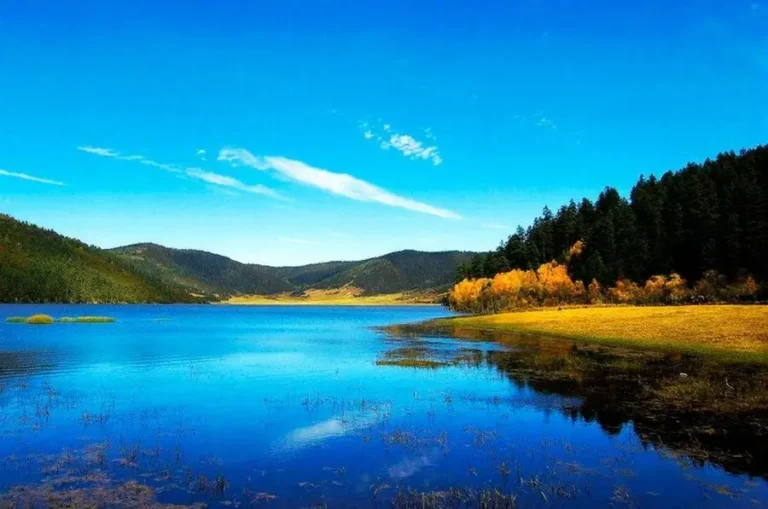
While Beijing and Shanghai bake at 38°C (100°F), most of Yunnan sits at 20–25°C (68–77°F). Shangri-La’s meadows turn emerald and fill with wildflowers. Puzhehei’s lotus fields stretch for thousands of acres — paddle a boat through them while strangers ambush you with buckets of water (it’s local tradition, not hostility).
Yes, it rains — Shangri-La gets 24 rainy days in July, Lijiang gets 22. Most rain falls in short afternoon bursts. But it can rain for five straight days. Meili Snow Mountain’s famous “golden sunrise” has a visibility rate below 5% all summer. The tiger leaping gorge yunnan china trail often closes after heavy rain due to landslide risk.
The rain has a reward: wild mushrooms. July through September is matsutake, porcini, and chicken-of-the-woods season. A hotpot full of fungi picked that morning might make you forgive every afternoon downpour. For cool green landscapes, summer is the best time to visit Yunnan China.
Autumn (September–November): Locals Call This the Best Time to Visit Yunnan
The rain stops. The sky sharpens. Temperatures land in the sweet spot — T-shirt by noon, sweater by dinner.
Tengchong’s Ginkgo Village goes off in early November. Over 3,000 ancient ginkgo trees — some centuries old — drop a thick golden carpet across roofs, paths, and outdoor dinner tables (entrance: 40 RMB / 6 USD). Lugu Lake loses its summer water flowers but gains perfect stillness. Shangri-La’s Pudacuo National Park explodes into reds, oranges, and purples (entry + shuttle: 120 RMB / 17 USD). Many photographers swear this is the best time of the year to visit Yunnan.
One landmine: National Day Golden Week (October 1–7, 2026). Eight million visitors flood the province per day. A sea-view guesthouse near Erhai Lake that costs 380–580 RMB (54–83 USD) in November runs 1,800–3,600 RMB (257–514 USD) during Golden Week. The 30-minute drive from Shuanglang to Caicun becomes three hours of gridlock. Go October 8 or later for perfect autumn without the chaos.
Winter (December–February): Snow Up North, Shorts Down South
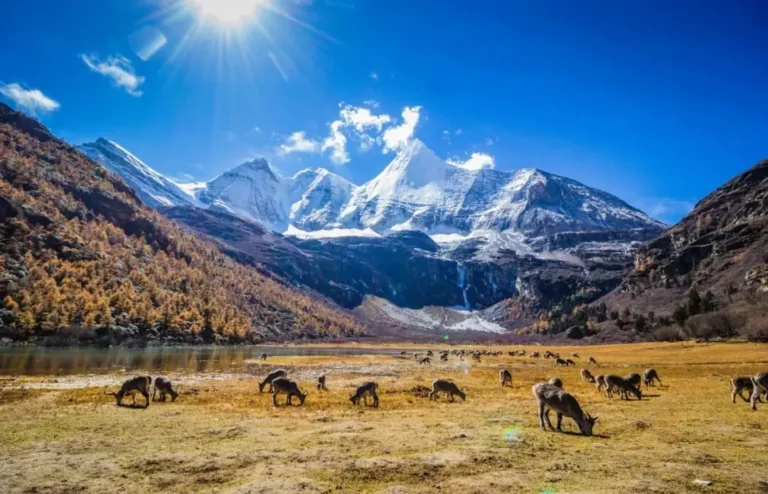
Winter splits Yunnan in half. In the northwest, jade snow mountain yunnan and Meili Snow Mountain hit their peak viewing season — crystal-clear skies, “sunshine on golden peaks” almost every morning. Shangri-La drops to -10°C (14°F) at night. Pack a real down jacket.
In the south, xishuangbanna sits at 15–25°C (59–77°F). You’ll eat grilled fish wrapped in banana leaves at the Starlight Night Market in shorts. In December. In China. This never stops feeling surreal.
Kunming gets its own winter magic: thousands of red-billed gulls fly in from Siberia to winter on Dianchi Lake. Yuanyang’s rice terraces hit their photographic peak — flooded paddies turn mountainsides into thousands of mirrors catching every shade of sunrise (multi-day ticket: 100 RMB / 14 USD). For travelers chasing both tropical warmth and snow peaks, winter is yunnan china best time to visit.
Another minefield: Chinese New Year (February 15–23, 2026 — nine days). Cable car tickets for Jade Dragon Snow Mountain vanish to scalping bots within seconds. The Starlight Night Market becomes shoulder-to-shoulder gridlock. Hotel rates triple. Go early December or late February instead.
What Is the Best Month to Visit Yunnan?
If you’re after the single best month to visit Yunnan, here’s the honest breakdown:
- October wins for most people. Dry, clear, 15–24°C (59–75°F). Golden Week ends by October 7 — go mid-month for perfect weather with manageable crowds. This is the best month to visit Yunnan for first-timers who want a bit of everything.
- November is your pick for photography. Ginkgo leaves in Tengchong, flooded terraces in Yuanyang, mirror-still lakes in Lugu.
- April is unmatched for festivals — but only if you book months ahead and don’t mind the premium. For culture lovers, this is the best month to visit Yunnan.
- March and September are the quiet shoulder-season sweet spots. Good weather, lower prices, fewer tourists.
The real answer: the best month to visit Yunnan depends on what you came for. Snow-capped mountains? December or January. Wildflowers and green meadows? June or July. Cherry blossoms without summer rain? March.
Best Time to Visit Yunnan by Destination
- Kunming: Any time. Winter brings the gulls; March brings jacaranda blooms. The “Spring City” (annual average 15.1°C / 59°F) lives up to its name.
- Dali: March–May and September–November. Cherry blossoms in spring, crisp golden light in autumn. Avoid Golden Week and Chinese New Year.
- Lijiang: April–May and September–October. Jade Dragon Snow Mountain is clearest in winter but brutally cold — autumn offers the best balance.
- Shangri-La: Late May through October. Outside this window, many guesthouses close for winter. Rhododendrons May–June; autumn foliage October.
- Xishuangbanna: November–March is prime escape-the-winter territory. April’s Water Splashing Festival is worth planning around; May–September is oppressively humid.
- Tengchong: November for the ginkgo leaves. December–February for hot springs under cold winter skies.
When to Book, What to Pay & the Crowds to Avoid
Kunming Changshui Airport is the main international hub, with dense Southeast Asian routes (Bangkok, Chiang Mai, Kuala Lumpur, Singapore, Vientiane, Phnom Penh) and a direct Paris flight. Thanks to visa-free policy expansions in 2026, Southeast Asia–Kunming routes are plentiful and affordable — except July–August, when summer study-tour traffic pushes international fares up about 40%.
Inside Yunnan, high-speed rail connects the major dots: Kunming to Dali in ~2 hours, Dali to Lijiang in ~1.5 hours. The Lijiang–Shangri-La railway is now fully open — the bullet train takes just 1 hour (second-class: 63 RMB / 9 USD), replacing a brutal 4-hour mountain bus. The Dali–Baoshan leg is also open (1 hour 10 minutes), but Baoshan–Ruili won’t open until 2028 — the Gaoligong Mountain tunnel remains an engineering nightmare.
Hotel prices swing wildly:
- Erhai Lake lake-view guesthouse: 380–580 RMB (54–83 USD) off-peak → 1,800–3,600 RMB (257–514 USD) during Golden Week or Chinese New Year. 5–6x difference.
- Lijiang Old Town courtyard inn: 260–400 RMB (37–57 USD) off-peak → 980–1,680 RMB (140–240 USD) in summer or holidays. 3–4x.
- Xishuangbanna Gaozhuang hotel: 450 RMB (64 USD) in September → 2,200–3,800 RMB (314–543 USD) during Water Splashing Festival. 6–8x.
Travel off-peak. You’ll save money. More importantly, you’ll see Yunnan instead of the back of someone else’s head.

What to Pack & How Not to Ruin Your Trip
Sunscreen. Is. Not. Optional. The plateau sun burns through clouds. SPF50, sunglasses, a wide-brim hat — skip any of these and you’ll regret it by day two.
Altitude is real. Acclimate in Dali (1,976m) for a day or two before pushing to Lijiang (2,418m) and Shangri-La (3,280m). Above 3,000 meters: no alcohol, no hot showers, no running. Oxygen cans cost 20 RMB (3 USD) at old-town pharmacies — buy them there, not at scenic spots where prices double. If you feel awful, go down. That’s the only real fix.
Layer everything. A fleece and a windbreaker get you through spring mornings, summer rain, and autumn evenings. For winter in Shangri-La or on Jade Dragon Snow Mountain: down jacket, thermal base layers.
Roads wash out in summer. June through September, these routes are landslide-prone: the Middle Tiger Leaping Gorge trail, the G214 highway between Shangri-La and Deqin, and the Nujiang Grand Canyon road (Liuku to Bingzhongluo). Don’t self-drive these in monsoon season.
Eat where locals eat. Skip the 68–88 RMB (10–13 USD) “authentic” crossing-the-bridge noodles inside Lijiang Old Town — the real thing is in Mengzi. Walk ten minutes outside any old town, find a place crowded with locals, and order what they’re eating. July and August: wild mushroom hotpot. Explore more in our yunnan food guide.
Don’t buy jade, silver, or “ancient” tea in tourist old towns. Most of it is fake, overpriced, or both. For real silver, go to Xinhua Bai Minority Village near Dali. For tea: Kunming’s Xiongda Tea City.
Quick Answers
What is the best time to visit Yunnan for good weather?
October. Dry, 15–24°C (59–75°F), clear skies, post-holiday calm.
Is it worth visiting during the rainy season?
If you want green mountains, wild mushrooms, and mid-summer temperatures that don’t break 25°C (77°F) — absolutely. If snow-capped mountain views are non-negotiable — wait until autumn.
How many days do I need?
For a first trip, 7–10 days gets you Kunming–Dali–Lijiang at a relaxed pace. Add 3–4 days for Shangri-La. Another 3–4 for Xishuangbanna. Cramming everything into one week means half your trip on trains. See our how many days to spend in yunnan guide for sample itineraries.
When should I book?
For Golden Week or Chinese New Year: 3 months ahead for flights, 1–2 months for hotels. Off-peak: 2–4 weeks is usually fine. The Water Splashing Festival is its own beast — treat it like peak season.
Yunnan doesn’t reward tight schedules. Don’t cram five cities into seven days. Pick two or three. Leave gaps in your itinerary. When you pass a cafe with a view of the mountains and a seat by the window, stop. Sit down. Order something.
You’ll remember that afternoon in Xizhou, watching wheat fields sway through a window frame, longer than any temple gate or viewpoint platform.
So maybe the best time to visit Yunnan isn’t a month at all.
Maybe it’s whenever you finally buy the ticket.

Ke Ping — Founder, Yunnan Travel Tips
Certified China Travel Specialist · Certificate details
This guide can become your real trip. Instead of figuring out complicated logistics alone, let me and our team build your perfect Yunnan journey — from sunrise at Meili Snow Mountain to tea tasting in ancient Dali.
📋 Plan My Yunnan Trip